
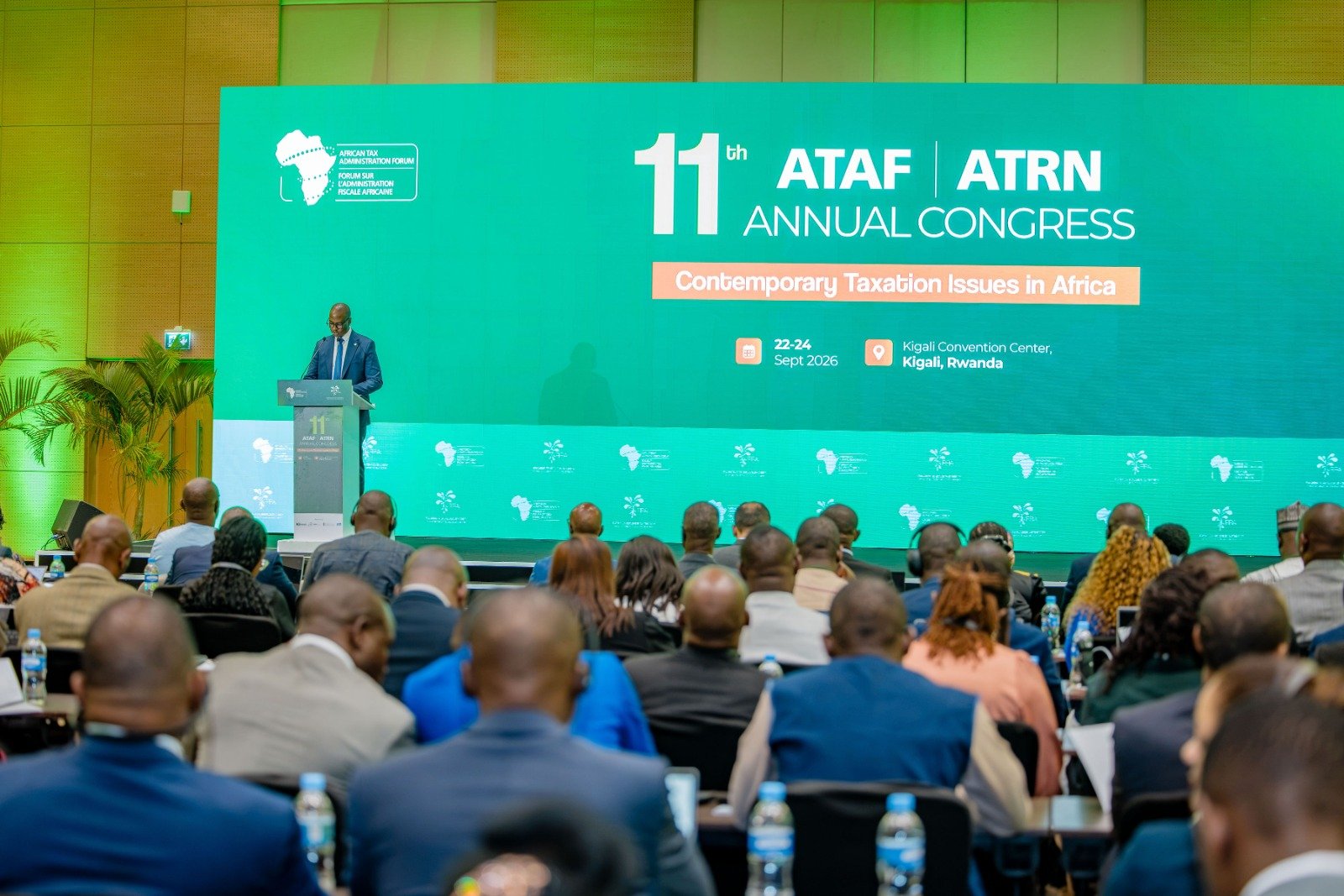
The 11th African Tax Research Network (ATRN) Annual Congress officially opened today at the Kigali Convention Centre in Rwanda, bringing together researchers, tax administrators, policymakers, academics and development partners for three days of engagement on the taxation issues shaping the continent.
Convened by the African Tax Administration Forum (ATAF), and hosted by the Rwanda Revenue Authority (RRA), the Congress runs from 22–24 September under the theme “Contemporary Taxation Issues in Africa.”
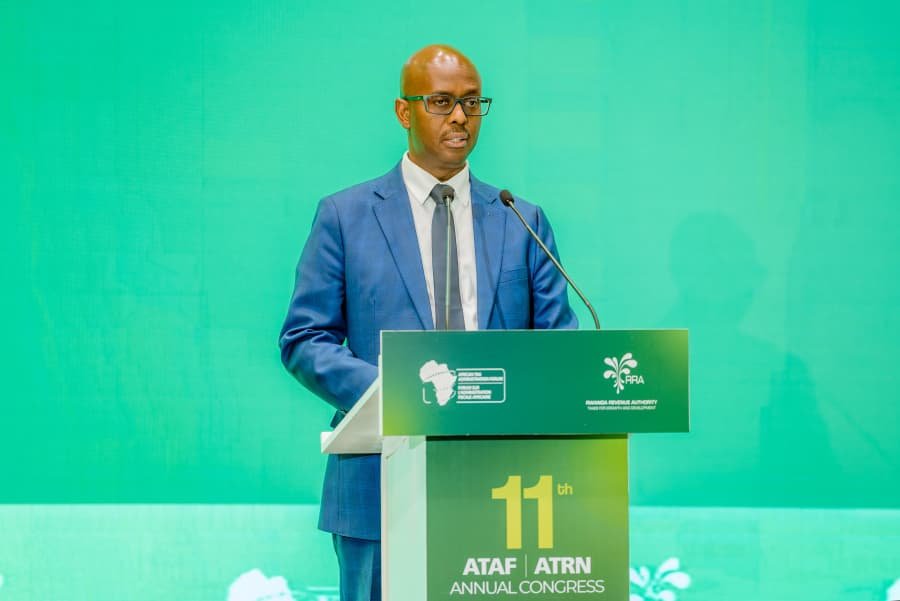
The Congress was officially opened by Hon. Yusuf Murangwa, Minister of Finance and Economic Planning of the Republic of Rwanda, who underscored the importance of credible evidence in informing public finance and tax policy decisions.
“The quality of a country’s public finance decisions can never rise above the quality of the evidence on which they rest,” Minister Murangwa said.
The Minister also recognised ATAF’s contribution to strengthening African tax administrations, describing its value as rooted in its African membership, leadership and agenda.
“The African Tax Administration Forum exists so that Africa’s revenue administrations can learn from one another, speak with one voice in international rule making, and build the technical capacity that domestic resource mobilisation demands,” he said.
He noted that Rwanda has been a committed member since ATAF’s founding and that RRA’s development has drawn deeply on this peer exchange.
The opening programme also featured H.E. Ramy Mohamed Youssef, Deputy Minister of Finance for Tax Policy and Reforms of the Arab Republic of Egypt and Chairperson of the United Nations Intergovernmental Negotiating Committee on the Framework Convention on International Tax Cooperation.
Across the three days, the Congress will examine a broad range of contemporary taxation issues, including artificial intelligence and digitalisation, tax expenditures, gender and taxation, climate-related taxation, the informal economy, tax morale, access to tax data, and the changing international tax landscape.
ATAF’s Head of Domestic Tax & Capacity Enhancement, Mr Emeka Nwankwo, delivering remarks on behalf of ATAF Executive Secretary Ms Mary Baine, highlighted the scale of the domestic revenue mobilisation opportunity facing the continent and the role research can play in helping countries identify and realise that potential.
Across the 39 African countries covered by the latest African Tax Outlook, tax revenue averaged 15% of GDP in 2024. With continental output of roughly USD 3 trillion, each additional percentage point of GDP mobilised through taxation represents approximately USD 30 billion annually.
The remarks emphasised that stronger domestic revenue mobilisation requires evidence that can help countries understand what works, for whom, under what conditions and at what cost — whether they are addressing tax expenditures, VAT gaps, informality or the impact of digitalisation.
This focus on connecting research with policy and administration is central to ATRN. Established in 2013, the Network has developed into a multidisciplinary platform connecting African researchers, tax officials and policymakers and strengthening the production and use of African tax research.
This year, the Congress received a record 190 research paper submissions across 12 thematic areas, compared with 46 submissions in 2022. The submissions were assessed through a double-blind review process supported by a Scientific Committee of approximately 165 tax administrators, academics and practitioners.
ATRN Advisory Board Chairperson Prof Annet Oguttu said the growth reflects the increasing recognition of the Network among African universities, revenue authorities and research institutions as a platform for serious tax scholarship.
She stressed, however, that the objective extends beyond producing research. ATRN seeks to ensure that rigorous African tax research reaches Commissioners General, Ministers, negotiators and other decision-makers responsible for translating evidence into policy and practice.
The Congress is also being hosted at a time when African tax administrations are under increasing pressure to mobilise more domestic resources while adapting to technological and economic change.
RRA Commissioner General Mr Ronald Niwenshuti used Rwanda’s recent experience to demonstrate the potential of stronger compliance management, digitalisation, data and evidence-based tax administration. He noted that improved revenue performance in Rwanda has been driven by factors including stronger VAT collection, expanded digital services, improved tax recovery measures and better use of data.
He also emphasised that sustainable revenue mobilisation depends on the relationship between tax administrations and taxpayers, with fairness, trust and an understanding of how tax revenues contribute to development providing an important foundation for voluntary compliance.
Over the next three days, the Congress will feature research presentations, plenary discussions, masterclasses and exchanges between researchers and practitioners, creating opportunities to examine how African evidence can inform practical responses to the tax challenges confronting the continent.
The discussions will also look ahead to the future African tax research agenda, including how research priorities can better respond to the needs of African countries as they pursue stronger domestic revenue mobilisation and participate in shaping international tax rules.
