
In the evolving calculus of sovereign development finance, Uganda’s latest external borrowing decision has once again placed climate resilience and debt sustainability on a collision course.
The 12th Parliament approved a €168.98 million, approximately Shs735 billion, financing package from United Kingdom Export Finance and Citi Bank to implement Phase II of the Solar Powered Irrigation Systems Project. The intervention is designed to deploy 427 solar powered irrigation systems across 126 districts, directly benefiting an estimated 2,562 households and covering about 4,768 acres of farmland.
The approval process, however, was anything but routine. Parliament suspended Rules 162(2), (3), and (4) of its procedural framework to fast track consideration of the loan without full committee scrutiny, citing urgency linked to the imminent expiry of financing terms.
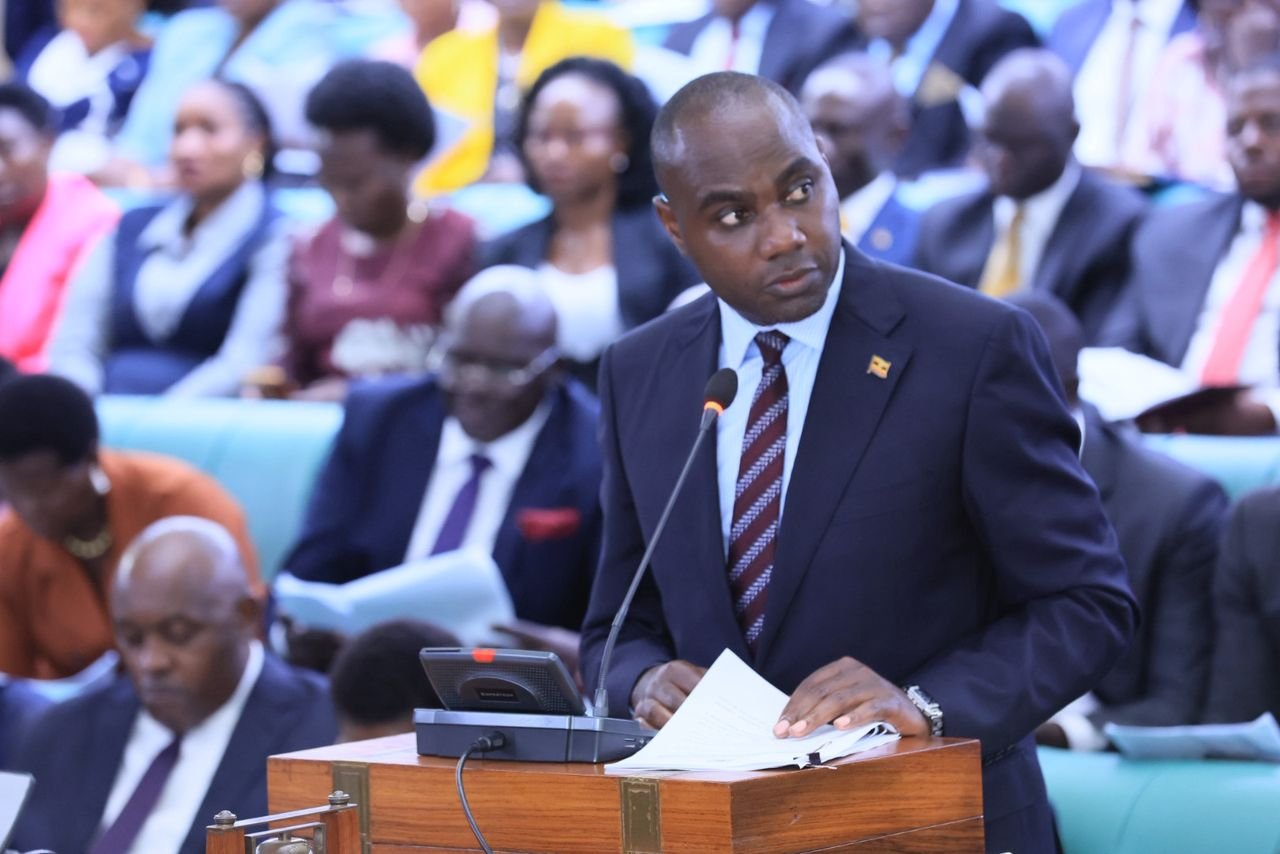
Speaker Jacob Marksons Oboth defended the decision, stating: “We do not have the committees; that is a reality of fact, and this loan is as important as water itself.”
The move triggered immediate concern from legislators who warned that procedural shortcuts risk weakening oversight over rising public debt exposure.
Hon. Patrick Nsamba (NUP, Kassanda County North) criticized the approach, arguing: “It’s not sufficient to just tell us that we do not have committees and yet the people who are supposed to do that are available.”
Finance Minister Henry Musasizi defended the project as a necessary response to worsening climate conditions affecting agricultural output. “Currently, farmers are losing a lot of crops due to prolonged dry seasons and this in turn affects their livelihoods,” he said, noting that the project scope was reduced from 700 to 427 irrigation sites to align with fiscal constraints.
Uganda’s agricultural sector remains the backbone of the economy but is structurally exposed to climate variability. Government statistics show that only 23,595 hectares are currently under irrigation out of a potential 3.03 million hectares nationwide, leaving production heavily dependent on rainfall patterns that are becoming increasingly erratic.
Coffee, Uganda’s leading export commodity, generated nearly US$2.4 billion in revenue in the year ending March 2026, supporting millions of livelihoods. Yet production remains vulnerable to drought cycles that reduce yields and weaken export consistency. Government projections indicate that irrigation could increase coffee yields from 1.3 kilograms to as high as 6.5 kilograms per tree, a near fourfold productivity gain.
The financing arrangement combines concessional and commercial debt. The €148.5 million UKEF facility carries a fixed interest rate between 3.65 percent and 3.92 percent, with a 13 year repayment period and a three year grace period. The remaining €20.5 million from Citi Bank is priced at approximately 7.5 percent, raising questions about the blended cost of capital and long term fiscal exposure.
Hon. Karim Masaba (Mbale Industrial Division MP) questioned the borrowing terms, arguing that government had not adequately explored alternative financing options. “We have an option at a lower rate than 7.5 percent. We needed to know what options government had with their interest rates and terms and conditions,” he said.
Despite the concerns, other legislators defended the borrowing as necessary given Uganda’s fiscal gap and development priorities. Hon. Julius Muntu (NRM, Budadiri County East) noted: “Our budget is Shs84 trillion, Shs33 trillion is going into debt, Shs50 trillion is what will be left to public service. We have a deficit of about Shs38 trillion, we have to get it through borrowing.”
Minister of Agriculture Frank Tumwebaze emphasized that changing weather patterns have made irrigation a strategic necessity rather than an option. “I appeal to you to make an exception and pass a loan that will support the small holder farmers, because the 10-20 acre farmers are for farmers who are not able to borrow from Uganda Development Bank to invest in massive irrigation systems,” he said.
Trade Minister Sanjay Tanna also supported the financing, noting that stable macroeconomic conditions and controlled inflation make it a favorable moment for external borrowing aimed at productive infrastructure investment. Meanwhile, Leader of the Opposition Joel Ssenyonyi called for accountability over performance of earlier irrigation phases before expanding further debt exposure.
Beyond parliamentary debate, the project sits at the intersection of opportunity and risk. Uganda is confronting intensifying climate stress that threatens agricultural productivity, while simultaneously navigating rising public debt obligations and constrained fiscal space.
If effectively implemented, the 427 solar powered irrigation systems could transform agriculture from rainfall dependency into a predictable, year round production system, improving yields, stabilizing export volumes, and strengthening rural incomes. Solar powered systems also reduce reliance on diesel, lowering operating costs and shielding farmers from fuel price volatility.
However, concerns around execution remain central. Previous phases of irrigation investment have reportedly suffered from underutilization, maintenance gaps, and operational inefficiencies. Without strong systems for training, spare parts, and community management, infrastructure risks deteriorating while debt obligations remain fully active.
Ultimately, the success of the Shs711 billion solar irrigation investment will depend less on parliamentary approval and financing structure, and more on execution discipline on the ground. The key test will be whether borrowed capital is consistently translated into functional infrastructure and sustained agricultural productivity.
For Uganda, the question is no longer whether climate smart agriculture is necessary, but whether the state can reliably convert debt financed ambition into durable economic value.
