
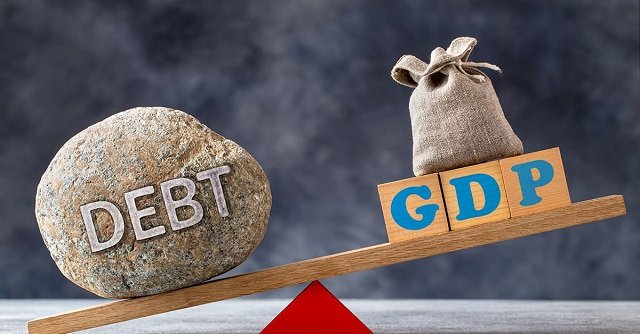
When Finance Minister Henry Musasizi presented Uganda’s FY 2026/27 National Budget at Kololo Ceremonial Grounds, one figure stood out above all others: 53 percent.
As of December 2025, Uganda’s public debt had risen to USD 34.86 billion (approximately Shs126.19 trillion), pushing the country’s debt-to-GDP ratio to 53 percent. While still within broadly manageable levels by international standards, crossing the 50 percent mark has intensified debate among economists, investors, and business leaders about the sustainability of Uganda’s borrowing strategy.
At the heart of the discussion is a critical question: Is Uganda building the foundations for long-term economic transformation, or accumulating liabilities that could constrain future growth?
Uganda’s debt profile reflects a significant shift in recent years. Of the total debt stock, USD 15.84 billion is external debt, while USD 19.02 billion is domestic debt. The larger domestic component has drawn particular attention because government borrowing within the local market can reduce the availability of affordable credit for businesses, especially small and medium-sized enterprises.
For many private sector players, this raises concerns about the risk of crowding out investment. When government competes aggressively for domestic financing, interest rates can remain elevated, making expansion more expensive for businesses that depend on bank lending.
Government, however, argues that the debt should not be viewed in isolation. The Ministry of Finance maintains that much of the borrowed capital has been invested in productive assets designed to generate long-term economic returns. Over the past decade, debt-financed spending has largely been directed toward transport infrastructure, electricity generation and transmission, water systems, agro-industrialization, education, healthcare, and industrial development.
The central argument is simple: Uganda is borrowing to build the infrastructure required to support a larger and more productive economy.
That argument gains additional weight from the country’s growth outlook. Uganda’s economy expanded by an estimated 6.4 percent in FY 2025/26, building on the 6.3 percent growth recorded the previous year. However, the government projects growth to accelerate sharply to 10.2 percent in FY 2026/27, largely driven by the anticipated commencement of commercial oil production, continued infrastructure investments, and strong export performance.
Exports have already shown impressive momentum. Total export earnings reached USD 18.04 billion in the 12 months to March 2026, supported by strong performances in coffee, gold, and other key sectors.
If these growth projections materialize, Uganda could significantly improve its debt position over time. Faster economic expansion would increase the size of the economy relative to the debt stock, naturally reducing the debt-to-GDP ratio while generating additional revenues to meet debt obligations.
Yet the optimism surrounding future growth is tempered by a growing fiscal reality: the rising cost of servicing the debt.
For FY 2026/27, Uganda has budgeted approximately Shs14.11 trillion for interest payments and commitment fees. This represents one of the largest expenditure items in the national budget and highlights the mounting cost of maintaining a highly leveraged development strategy.
Of this amount, Shs12.35 trillion will go toward servicing domestic debt, while Shs1.75 trillion is allocated to foreign interest payments and related charges.
The implications are significant. With projected domestic revenue collections of about Shs45.6 trillion, nearly one-third of all tax revenue will be spent on debt servicing before government finances essential services such as healthcare, education, security, and infrastructure maintenance.
This growing debt-service burden reduces fiscal flexibility and increases vulnerability to external shocks. Any delays in oil production, weaker-than-expected export earnings, or global economic disruptions could place additional pressure on public finances.
Recognizing these risks, government has signaled a shift in focus from borrowing for expansion to improving efficiency and accountability in public spending.
Under the implementation agenda popularly described as “Kisanja No More Sleep,” the emphasis is moving toward stronger fiscal discipline, stricter project monitoring, and improved value for money.
Among the reforms being introduced are performance and accountability contracts for Accounting Officers, tighter controls on project implementation, centralized management of counterpart funding for externally financed projects, and efforts to eliminate non-essential public expenditure.
The objective is to ensure that every borrowed shilling generates measurable economic returns while strengthening domestic revenue mobilization to reduce dependence on debt over the long term.
The broader challenge facing Uganda is not necessarily the size of the debt itself, but whether the investments financed by that debt deliver the expected economic outcomes.
Countries that successfully industrialized often relied heavily on borrowing during key phases of development. The difference between sustainable debt and a debt trap lies in execution. Infrastructure must stimulate productivity, industrial parks must attract investment, and oil revenues must translate into broader economic transformation rather than temporary fiscal relief.
Uganda therefore stands at a pivotal moment.
If commercial oil production begins as planned, export growth remains strong, and public investments generate the expected returns, today’s debt burden could become the foundation for a much larger economy. However, if implementation gaps persist or growth underperforms, the rising cost of debt servicing could increasingly limit fiscal space and crowd out private sector growth.
For businesses, investors, and policymakers alike, the debate is no longer simply about how much Uganda is borrowing. It is about whether the country can convert that borrowing into sustainable growth, higher productivity, and long-term prosperity.
The answer will depend not on the size of the debt, but on what Uganda does with it.
