
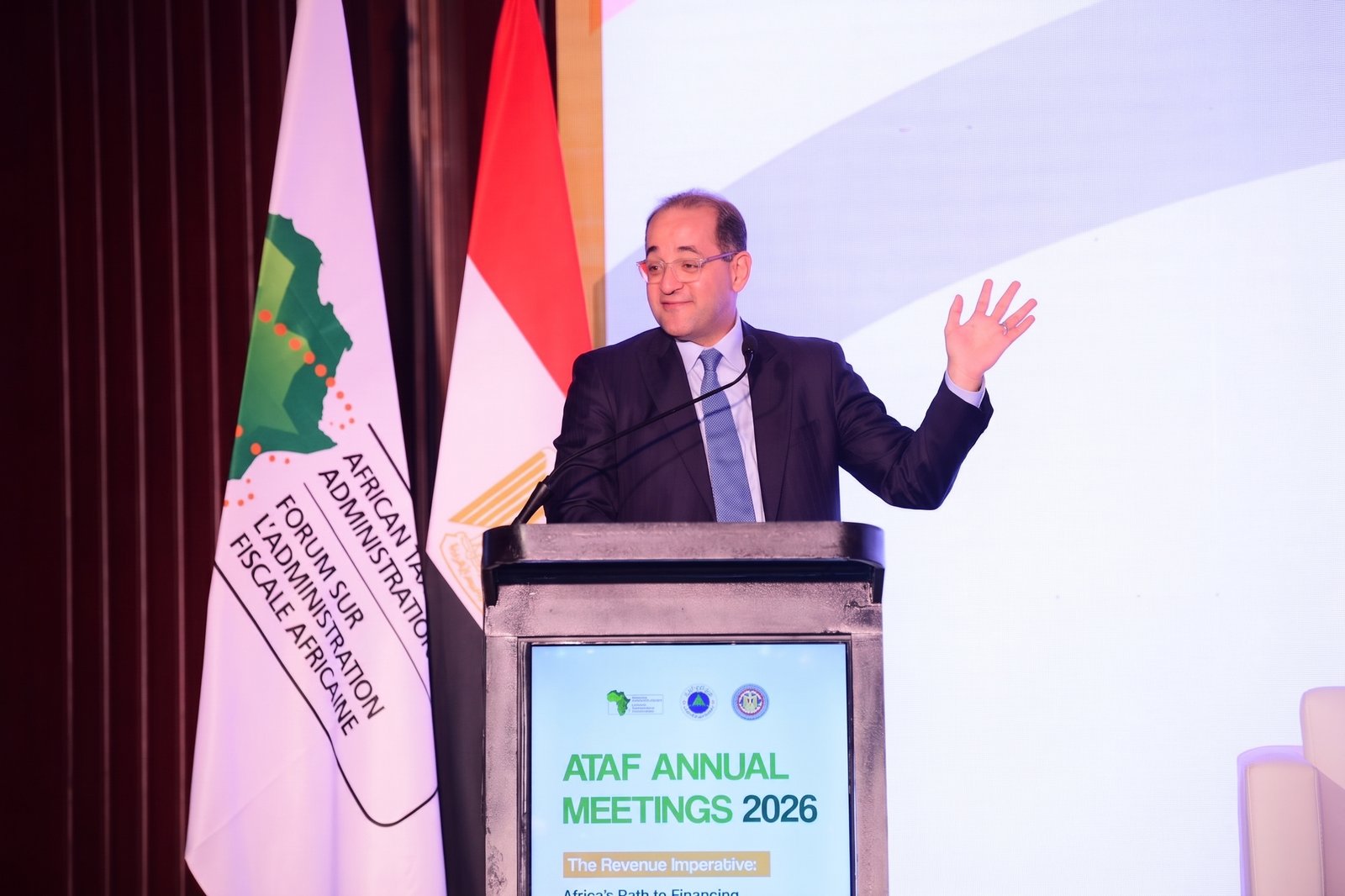
African tax administrations must look beyond revenue collection and invest in technology, simpler services and stronger taxpayer relationships to make taxation an instrument of economic development, Egyptian Finance Minister Ahmed Kouchouk has said.
Speaking at the opening of the African Tax Administration Forum (ATAF) 2026 Annual Meetings in Cairo on November 3, Kouchouk called on African countries to strengthen cooperation and adopt smart technological applications that make tax compliance easier for citizens and businesses.
His message draws on Egypt’s experience, where investment in digital tools and simplified administrative procedures has helped improve tax registration and revenue performance without introducing additional tax burdens.
Egypt recorded a 27% increase in tax revenues last year, while 3.5 million properties were voluntarily registered within 120 days. Kouchouk presented these results as evidence that governments can improve revenue collection by making tax systems more accessible and efficient rather than relying exclusively on higher taxes.
The experience highlights a broader question facing African tax administrations: how can governments mobilise more domestic resources while making it easier for taxpayers to comply with their obligations?
For Kouchouk, the answer lies partly in changing how tax authorities interact with businesses and individuals. Rather than treating taxpayers solely as sources of government revenue, administrations must provide accessible services, simplify procedures and use technology to reduce the difficulties associated with tax compliance.
Digital applications can make tax declarations easier, improve the monitoring of economic activities and strengthen the ability of administrations to identify taxable transactions. They can also reduce administrative inefficiencies and create more predictable processes for businesses operating within the formal economy.
“Smart tax policy is one of the most effective development tools. It stimulates the economy and creates new employment opportunities,” Kouchouk said.
This approach places taxpayer confidence at the centre of revenue mobilisation. When registration, filing and payment procedures are straightforward, citizens and businesses have fewer administrative barriers to meeting their obligations. More efficient tax services can also improve perceptions of fairness and strengthen voluntary compliance.
For governments, the benefits extend beyond additional revenue. A more effective tax administration provides greater capacity to finance public services, infrastructure and other development priorities while supporting an environment in which businesses can operate and expand.
Kouchouk’s appeal also reflects the need to adapt tax administration to the changing structure of African economies. Digital commerce, increasingly complex financial transactions and the expansion of economic activities across national borders are creating new demands on revenue authorities.
Addressing these developments requires more than individual countries investing in technology independently. African tax administrations must also cooperate, exchange experiences and develop solutions that respond to common challenges.
However, modernisation does not mean adopting identical systems across the continent. Egypt’s experience offers an example of what technology and administrative simplification can achieve, but other countries must adapt these approaches to their own economic structures, institutional capacities and taxpayer needs.
Kouchouk’s message therefore extends beyond improving the efficiency of revenue collection. He is advocating a model in which tax administrations support economic activity, encourage formalisation and strengthen the relationship between governments and taxpayers.
Egypt’s reported 27% increase in tax revenues and the voluntary registration of 3.5 million properties within 120 days provide an illustration of this approach. The broader challenge for African countries is to translate similar administrative improvements into stronger compliance, more predictable tax systems and additional resources for development.
For the continent, modernising taxation is not simply about collecting more money. It is also about building administrations that taxpayers can trust, businesses can work with and governments can rely on to finance long-term economic development.
