
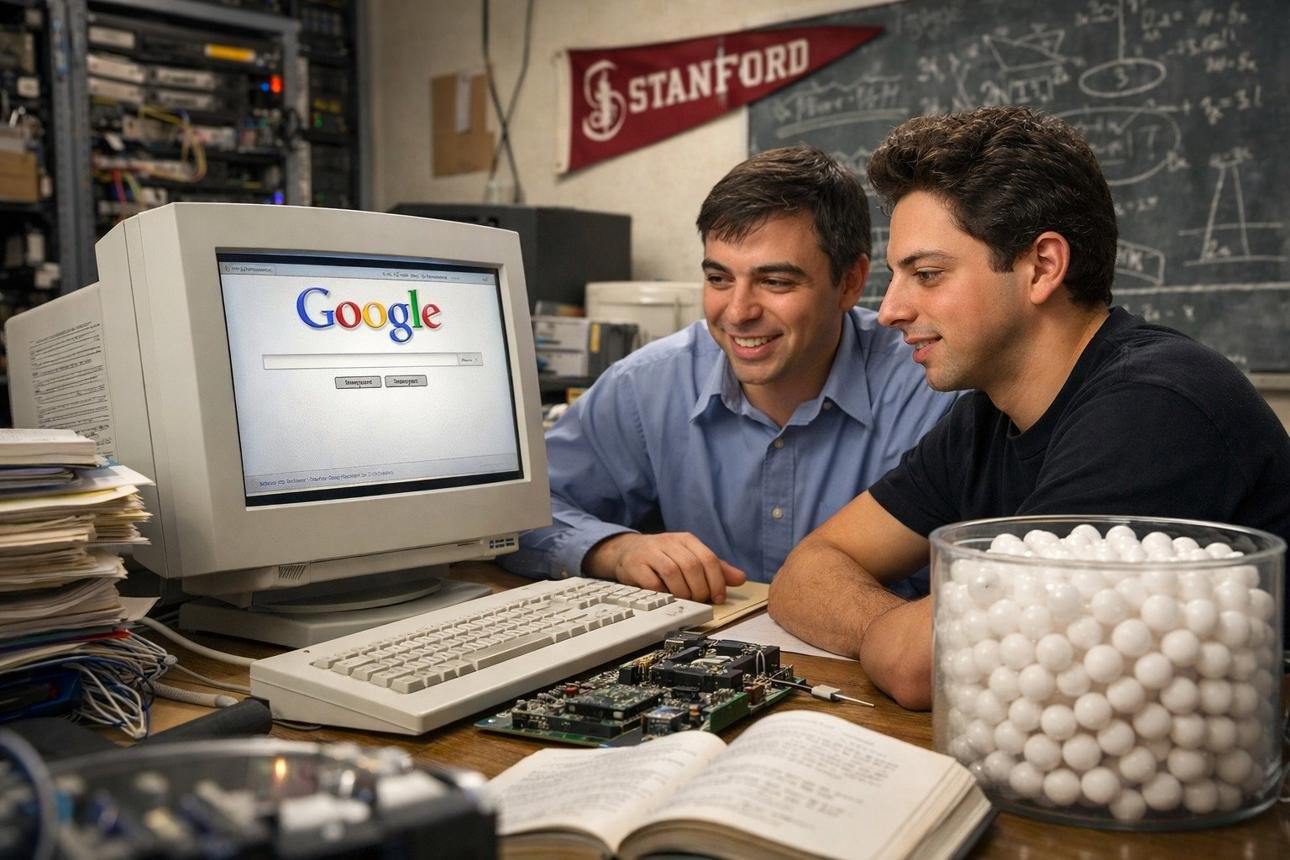
On September 27th Google marked its 28th birthday with a nostalgic homepage Doodle, a trivia quiz about its own history and a round of Pixel discounts. The artwork brought back the chunky primary colours of the late-1990s logo. Billions of people saw it. Almost none stopped to notice the awkward detail sitting at the centre of the whole celebration.
Google Inc. was incorporated on September 4th 1998. That is the day the legal papers were filed by Larry Page and Sergey Brin after Sun Microsystems co-founder Andy Bechtolsheim wrote them a $100,000 cheque. The domain google.com had already been registered the year before. The project itself started even earlier under the name BackRub. By any normal corporate measure, September 4th should be the birthday.
Yet Google celebrates on the 27th. It has done so, fairly consistently, since the mid-2000s. In the early years the date wandered around. Sometimes it was the 4th, sometimes the 7th or the 15th, before it finally settled. One explanation ties September 27th to a 2005 indexing milestone, the moment Google announced it had pulled far ahead of rivals in the number of web pages it could search. Another explanation is simpler. The first birthday-themed Doodle landed on that date in 2002 and the habit just stuck. On its 20th anniversary the company even admitted the discrepancy without much fuss. The firm that made its name organising the world’s information has never quite managed to organise its own beginning into one clean, official date.
That is the strange story behind Google’s birthday. A company built on precision has chosen a date that is more about tradition than hard fact. And the oddness only grows when you look at the size of the organisation that still cannot settle on when it started.
Alphabet, Google’s parent company, is valued at roughly $4.2 trillion. Its trailing twelve-month revenue sits near $446 billion. The full-year 2025 figure crossed $400 billion for the first time. To put those numbers in an East African frame is useful. Uganda’s GDP is somewhere around $60-73 billion. Kenya’s is about $117-147 billion. Tanzania’s sits near $85-95 billion. Alphabet’s annual revenue alone is bigger than the combined economies of several East African countries. Its market value dwarfs the entire GDP of the African continent several times over. Not many private companies in history have carried this kind of weight compared with the countries where so many of their users live.
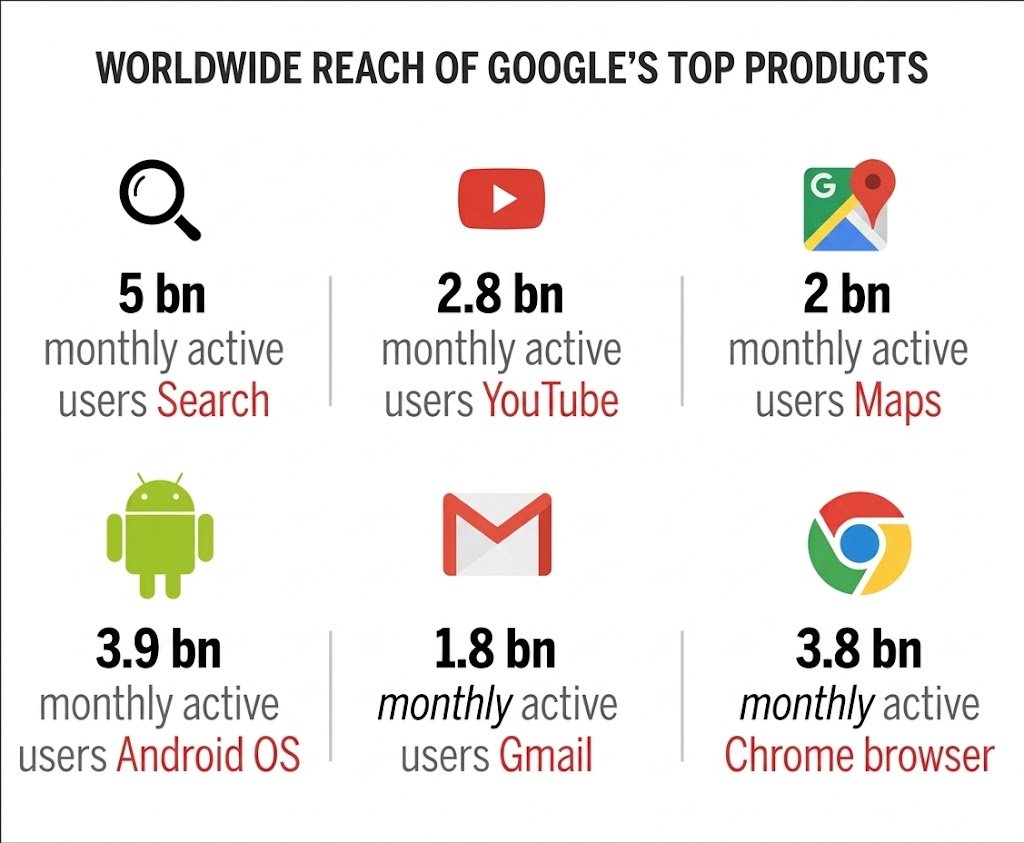
The reach is just as striking. Google Search handles more than five trillion queries a year, which works out to roughly 158,000 every second. Somewhere around five billion people use Google Search. YouTube has about 2.7 billion monthly active users and people watch more than a billion hours of video on it every day. Android runs on billions of devices and still holds the largest share of the global smartphone market. Gmail, Maps, Chrome and Drive each have more than a billion users. Eight Google products now sit above the one-billion-user mark. Outside of Meta, no other company comes close to this level of everyday human attention. These services have become basic infrastructure. They are how much of the world looks things up, finds its way around, sends messages and watches video.
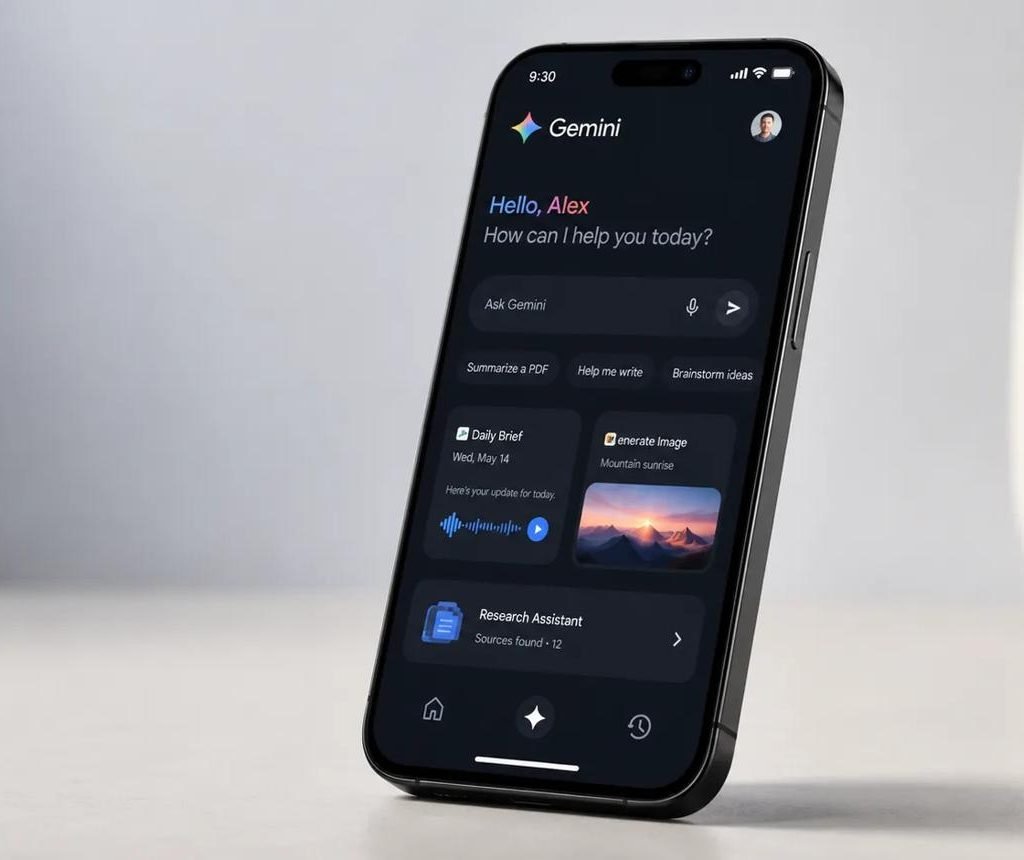
All of this is happening in the middle of the artificial-intelligence shift, and Google is not just taking part. It is trying to set the pace. Gemini, its main AI family, now runs through many of the company’s products. The standalone Gemini app has grown to around 900-950 million monthly users, and daily usage is climbing fast.
AI Overviews and AI Mode inside Search are already reaching well over a billion people each month. Google Cloud, which used to sit in the background, has turned into a major growth engine. One recent quarter showed 82 per cent year-on-year revenue growth and a contract backlog of $514 billion. Almost 90 per cent of Fortune 100 companies are said to be using Gemini Enterprise. Capital spending is running very high. Guidance for 2026 has been pushed up toward the $195-205 billion range as the company races to build the computing power these advanced models need. Advertising still makes most of the money, but cloud and AI infrastructure are becoming the real growth story.
Against this backdrop, the fuzzy birthday starts to feel even stranger. Technology companies like to present themselves as machines of precision. Timestamps, version histories, real-time data and models that can rebuild events from scraps of information are what they sell. Google sits right at the top of that world.
It can tell you the exact minute someone searched for a leaking tap. It can pull up the weather from the day a couple got married decades ago. But when the question is about its own birth, the company just shrugs, picks a date that feels good enough and throws a party. That choice is not pure whimsy. Birthdays, even for companies this large, work more as ritual than as strict record. They are the stories organisations decide to keep telling about themselves.
Google’s actual beginning was never one tidy Tuesday in September 1998. It was a messy chain of events. A research project that got out of hand. A mathematical term that someone misspelled into a brand name. A garage in Menlo Park. A workplace culture that once put a stick-figure Burning Man logo on the homepage simply because the founders were out of the office. Trying to force that whole messy start into a single calendar square was always going to feel forced. By sticking with September 27th, Google has done something quite unusual for a data company. It has chosen tradition over precision.
The business side of this is straightforward. In a sector that never stops reinventing itself, with new models, new hardware and constant reorganisations under Alphabet, the yearly birthday offers a bit of continuity. The Doodle is cheap brand work. The trivia quiz holds people inside the products a little longer. The hardware deals turn nostalgia into sales.
At the same time the whole exercise softens the image of a company that often faces criticism over its size, power and lack of transparency. For one day the system that never stops indexing takes a moment to look back. In a time when artificial intelligence can answer almost any factual question, Google answers the simplest one about its own history with deliberate vagueness.
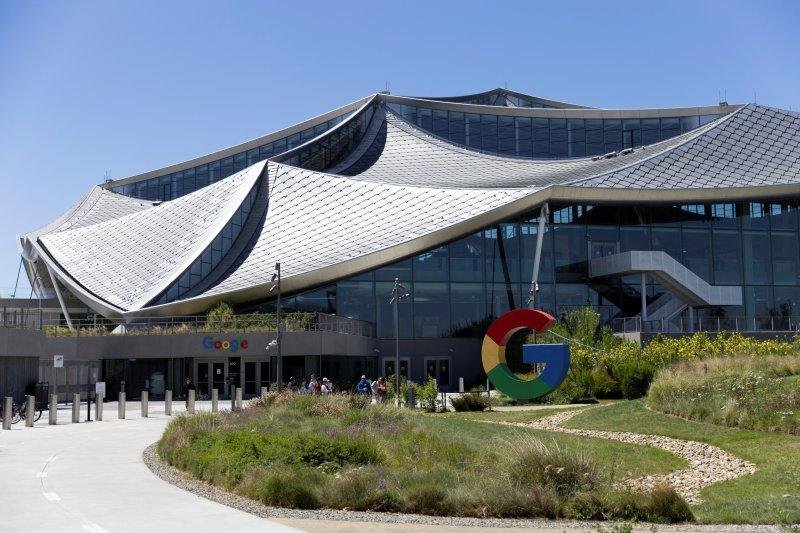
There is a wider point here about how companies build identity in the digital age. Tech firms put a lot of energy into origin stories that do not always line up perfectly with the records. What makes Google’s case interesting is the irony. The company that made imperfect memory feel outdated still prefers a good story to a precise one when the subject is itself. At 28 the search giant has moved far beyond the garage, beyond pure search, and beyond any simple story about what it is for. Yet it still holds on to a birthday that is more useful than accurate. Sometime in September, the company seems to say. Let’s just celebrate. The candles are lit, the logo looks retro, and the date, like so much else in the digital world, remains approximate.
