
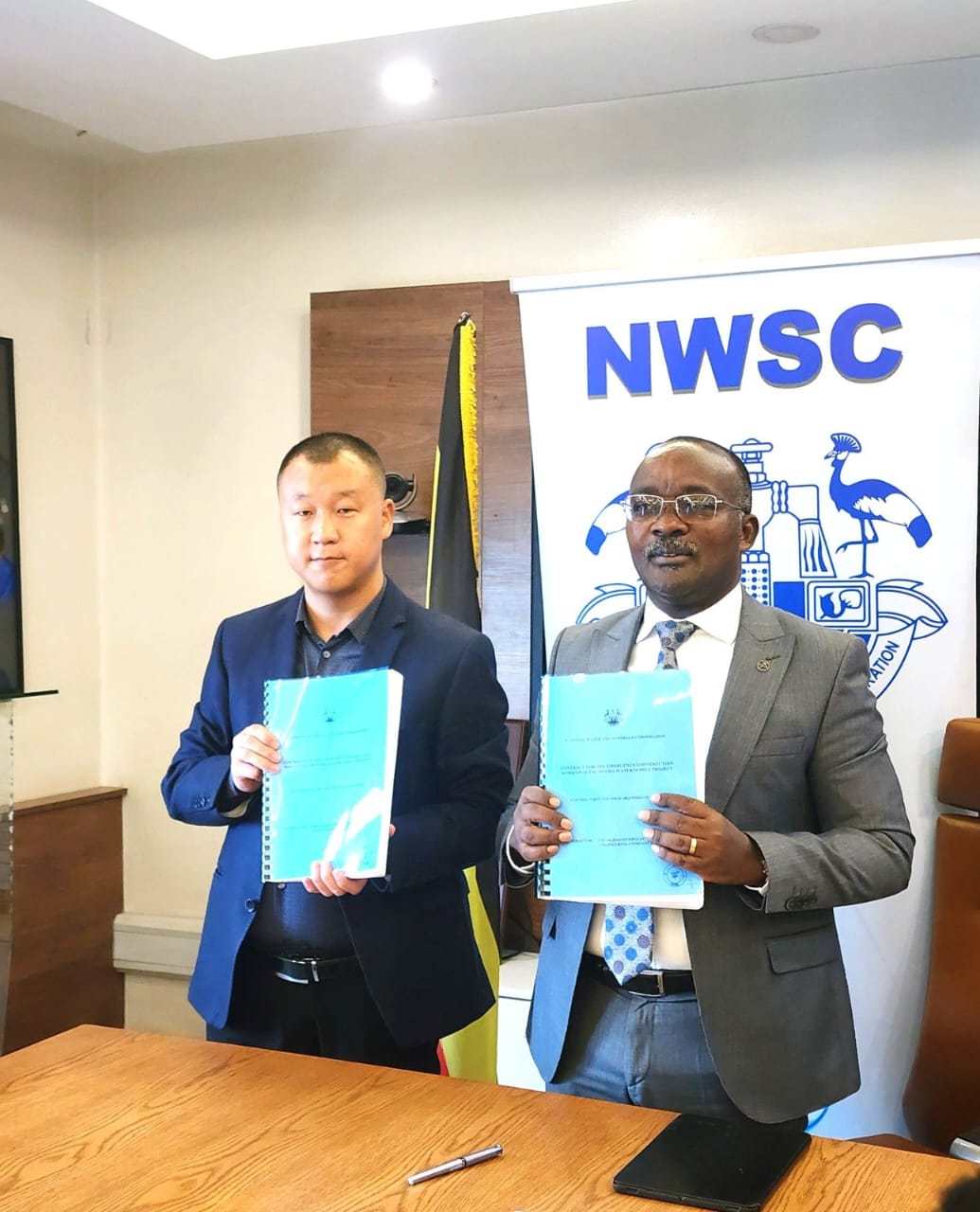
The National Water and Sewerage Corporation (NWSC) has unveiled a Shs14.24 billion water infrastructure project aimed at addressing chronic water shortages in Hoima City as Uganda prepares for commercial oil production and the 2027 Africa Cup of Nations (AFCON).
The project, known as the Hoima 2 Water Supply System, was officially announced on June 23 and is expected to strengthen water access in one of Uganda’s fastest-growing urban centres, where rising demand from oil and gas investments, urbanisation, and population growth has increasingly strained existing infrastructure.
According to NWSC Managing Director Dr. Eng. Silver Mugisha, the new system will abstract raw water from River Kafu in neighbouring Kikuube District, treat it at a newly constructed conventional treatment plant, and transfer the processed water to Hoima through a dedicated bulk supply network.
The project is designed to produce 2,000 cubic metres, equivalent to approximately 2 million litres, of clean water per day.
Key infrastructure components include approximately 25 kilometres of transmission and distribution pipelines, a 300-cubic-metre elevated steel reservoir at Musaijamukulu Hill, pumping stations, storage facilities, and supporting electrical infrastructure.
Construction has been awarded to Zhonghao Overseas Construction Engineering Company Limited, with completion expected within eight months. Financing is being provided jointly by the Government of Uganda and NWSC.
The contractor has committed to prioritising local labour during implementation, a move expected to create employment opportunities for residents and stimulate economic activity within the region.
Growing Demand Places Pressure on Existing Infrastructure
Hoima has experienced rapid growth in recent years as Uganda’s oil and gas industry advances toward first oil production. The influx of workers, investors, businesses, and real estate developments has significantly increased pressure on the city’s existing water system.
The current Hoima 1 Water Supply System has struggled to meet growing demand, resulting in periodic shortages affecting households, commercial establishments, and public institutions.
NWSC says the Hoima 2 project will serve as an immediate and medium-term solution while plans for the larger Hoima 3 Water Supply System continue to be developed.
The corporation expects the new infrastructure to improve service reliability, expand coverage, and enhance the city’s capacity to support future population and industrial growth.
Strategic Importance for Uganda’s Oil Industry
Beyond improving access to clean water, the project carries significant economic implications for Uganda’s oil-producing region.
Hoima sits at the centre of development activities linked to the Albertine Graben and is expected to play a critical role in supporting commercial oil operations once production begins.
Reliable water infrastructure is increasingly viewed as a key requirement for industrial expansion, investor confidence, and workforce welfare.
For companies establishing operations in the region, dependable access to water helps reduce operational risks, supports industrial processes, and improves overall competitiveness.
The improved supply is also expected to benefit industrial parks, hospitality facilities, residential developments, and other businesses emerging alongside Uganda’s oil economy.
AFCON 2027 Preparations Increase Urgency
The project also forms part of broader infrastructure improvements associated with Uganda’s preparations to co-host the 2027 Africa Cup of Nations alongside Kenya and Tanzania.
Hoima is among the cities expected to benefit from investments linked to the tournament, which will require reliable public services to support visitors, hospitality facilities, training venues, and related infrastructure.
A stable water supply will be essential for hotels, restaurants, fan zones, and other facilities expected to serve thousands of visitors during the competition.
Successful completion of the project would strengthen Uganda’s readiness for the tournament while demonstrating progress in infrastructure development ahead of one of Africa’s largest sporting events.
Focus on Delivery and Accountability
Despite optimism surrounding the initiative, stakeholders say its success will depend on timely execution and adherence to quality standards.
NWSC has emphasized the importance of completing the project within the agreed timeline and budget while ensuring compliance with technical specifications.
Local leaders are also expected to monitor commitments related to local employment and skills development to ensure that project benefits extend beyond short-term construction opportunities.
Supporting Long-Term Urban Growth
The Hoima 2 Water Supply System highlights the growing importance of investing in essential infrastructure as Uganda pursues industrialisation and economic transformation.
While large-scale investments in roads, airports, and energy projects often attract greater public attention, access to reliable water remains a critical foundation for sustainable urban development.
For Hoima, the project represents more than an expansion of water services. It is a strategic investment in public health, economic productivity, industrial growth, and the city’s ability to support the demands of a rapidly expanding population as Uganda enters a new phase of oil-led development and prepares for AFCON 2027.
