
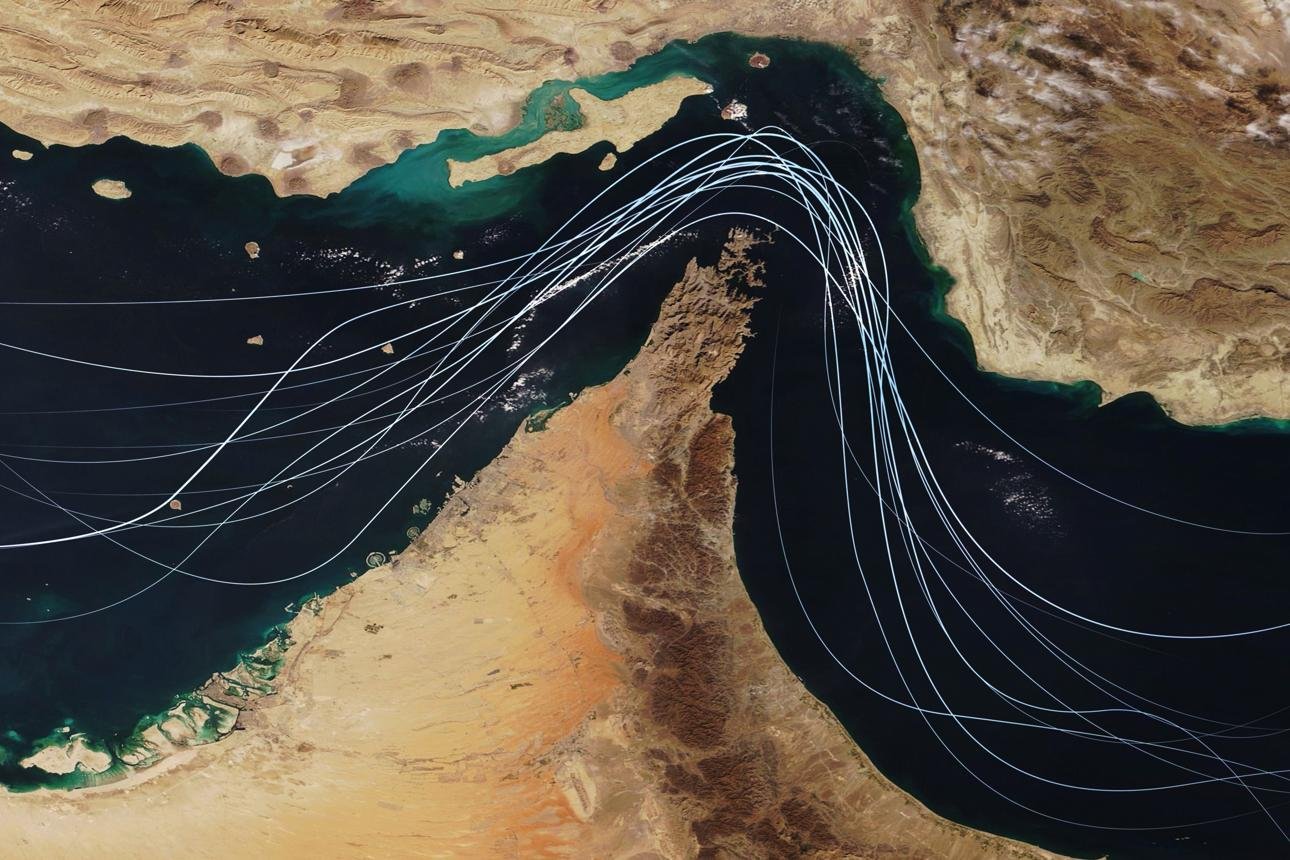
The Strait of Hormuz carries roughly a fifth of the world’s petroleum liquids consumption. That sounds significant, but not overwhelming. Yet when the strait comes under threat, global oil, gas, shipping and financial markets react as though a much larger share of the world’s energy supply has been cut off.
The apparent contradiction disappears once the numbers are viewed through the structure of the global energy system.
Hormuz is not simply a major shipping route. It is a concentrated chokepoint through which an unusually large share of internationally traded oil and gas must pass, with limited alternatives available if the route is disrupted. Its importance is therefore less about the percentage of global consumption it represents and more about how difficult that volume is to replace.
The numbers behind the chokepoint
The U.S. Energy Information Administration (EIA), using Vortexa tanker data to track major energy chokepoints, estimates that about 20 million barrels per day of oil moved through the Strait of Hormuz in 2024. That was equivalent to roughly 20% of global petroleum liquids consumption, with flows remaining broadly similar into the first quarter of 2025.
The International Energy Agency (IEA) places the 2025 average at about 20 million barrels per day of crude oil and oil products, reinforcing Hormuz’s position as one of the world’s most important oil transit chokepoints.
But consumption is not the most revealing denominator.
Nearly 15 million barrels per day of crude oil passed through Hormuz in 2025, equivalent to about 34% of global crude oil trade. In other words, Hormuz accounts for a relatively modest share of all oil consumed worldwide but a much larger share of the oil that is actually traded internationally.
That distinction is critical.
Countries producing oil for domestic consumption do not need to move those barrels through an international maritime chokepoint. But barrels destined for foreign markets do. Hormuz therefore sits at a critical junction between some of the world’s largest producers and some of its largest importers.
Asia is at the centre of that network. China, India and Japan are among the principal destinations for Hormuz oil, while China and India alone accounted for 44% of crude flows through the strait in 2025.
Why a 20% disruption can cause a much larger shock
The first vulnerability is concentration.
If 20% of global oil consumption were spread across dozens of independent routes with ample alternatives, losing part of that supply would be serious but potentially manageable. Hormuz is different. A large volume of energy passes through a narrow geographical corridor, creating a single point of failure.
The EIA has repeatedly identified Hormuz as the world’s most important oil chokepoint partly because there are few alternative ways to move the oil that normally passes through it.
The second vulnerability is limited bypass capacity.
Saudi Arabia’s East-West Pipeline and the United Arab Emirates’ Habshan-Fujairah pipeline provide alternative routes that can bypass the strait. But the IEA estimates their combined available capacity at roughly 3.5 million to 5.5 million barrels per day.
Against normal Hormuz flows of around 20 million barrels per day, that represents only a fraction of the oil that would need another route.
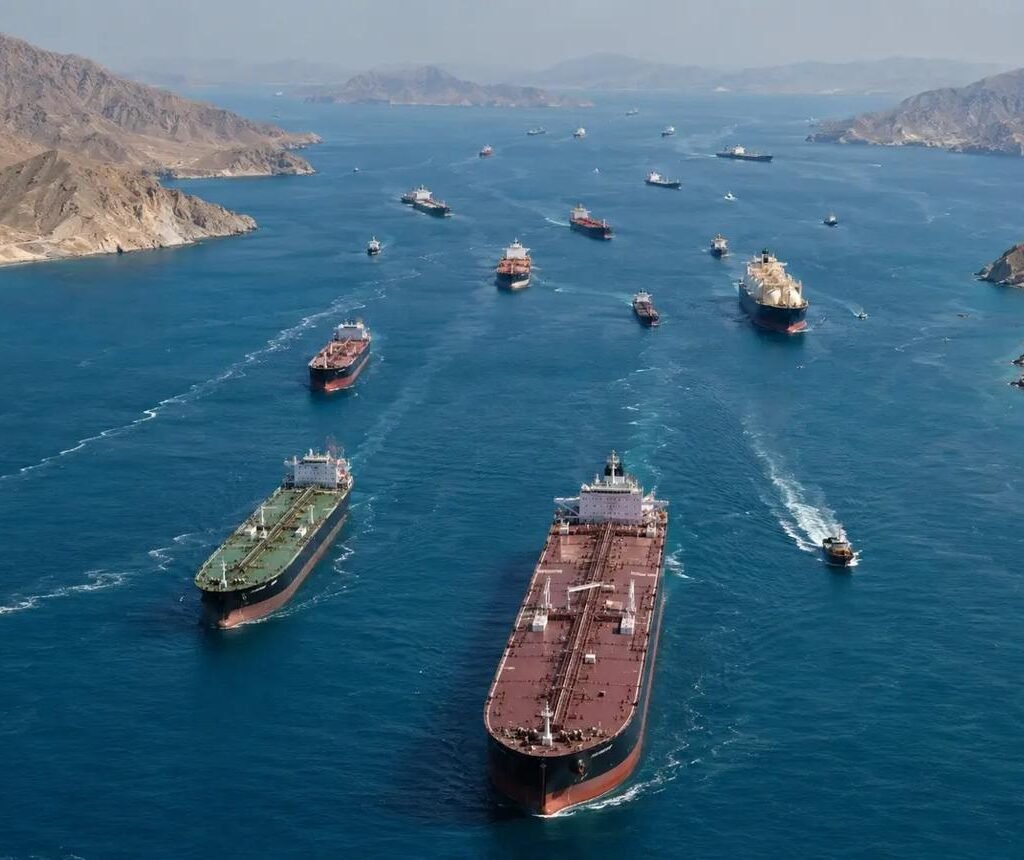
The difference between those two figures is where much of the market risk lies.
If Hormuz were suddenly unavailable, the world would not simply redirect 20 million barrels per day through another pipeline. A large portion would have to compete for alternative shipping routes, alternative suppliers and whatever spare production capacity remains available.
The spare-capacity problem
There is another vulnerability that is less obvious but potentially more consequential.
Much of the world’s spare oil production capacity is concentrated in the Gulf, particularly Saudi Arabia. The IEA has warned that a prolonged Hormuz disruption could therefore affect not only oil in transit but also the spare production capacity that markets normally rely on to cushion other supply shocks.
That creates a double exposure.
Hormuz is both a major route for existing supply and a gateway to much of the world’s emergency production buffer.
If the strait is disrupted, the market loses part of its normal supply while simultaneously losing access to some of the capacity that could have been used to replace it.
That is why the impact cannot be measured simply by comparing barrels lost with barrels consumed.
What the 2026 disruption shows
The 2026 conflict has turned that structural vulnerability into a live market problem.
The EIA’s Global Energy Security Data report found that crude oil and petroleum liquids moving through Hormuz fell almost 30% year over year to 14.6 million barrels per day in the first quarter of 2026, down from 20.4 million barrels per day a year earlier.
The report describes the strait as effectively closed by Iran since the conflict began, disrupting a route responsible for roughly 20% of global seaborne oil and LNG flows.
Shipping activity has also deteriorated sharply. AIS-based tracking recorded six confirmed crossings on August 9, compared with 15 on August 7 and 11 on August 8, illustrating how quickly commercial shipping can retreat when the security risk rises.
The market response has followed.
Brent crude moved toward $85 a barrel on August 10 as uncertainty over reopening intensified. The price response reflects not only barrels already lost but also the risk that the disruption could persist and that replacement supplies may prove expensive or insufficient.
Strategic reserves provide a buffer but not a complete solution
The crisis is also exposing differences in the world’s strategic stockpiles.
U.S. strategic petroleum reserves stood at about 413 million barrels at the end of the first quarter of 2026, compared with storage capacity of roughly 714 million barrels.
China held an estimated 1.541 billion barrels at the end of the same quarter, up from 1.397 billion barrels at the end of 2025.
Large inventories can provide time for governments and companies to adjust. But reserves do not solve the underlying logistical problem. Stored oil still has to be released, transported, refined and delivered to consumers, while replacement cargoes have to compete for available ships and alternative routes.
The existence of barrels in storage therefore does not make a chokepoint irrelevant. It changes how long the system can absorb the disruption.
LNG makes the problem broader than oil
Hormuz is also critical to the global gas market.
Qatar and the United Arab Emirates together account for close to a fifth of global LNG exports, and almost all of those exports pass through Hormuz.
That exposure is particularly significant because the LNG market has less spare capacity than the oil market. A major disruption can therefore tighten gas markets rapidly, pushing up prices for buyers far beyond the Gulf.
The consequences can extend beyond energy.
Higher gas prices can increase fertiliser production costs, while higher oil prices raise transport and production costs. Together, they can feed into food prices and broader inflation.
Why Uganda is exposed
Uganda does not depend directly on the Strait of Hormuz for its physical supply in the same way that major Asian importers do. But global energy markets do not need a country to be directly connected to the chokepoint for it to feel the consequences.
Uganda is a net fuel-importing economy. Higher international crude prices, shipping costs, insurance premiums and freight rates can eventually feed into domestic pump prices.
That increases the cost of transporting people and goods and raises operating costs for agriculture, construction, manufacturing and other businesses.
The transmission may therefore be indirect, but the economic effects can be widespread.
The real lesson is about redundancy
The central lesson of Hormuz is not that 20% of global oil consumption is somehow equivalent to 100%.
It is that volume and vulnerability are not the same thing.
A supply route can carry a minority share of global consumption while remaining indispensable if alternative routes are too small, alternative suppliers are limited and the world’s emergency production capacity sits behind the same chokepoint.
That is what makes Hormuz different from an ordinary shipping route.
The global energy system has been built largely around efficiency: producing commodities where they are cheapest, moving them along established routes and maintaining inventories and infrastructure at levels that make economic sense under normal conditions.
Security requires something different.
It requires redundancy alternative pipelines, diversified suppliers, strategic reserves, spare shipping capacity, LNG infrastructure and insurance mechanisms capable of absorbing major disruptions.
Those safeguards are expensive because they often sit idle when markets are functioning normally.
But the Hormuz crisis demonstrates their value when they are needed.
The strait was never merely a shipping lane carrying one-fifth of the world’s oil consumption. It is a critical seam in the global energy system where efficiency, concentration and security meet. The current disruption is revealing what happens when a system optimized for moving energy cheaply has too few alternatives when its most important route stops working.
