
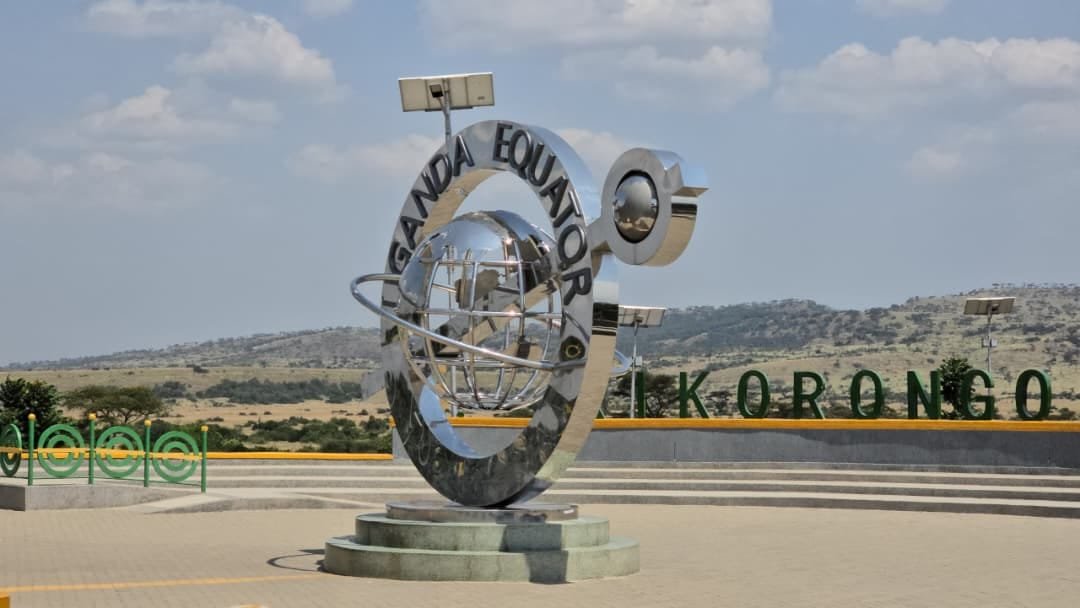
The Government of Uganda has launched construction of a UGX 9.7 billion redevelopment project at the Kikorongo Equator Monument in Kasese District, signaling a strategic shift in how the country intends to monetize one of its most recognizable geographical landmarks.
The groundbreaking, held between July 9 and July 11, 2026, marks the beginning of an ambitious 18-month project that will transform the iconic Equator crossing from a brief roadside stop into a modern tourism and commercial hub designed to generate greater economic value for local communities and the national tourism sector.
Located along the busy Mbarara–Kasese highway, the monument serves as a gateway for thousands of domestic and international visitors travelling to Queen Elizabeth National Park, one of Uganda’s premier wildlife destinations. Yet despite the steady flow of tourists, the site has historically captured only a fraction of its economic potential.
Most visitors spend no more than 15 to 30 minutes at the monument taking photographs, observing the famous water-flow demonstration, and purchasing few, if any, local products before continuing their journey. The result has been high visitor numbers but relatively low spending, limiting the site’s contribution to the surrounding economy.
The government’s latest investment seeks to change that.
Turning Transit Traffic into Tourism Revenue
Rather than viewing the Equator monument as simply a landmark, the Ministry of Tourism, Wildlife and Antiquities is repositioning it as a destination capable of generating sustained visitor spending.
The project will be implemented by Kwed Construction Limited on approximately 2.7 acres of land allocated by the Uganda Wildlife Authority (UWA).
Once completed, the new development will include:
- A modern Information and Interpretation Centre explaining the science of the Equator, the Rwenzori ecosystem, and western Uganda’s cultural heritage.
- Purpose-built museums focusing on geography, history, and regional culture.
- A restaurant and viewing deck overlooking the surrounding landscape.
- Modern craft markets providing organized retail space for local artisans.
- Expanded parking facilities and visitor amenities designed to accommodate larger tour groups and improve the overall visitor experience.
Collectively, these additions are intended to encourage travellers to spend several hours at the site instead of making a quick stop, creating new opportunities for spending on food, crafts, educational experiences, and tourism services.
A Strategic Investment in Uganda’s Tourism Economy
The redevelopment reflects a broader strategy to strengthen Uganda’s tourism value chain by increasing visitor expenditure beyond wildlife experiences alone.
Tourism has become one of Uganda’s most important foreign exchange earners, but many attractions outside national parks have struggled to convert visitor traffic into meaningful economic returns.
By expanding commercial facilities at Kikorongo, government hopes to create an integrated tourism ecosystem where travellers engage with local businesses before continuing to nearby destinations such as Queen Elizabeth National Park, the Rwenzori Mountains, and the Katwe Salt Lake.
The project also represents an effort to diversify Uganda’s tourism product.
While the country remains internationally recognised for mountain gorilla trekking and wildlife safaris, officials have increasingly promoted heritage tourism, cultural experiences, scientific attractions, and educational travel as additional growth areas capable of extending visitor stays and increasing overall tourism revenue.
Opportunities for Local Communities
Beyond attracting tourists, the redevelopment is expected to generate tangible economic benefits for communities in Kasese District and western Uganda.
During construction, the project is anticipated to create employment opportunities for local contractors, suppliers, and labourers. Once operational, the expanded facility will require workers across hospitality, facility management, maintenance, security, guiding services, retail operations, and administration.
The structured craft market is also expected to provide local artisans, women’s groups, and small businesses with formal retail space where they can sell handmade products directly to domestic and international visitors, replacing the informal roadside trading model that has long characterized the site.
This formalization has the potential to improve product quality, increase incomes, and strengthen local participation in Uganda’s growing tourism economy.
Government Emphasizes Long-Term Sustainability
Speaking during the groundbreaking ceremony, Minister of Tourism, Wildlife and Antiquities Tom Butime emphasized the importance of developing tourism infrastructure that delivers lasting economic returns rather than functioning solely as visitor attractions.
The Ministry has indicated that the project will be supported by long-term management frameworks, including public-private partnerships aimed at ensuring effective maintenance, sustainable operations, and continued investment after construction is complete.
According to officials, these governance arrangements are intended to avoid the deterioration that has affected many public tourism facilities over time while ensuring the monument continues generating value for surrounding communities.
Looking Ahead
Construction is expected to take approximately 18 months, with government urging the contractor to adhere strictly to the implementation schedule.
If delivered on time and managed to modern hospitality standards, the redeveloped Kikorongo Equator Monument could become far more than a symbolic line dividing the Northern and Southern Hemispheres.
Instead, it would stand as an example of how strategic infrastructure investment can transform a simple geographical landmark into a commercially viable tourism destination one that creates jobs, supports local enterprise, diversifies Uganda’s tourism offering, and captures more value from the millions of travellers already moving through one of the country’s busiest tourism corridors.
As Uganda continues investing in tourism infrastructure, the success of the Kikorongo project may well serve as a blueprint for revitalizing other heritage and cultural sites across the country, demonstrating that with the right facilities, management, and commercial vision, even a brief roadside stop can become a powerful driver of regional economic development.
