
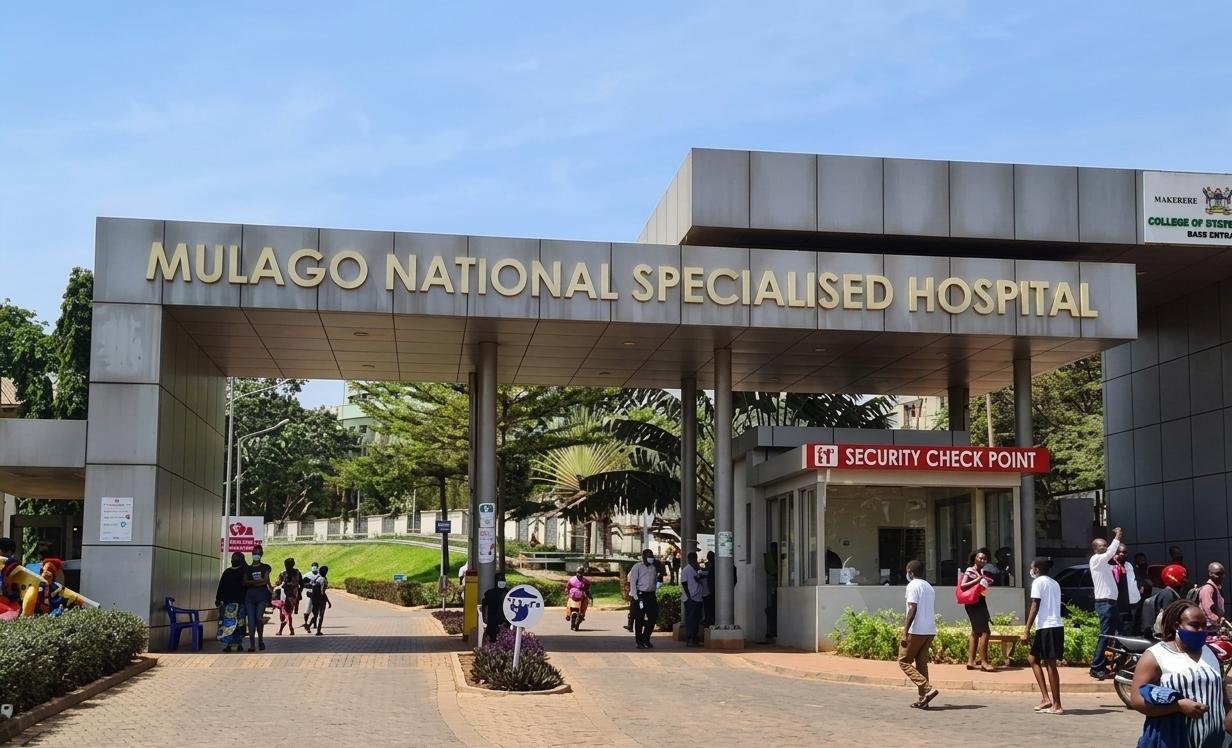
A major confrontation between public healthcare priorities and private commercial interests has erupted at Uganda’s biggest referral hospital, sending a strong message to investors, developers, and businesses operating on government land.
President Yoweri Kaguta Museveni has ordered the immediate eviction of private pharmaceutical operators from land belonging to Mulago National Referral Hospital, targeting a controversial pharmacy development that had occupied part of the hospital grounds.
At the center of the dispute is a 49-year lease on Kibuga Block 5, Plot 3531 along Dwaliro Road, reportedly issued by the Uganda Land Commission to businessman Brian Samuel Segawa. The land hosted Get Well Pharmacy, a private commercial operation that state investigators linked to broader retail pharmacy activities around the hospital complex.
Instead of allowing the structure to remain, President Museveni directed authorities to cancel the lease, demolish the building, and reopen an internal access road needed for the planned expansion of the Uganda Heart Institute.
The decision is more than a local land dispute. It signals a tougher government position on the use of public land for private commercial activity, especially in critical sectors like health, infrastructure, and education.
According to government accounts, the disputed land was originally acquired by the state between 1996 and 1998 under an African Development Bank-funded expansion project for Mulago Hospital. The land was intended to support parking space and access roads for the national referral facility.
However, over time, the original plot was subdivided and a fresh title was created under a long-term lease arrangement. Temporary structures gradually evolved into a permanent commercial pharmacy operation after approvals from planning authorities and legal processes.
President Museveni reportedly questioned how commercial developments were approved on land meant for a national referral hospital and ordered security agencies and anti-corruption investigators to examine the roles played by officials in land administration and hospital management.
“Public infrastructure is not for private capture.”
That appears to be the broader message emerging from the crackdown.
The move also exposes long-standing tensions between public hospitals and private pharmacies operating near or within government health facilities.
For years, critics have argued that patients seeking free or subsidized medicines supplied through the National Medical Stores are often redirected toward expensive private pharmacies located close to public hospitals.
Private operators defend themselves by arguing that they provide specialized medicines and products sometimes unavailable in government stores. But the government increasingly appears concerned that the close relationship between public facilities and private operators creates conflicts of interest and weakens public healthcare delivery.
By removing private pharmacy structures from Mulago land, the state is signaling a stronger push toward centralized and tightly controlled healthcare supply systems.
The implications extend far beyond healthcare.
For property developers, investors, and businesses involved in public-private partnerships, the Mulago decision changes the risk landscape around government land and public assets.
Holding a lease title or development permit may no longer be enough protection if the government later determines that the land is strategically important for national infrastructure or public service delivery.
The crackdown also suggests that authorities are likely to increase scrutiny of commercial projects operating on or near public institutions such as hospitals, universities, transport hubs, and parastatal land.
At the same time, the government’s decision to prioritize the expansion of the Uganda Heart Institute highlights a broader strategic direction.
Uganda is investing heavily in specialized medical infrastructure as part of efforts to reduce medical tourism and keep healthcare spending within the local economy. Expanding advanced treatment centers is increasingly viewed as both a public health priority and an economic strategy.
For the business community, the lesson is becoming clearer: Uganda still welcomes private investment, but the state is drawing firmer boundaries around strategic public assets.
Investors will now need deeper due diligence before committing capital to projects linked to public land or state institutions. Businesses must verify not only ownership documents and permits, but also the historical purpose, funding arrangements, and long-term strategic importance of the land involved.
The Mulago crackdown ultimately marks a wider policy shift. Uganda’s government appears determined to tighten control over sovereign assets, strengthen institutional discipline, and reduce what it sees as commercial encroachment into critical public service infrastructure.
For businesses, the era of relying on administrative loopholes and ambiguous public land arrangements may be rapidly coming to an end.
