
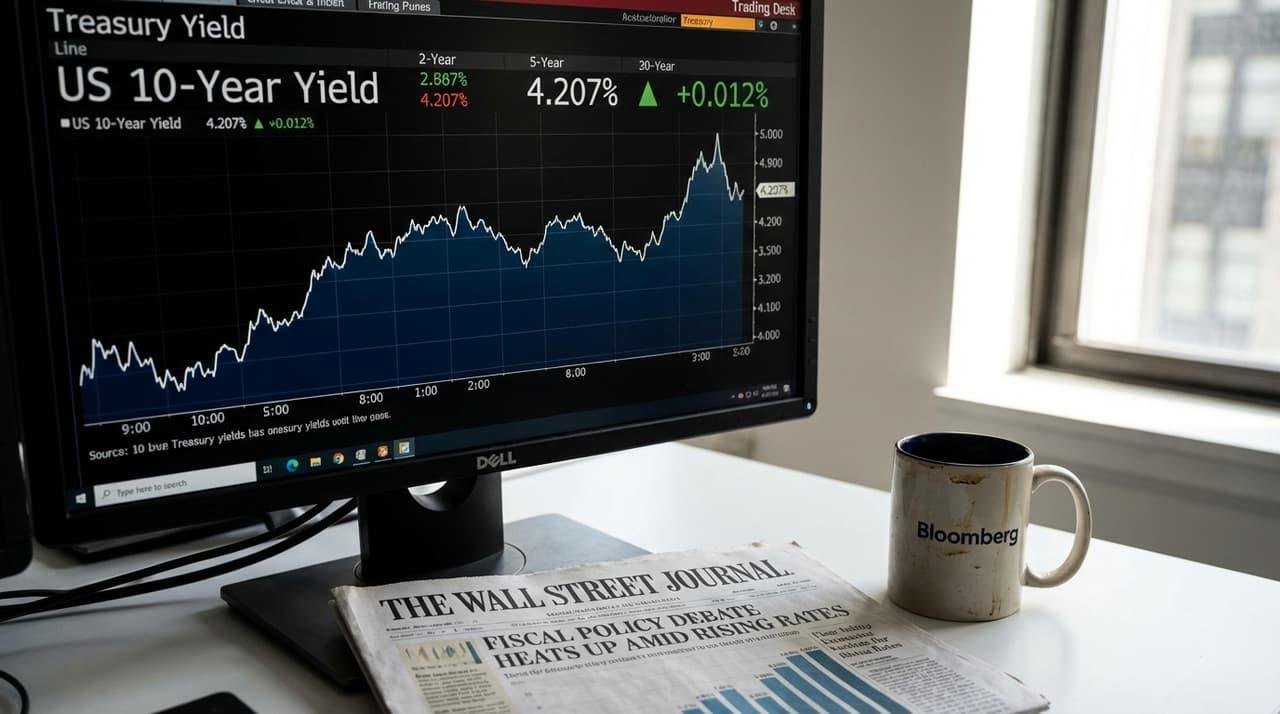
If your Ugandan business imports machinery, pays suppliers in dollars or carries dollar-denominated debt, a surge in U.S. borrowing costs has consequences far beyond Washington.
The yield on the U.S. 10-year Treasury note climbed to 5.342% on October 1, its highest level since early 2002, as a global bond sell-off pushed long-term borrowing costs sharply higher. The benchmark yield, which influences pricing across international credit markets, has since eased, but the move has changed the financing environment for businesses and investors far beyond the United States.
For companies in Uganda, the significance lies in how international borrowing costs feed into the price of dollar funding. Loans, supplier credit and trade finance linked to international markets are typically priced against a benchmark rate and then adjusted for the borrower’s risk. When the benchmark rises, the starting point for that pricing rises with it.
The effect is not necessarily immediate. A Ugandan company with a fixed-rate loan, for example, does not automatically see its interest bill change because the Treasury yield moved. The pressure becomes more relevant when businesses refinance existing debt, arrange new dollar facilities, negotiate supplier credit or compete for international capital.
The Treasury market’s latest move was part of a much broader rise in global borrowing costs. Britain’s 30-year government bond yield moved above 6% on October 1, reaching its highest level since 1998, while borrowing costs in France and Japan also climbed to multi-year or multi-decade highs. Reuters described the third quarter’s rise in U.S. 10-year yields as the largest quarterly increase of the 21st century.
Several forces have been pushing those yields higher.
Inflation remains one of them. Higher energy prices can feed into transport, manufacturing and other operating costs, making investors less confident that inflation will quickly return to central-bank targets. Brent crude moved back above $100 a barrel during the period, adding to those concerns.
Government borrowing is another factor. Large fiscal deficits require governments to issue more debt, increasing the supply of bonds that investors must absorb. Investors can demand higher yields when they perceive greater fiscal or inflation risk.
Corporate borrowing is adding another layer. The rapid expansion of artificial-intelligence infrastructure has prompted major technology companies to raise large amounts of debt, adding competition for available capital. Reuters has reported that borrowing by major technology companies has become an important feature of the current credit market.
The result is a more complicated financing environment for emerging markets.
U.S. Treasury securities are generally treated as a benchmark for global borrowing costs. When investors can earn more from relatively safe U.S. government debt, emerging-market assets have to offer returns that remain attractive relative to that benchmark and compensate investors for additional currency and country risks.
That does not mean money automatically leaves Uganda whenever U.S. yields rise. Capital decisions depend on several factors, including exchange rates, domestic interest rates, economic prospects and investor risk appetite. But higher U.S. yields can alter the relative attractiveness of emerging-market assets and make international funding more expensive.
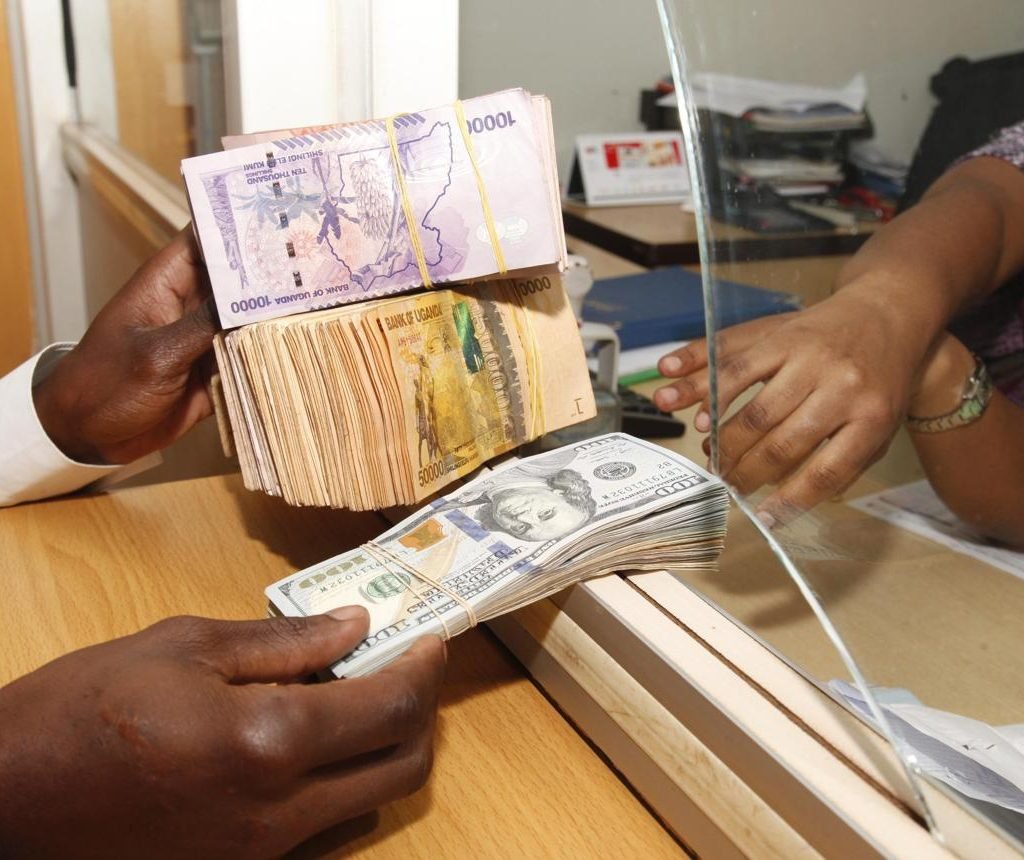
Currency markets can reinforce the pressure. The dollar strengthened during the recent global bond sell-off, with Reuters reporting that it reached a 17-month high against the euro on October 1. Higher U.S. yields can support demand for dollar assets, while rising oil prices can increase the dollar cost of imports for countries that rely heavily on imported energy and other goods.
For an importer in Uganda, the transmission mechanism can therefore operate through several channels at once.
A company purchasing equipment in dollars may face a higher financing cost if it borrows to fund the purchase. A manufacturer dependent on imported inputs can face a larger shilling bill if the dollar strengthens. A property developer arranging foreign-currency finance may find refinancing more expensive. A bank raising dollar funding internationally may also have to reassess the cost at which that money can ultimately be extended to customers.
The pressure, however, is not moving in only one direction.
The U.S. employment report released on October 2 was substantially weaker than economists had expected. Nonfarm payrolls increased by 29,000 in September, against a Reuters poll forecast of 90,000, while August’s figure was revised down to 133,000 from the previously reported 162,000. The unemployment rate rose to 4.2% from 4.1%.
Markets responded by pushing Treasury yields lower and reducing expectations of another Federal Reserve rate increase at its October meeting. The 10-year Treasury yield fell to about 5.205% after the employment figures were released.
That move illustrates why businesses should distinguish between a market shock and a permanent change in financing conditions.
The October 1 spike above 5.3% demonstrated how quickly long-term borrowing costs can move when investors reassess inflation, government borrowing and the economic outlook. The following day’s decline showed that yields can reverse when new economic information changes expectations about monetary policy.
For Ugandan businesses, the important issue is therefore not simply whether the U.S. 10-year yield remains above 5%. It is whether the combination of global borrowing costs, energy prices, exchange rates and investor expectations keeps the cost of dollar funding elevated.
A company with dollar revenues may have some protection against a stronger dollar, while one that earns primarily in shillings but services dollar debt has a different exposure. Businesses with fixed-rate financing face different risks from those that must regularly refinance. Importers, exporters, manufacturers and property developers will consequently experience the same global market move differently.
The immediate lesson from the bond sell-off is that international financial conditions can reach Ugandan businesses without any change in a local loan agreement or domestic policy announcement.
The U.S. 10-year Treasury yield may be set by a market thousands of kilometres away, but it remains one of the reference points against which the cost of money is assessed globally. For businesses in Uganda with dollar exposure, its movements are therefore not just Wall Street statistics. They are part of the financial backdrop against which the next loan, import order, refinancing decision or investment will be priced.
