
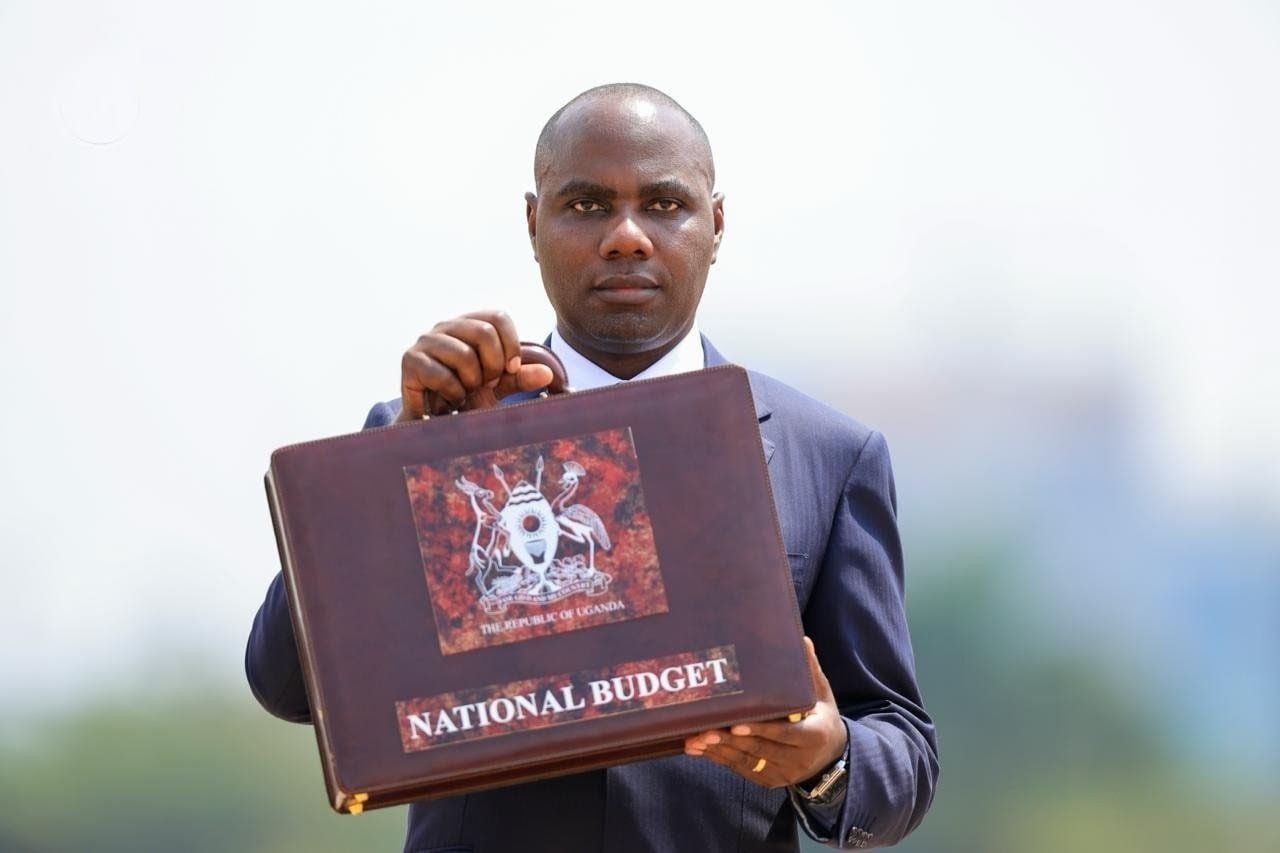
A record-breaking Shs 84.39 trillion budget has landed on Uganda’s table, but the real question is not how much money government plans to spend—it’s where that money is going and what it means for your pocket.
As Uganda positions itself for commercial oil production and pursues its ambition of becoming a more industrialized, middle-income economy, the FY 2026/2027 budget offers a revealing glimpse into the country’s priorities, challenges, and opportunities. From debt repayments and infrastructure projects to healthcare, education, and wealth creation programs, every allocation reflects a strategic choice about Uganda’s future. Understanding where the money is going helps explain how today’s budget decisions could shape tomorrow’s jobs, businesses, public services, and household incomes.
This is not merely a spending plan. It is a blueprint for Uganda’s next economic chapter.
The Biggest Budget in Uganda’s History
The government has approved a total resource envelope of Shs 84.39 trillion for FY 2026/2027, up significantly from Shs 72.38 trillion in the previous financial year.
The budget is anchored on a clear national objective: Full Monetisation of Uganda’s Economy. In simple terms, government wants more Ugandans participating in the formal, cash-based economy rather than surviving through subsistence activities.
Behind this ambition sits an even bigger target. Uganda is pursuing what President Museveni’s administration has termed the Tenfold Growth Strategy, an effort to expand the economy toward the equivalent of USD 500 billion over time through investments in Agro-industrialisation, Tourism Development, Mineral and Oil-Based Industrialisation, and Science, Technology and Innovation. Collectively known as the ATMS Strategy, these sectors are expected to become the primary engines of future growth, exports, employment creation, and household income expansion.
Where the Money Is Going
While the headline figure is Shs 84.39 trillion, the real story emerges when you examine how the national resource envelope is distributed across key sectors and government obligations. The allocations reveal a government focused on managing debt, investing in people, strengthening security, and building the infrastructure needed to support long-term economic growth.
| Sector / Programme | Allocation (Shs Trillion) | Share of Budget |
|---|---|---|
| Statutory & Fixed Obligations (Debt Servicing, Refinancing & Other Commitments) | 40.14 | 47.4% |
| Human Capital Development (Education, Health, Water & Social Protection) | 13.56 | 16.1% |
| Security, Governance & Rule of Law | 10.21 | 12.1% |
| Transport Infrastructure Development | 8.79 | 10.4% |
| Wealth Creation Programmes | 2.50 | 3.0% |
| Agro-Industrialisation | 2.26 | 2.7% |
| Sustainable Energy Development | 2.07 | 2.5% |
| Parliamentary Commission | 1.23 | 1.5% |
| Science, Technology & Digital Transformation | 1.10 | 1.3% |
| Manufacturing & Industrial Development | 1.03 | 1.2% |
| Tourism Development | 0.57 | 0.7% |
| Environmental Protection & Climate Adaptation | 0.49 | 0.6% |
| Mineral-Based Industrial Development | 0.44 | 0.5% |
| Total National Budget | 84.39 | 100% |
The table highlights one unavoidable reality: nearly half of the entire budget is already committed to statutory obligations, while the largest share of developmental spending is directed toward human capital, security, and infrastructure. Together, these three areas account for almost 40 percent of total budget resources and reveal where government believes the foundations of future growth will be built.
Uganda Is Betting Big on Growth
The economic backdrop to this budget is surprisingly strong.
Government estimates that Uganda’s economy will reach approximately Shs 250.4 trillion (USD 69.3 billion) by the end of June 2026.
Growth for FY 2025/2026 is estimated at 6.4 percent, but the real headline is what comes next.
With commercial oil production expected to begin later this year, Uganda is projecting economic growth of 10.2 percent in FY 2026/2027, the country’s first double-digit growth rate since the economic reforms of the 1990s.
Several indicators suggest momentum is already building. Export earnings reached a record USD 18.04 billion, while coffee exports alone generated USD 2.46 billion. Foreign exchange reserves increased to approximately USD 6 billion, inflation remained relatively stable at 3.8 percent, and Gross National Income per capita climbed to USD 1,389, placing Uganda above the lower-middle-income threshold.
The government’s argument is simple. If oil revenues, infrastructure investments, industrialization, and exports align successfully, Uganda could enter one of its fastest periods of economic expansion in decades.
The Real Story: Nearly Half the Budget Is Already Spoken For
Before discussing new roads, schools, hospitals, or wealth creation initiatives, one reality dominates this budget.
A staggering Shs 40.14 trillion, equivalent to 47.4 percent of the entire budget, has been allocated to statutory and fixed obligations.
This includes interest payments on existing government borrowing, debt servicing obligations, domestic debt refinancing, external debt amortization commitments, and a range of other mandatory financial expenditures that government must meet regardless of its development priorities.
Uganda’s public debt stood at approximately Shs 126.19 trillion (USD 34.86 billion) as of December 2025, representing about 53 percent of GDP.
In practical terms, nearly one out of every two shillings budgeted this year is committed before a single new classroom, health centre, road, or industrial park is funded.
That reality explains why government is simultaneously pursuing aggressive domestic revenue mobilisation and stricter expenditure controls.
The Human Capital Bet: Investing in People
If debt dominates the budget’s obligations, then Human Capital Development dominates its developmental ambitions.
The sector receives Shs 13.56 trillion, making it the largest development-focused allocation in the budget.
Within this allocation, Education, Skills Development and Sports receive Shs 6.66 trillion, while significant funding is also directed toward health services, water access, and social protection programmes.
One of the most politically significant announcements is the allocation of Shs 568.65 billion for salary enhancements targeting primary school teachers, arts teachers in secondary schools, and arts instructors in BTVET institutions.
Government has also released Shs 20 billion to private teachers’ unions to improve access to affordable credit, building on an earlier allocation of Shs 25 billion to Walimu SACCO structures.
For thousands of educators across the country, these measures represent one of the most direct personal income benefits contained within the budget.
The budget also sustains investments in sports infrastructure as Uganda prepares to co-host the 2027 Africa Cup of Nations, with construction and upgrading of key facilities remaining a national priority.
Turning Uganda from Landlocked to Land-Linked
If there is one sector that demonstrates government’s long-term economic thinking, it is transport infrastructure.
The sector receives Shs 8.79 trillion, making it one of the largest investment areas in the budget.
The flagship project remains the Standard Gauge Railway connecting Malaba to Kampala. Construction has officially commenced, and the projected impact is transformative.
Government estimates that once operational, container transportation costs from Mombasa to Kampala could fall from approximately USD 3,500 to USD 1,600, while transit times could be reduced from five days to just one day.
Lower transport costs are expected to make the movement of goods significantly cheaper, improve the competitiveness of local businesses, accelerate inventory turnover, and make Uganda a more attractive destination for both domestic and foreign investment.
Beyond the SGR, the budget also supports the continued capitalization of Uganda Airlines, upgrades to the national road network, construction of strategic bridges, rehabilitation of railway infrastructure, and expansion of aviation facilities that are critical to trade and tourism.
Meanwhile, Kabalega International Airport has been completed to support oil sector operations, while Phase One of the expansion of Entebbe International Airport has delivered new passenger and cargo handling facilities.
The Rise of Uganda’s New Economy
Perhaps the most fascinating part of the budget lies beyond roads and oil.
Government is increasingly backing sectors that barely featured in national economic conversations a decade ago.
Uganda is quietly building one of Africa’s most ambitious electric mobility ecosystems. The Kiira Motors Corporation vehicle plant in Jinja now has the capacity to produce 2,500 buses annually, including electric buses, motorcycles, and bicycles. More than 25,000 electric mobility units have already been produced locally, with local content reaching approximately 40 percent. The facility has already secured regional orders for hundreds of buses, demonstrating growing confidence in Uganda’s manufacturing capabilities.
The budget also highlights Uganda’s growing biotechnology and medical manufacturing industry. Microhaem Scientifics now records annual sales of approximately USD 75 million through the production of diagnostic kits for malaria, HIV/AIDS, and sickle cell disease. At the same time, Jena Herbals, known for developing Covidex, has expanded pharmaceutical manufacturing capacity through a new facility in Soroti.
The message is clear. Government wants Uganda exporting knowledge-intensive products, technology, and finished goods rather than simply exporting raw materials.
Wealth Creation: Taking Capital to the Village
Government continues to view household-level wealth creation as central to economic transformation.
A combined allocation exceeding Shs 4.7 trillion supports wealth creation programmes, agro-industrialisation, commercial agriculture, value addition, and productivity enhancement initiatives.
The Parish Development Model remains a central pillar of this strategy, alongside other interventions designed to improve access to capital, markets, and enterprise development opportunities.
The objective is straightforward. Move millions of households from subsistence production into commercial economic activity by expanding access to financing, productive assets, and market opportunities.
For farmers, cooperatives, and rural entrepreneurs, these remain some of the most consequential allocations in the budget.
The Quiet Revolution: Government Is Trying to Spend Smarter
Beyond the spending figures, some of the most important reforms are administrative.
In a surprising move, government has suspended state-funded celebrations for public holidays, excluding religious observances.
The symbolism matters.
The message is that scarce public resources should increasingly flow toward productive investment rather than ceremonial expenditure.
Even more significant is the introduction of Budget Discipline and Accountability Charters. Beginning in FY 2026/2027, Accounting Officers will be required to sign performance and accountability commitments, exposing them to administrative and legal consequences for planning failures, compliance breaches, and budget indiscipline.
If effectively enforced, this could become one of the most consequential governance reforms embedded within the budget.
Government is also continuing efforts to improve efficiency in the business environment. Following automation initiatives at the Uganda National Bureau of Standards, product import inspection turnaround times have reportedly fallen from three weeks to just four hours, while product testing periods have been reduced from thirty days to fourteen days.
Why Taxes Are Going Up
The debt burden and ambitious spending plans require revenue.
Government projects domestic revenue collections of Shs 45.6 trillion, a substantial increase from Shs 35.7 trillion in the previous financial year.
The broader objective is to ensure that Uganda increasingly finances its own development priorities through domestic resources rather than relying heavily on external borrowing.
To strengthen domestic resource mobilisation, Parliament approved several tax measures.
The environmental levy on imported used clothing has been increased from 15 percent to 30 percent. Government argues that the move will help protect local textile manufacturers while generating an additional Shs 40 billion in revenue.
Similarly, the tax on sports betting has been increased from 20 percent to 30 percent, with government expecting to generate approximately Shs 24 billion in additional revenue while harmonising taxation across gaming activities.
For businesses operating within these sectors, the effects will be immediate and significant.
Three Lessons Hidden Inside This Budget
When viewed as a whole, the FY 2026/2027 budget reveals three major lessons government appears to have learned.
The first is that administrative waste has a cost. The decision to reduce ceremonial spending and strengthen accountability frameworks reflects a recognition that efficiency matters just as much as revenue collection.
The second is that exporting raw materials is no longer viewed as a sustainable development strategy. The emphasis on manufacturing, electric mobility, biotechnology, agro-processing, and value addition reflects a deliberate effort to move Uganda higher up global value chains.
The third is that debt must produce assets. Government’s defence of public borrowing rests on a central argument: borrowed resources should finance productive infrastructure that lowers business costs, improves competitiveness, and creates future economic growth.
Whether that bet succeeds will largely determine how history judges this period of Uganda’s development journey.
The Final Verdict: Is This a Budget for You?
The FY 2026/2027 budget signals that Uganda is entering a defining economic moment.
Commercial oil production is approaching. Infrastructure investments are accelerating. Manufacturing capacity is expanding. Export earnings are rising. Government is pushing aggressively toward a more commercialized and productive economy.
The opportunities emerging from this budget are likely to be concentrated in agriculture and agro-processing, logistics and transport, manufacturing, technology and innovation, energy and infrastructure, tourism, and financial services, sectors receiving substantial public investment and policy support.
For teachers, entrepreneurs, investors, farmers, manufacturers, and young professionals, the message is increasingly clear. The economy government is trying to build will reward productivity, value addition, innovation, and scale.
The money is being allocated. The infrastructure is being built. The policies are being aligned.
The question is no longer whether Uganda’s economy is changing. The question is whether you are positioning yourself to benefit from that change.
