

Ugandan businessman Sudhir Ruparelia’s acquisition of the former UAP Insurance building on Kimathi Avenue has put a spotlight on a changing Kampala commercial property market and raised an immediate question: what will he do with it?
The property at Plot 1 Kimathi Avenue in Kampala’s Central Business District has changed hands from Old Mutual to Ruparelia for an undisclosed amount. It previously served as the headquarters of UAP Insurance before the insurer moved its operations to Nakawa Business Park in 2016. The deal adds another established CBD asset to the Ruparelia Group’s extensive real estate portfolio, which already includes developments such as Kingdom Kampala, Pearl Business Park and Windsor House, alongside other acquired buildings.
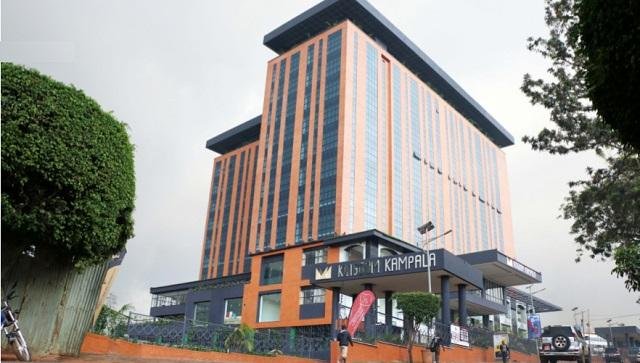
Ruparelia has not publicly disclosed his plans. That silence leaves several realistic options on the table: continued office use under new management, targeted refurbishment to meet current tenant standards, or a larger redevelopment that capitalises on the site’s prime location.
The timing of the purchase makes the decision particularly consequential. Kampala’s office market is increasingly split between modern, higher-quality buildings and older stock. According to Knight Frank Uganda’s latest Kampala property market review, Grade A office rents rose to about US$17 per square metre per month in the first half of 2026, up from US$16.50 in the same period of 2025. Grade AB rents, by contrast, slipped from US$14.50 to US$14. Occupancy tells a similar story: Grade A+/A buildings averaged 87% occupancy, against 83% for Grade AB properties. Businesses are relocating toward buildings that offer better facilities, efficient layouts, parking and professional management rather than expanding overall demand.
Much of the current activity is therefore relocation, not net growth. Older buildings with ageing infrastructure face longer vacancy periods. Landlords in the lower-grade segment are increasingly offering rent concessions, fit-out contributions and more flexible lease terms simply to hold on to tenants. More than 130,000 square metres of new office space remains in the development pipeline, intensifying competition for a limited pool of occupiers. In this environment, location still matters, but condition and functionality increasingly determine leasing success. Parking has become especially critical in a city where traffic congestion shapes commuting times and the practical accessibility of central locations.
The Kimathi Avenue property sits in one of Kampala’s most established commercial locations. Its proximity to Kampala Road, Parliament Avenue, financial institutions, government offices and other corporate premises gives it a clear location advantage. That advantage alone, however, may no longer be enough. The market data suggests that owners of older buildings who want to compete for corporate tenants will need to invest in refurbishment and repositioning.
Ruparelia’s recent track record offers clues about how he might approach the asset. In 2020, Meera Investments (associated with the Ruparelia Group) acquired Simbamanyo House on Lumumba Avenue for US$5 million after an Equity Bank auction and later renamed it Gender and Labour House. In 2024, Ruparelia and his wife Jyotsna acquired the 14-storey Lotis Towers in Nakasero following a dfcu Bank auction and renamed it Arie Towers. Both deals combined opportunistic acquisition of existing buildings in established commercial locations with subsequent rebranding and, in some cases, repositioning. The Kimathi Avenue purchase fits the same pattern of pairing new development with selective purchases of strategically located assets.
For Old Mutual, the sale forms part of a wider programme of reducing direct property exposure across East Africa. The group has previously indicated that some properties have delivered rental returns and capital appreciation below levels available from alternative investments. In September 2026, Old Mutual Holdings Group Chief Executive Officer Arthur Oginga confirmed the company was reviewing offers for properties in Uganda.
The next chapter for the former UAP building therefore rests with its new owner. Continued office use is the most straightforward path, but one that may require upgrades if the building is to command Grade A rents and occupancy. A more ambitious refurbishment or partial redevelopment could reposition the asset to meet the preferences of tenants who increasingly prioritise modern facilities, reliable services and adequate parking. A full redevelopment remains possible given the site’s central location, though that would involve greater capital commitment and a longer timeline.
Whatever course Ruparelia chooses, the decision will be watched closely. The transaction itself does not signal a broad recovery across Kampala’s office market. Instead, it reflects a more selective environment in which prime locations continue to attract investor interest while older properties face mounting pressure to adapt. For Ruparelia, the purchase strengthens his presence in Kampala’s traditional commercial centre and adds another high-profile asset whose future use will help illustrate how ownership, location and building quality are becoming tightly linked in the city’s evolving commercial real estate market.
