
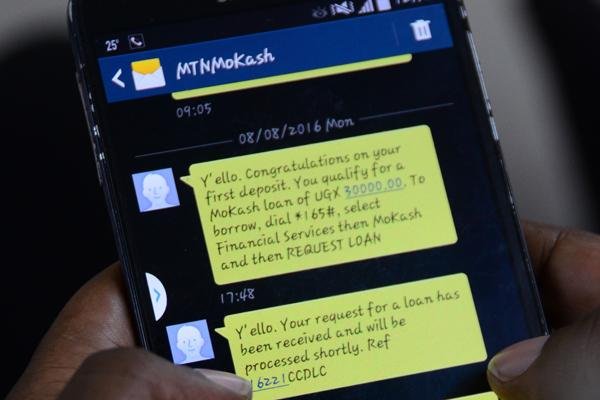
Borrowing has become a defining feature of Uganda’s economy. From digital loan apps and Savings and Credit Cooperative Organizations (SACCOs) to commercial banks and informal money lenders, access to credit has expanded rapidly over the past decade.
Yet behind this growth lies a deeper and more important question: Why does borrowing remain so expensive even as more financial institutions continue to enter the market?
The answer lies not only with households and businesses seeking loans, but also with the government’s growing appetite for domestic borrowing.
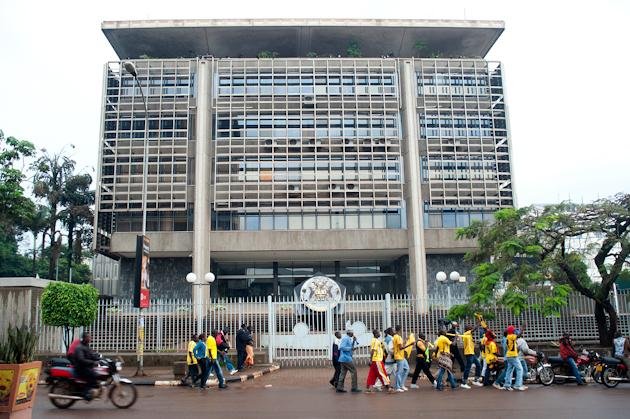
As Uganda finances major infrastructure projects, energy investments and recurring budget deficits, it has increasingly turned to the domestic financial market through Treasury Bills and Treasury Bonds issued by the Bank of Uganda.
For commercial banks, government securities represent one of the safest and most profitable investment opportunities available. Unlike private sector lending, where borrowers can default or businesses can fail, government securities carry minimal credit risk while offering attractive returns.
Recent auctions have seen 10-year Treasury Bonds yield around 16.25 percent, while 20-year bonds have offered yields as high as 18.50 percent. The government’s debt servicing burden is also rising rapidly. Interest payments on public debt are projected to consume 4.7 percent of Uganda’s Gross Domestic Product (GDP) in the 2025/26 financial year, up from 3.7 percent the previous year. Debt servicing is also expected to absorb 45.3 percent of domestic revenue, leaving less fiscal space for development spending.
This creates what economists describe as the “crowding out” effect. When commercial banks allocate a larger share of their capital to financing government debt, less money remains available for businesses and households. The loans that are available are priced higher to compensate for perceived risks, resulting in some of the highest commercial lending rates in the region.
Uganda’s small and medium-sized enterprises (SMEs), which account for more than 90 percent of private businesses and employ the majority of the country’s workforce, are among the biggest casualties of expensive credit.
Although the Bank of Uganda’s Central Bank Rate (CBR) has remained at 9.75 percent, the weighted average lending rate on shilling-denominated commercial loans stands at approximately 18.89 percent. Access to finance remains equally challenging. Recent Bank of Uganda data shows commercial banks approved only 64.7 percent of loan applications, meaning more than one in every three borrowers was denied credit.
For entrepreneurs, borrowing at interest rates approaching 20 percent means a business must generate exceptionally high returns simply to cover financing costs. Many enterprises postpone expansion, delay hiring or abandon investment plans altogether. Others are pushed toward SACCOs, supplier credit, microfinance institutions or informal money lenders that often charge even higher rates.
While businesses struggle to access affordable financing, household borrowing continues to expand.
Bank of Uganda data indicates that outstanding private sector credit has reached UGX 25.96 trillion, with personal and household loans accounting for the largest share of approved credit at 26.7 percent, equivalent to approximately UGX 533.2 billion.
Much of this borrowing supports education, housing improvements and small business activities. However, a growing portion finances emergency expenses, household consumption and short-term cash shortages rather than productive investments capable of generating future income.
Digital lending has accelerated this trend. Of the personal and household credit approved, UGX 163.2 billion was disbursed through digital and electronic money platforms. Mobile loan applications have significantly expanded financial inclusion by giving millions of Ugandans instant access to credit without visiting a bank.
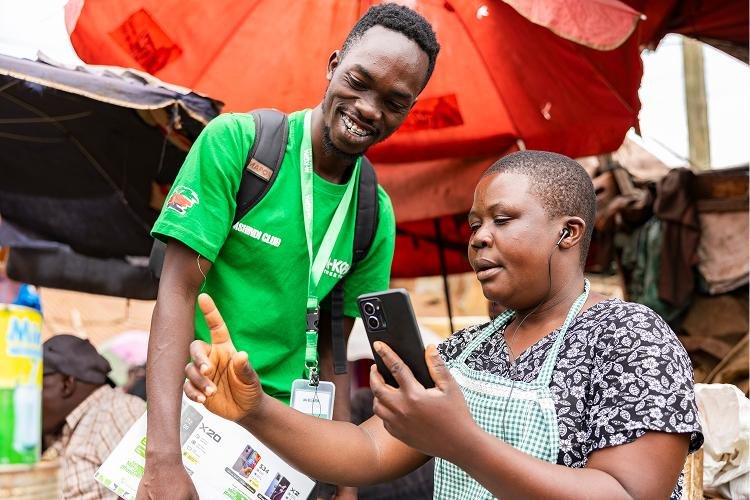
However, convenience comes with risks. Many digital lenders charge very high effective interest rates and encourage repeat borrowing. For lower-income households, loans intended as temporary financial relief can quickly become recurring obligations that trap borrowers in cycles of debt.
The continued expansion of SACCOs reflects both progress and shortcomings within Uganda’s financial system. For farmers, traders and small businesses that cannot satisfy commercial bank collateral requirements, SACCOs provide more accessible financing at relatively affordable rates. Their community-based lending model has enabled thousands of Ugandans to access credit that would otherwise remain out of reach.
Borrowing itself is not the problem. Every successful economy depends on credit to finance investment, expand production and create jobs. The greater challenge is ensuring that Uganda’s financial system channels sufficient capital toward productive sectors of the economy rather than concentrating it in government securities and short-term consumption.
Uganda is becoming a nation of borrowers not simply because more people are taking loans, but because debt has become central to how both government and the private sector finance growth. The challenge for policymakers is not to discourage borrowing, but to ensure that credit finances businesses, industries and investments capable of generating jobs, exports and higher incomes. Whether Uganda’s growing debt culture becomes an engine for prosperity or a drag on long-term growth will depend largely on how effectively the country’s financial system balances the needs of government with those of the productive private sector.
