
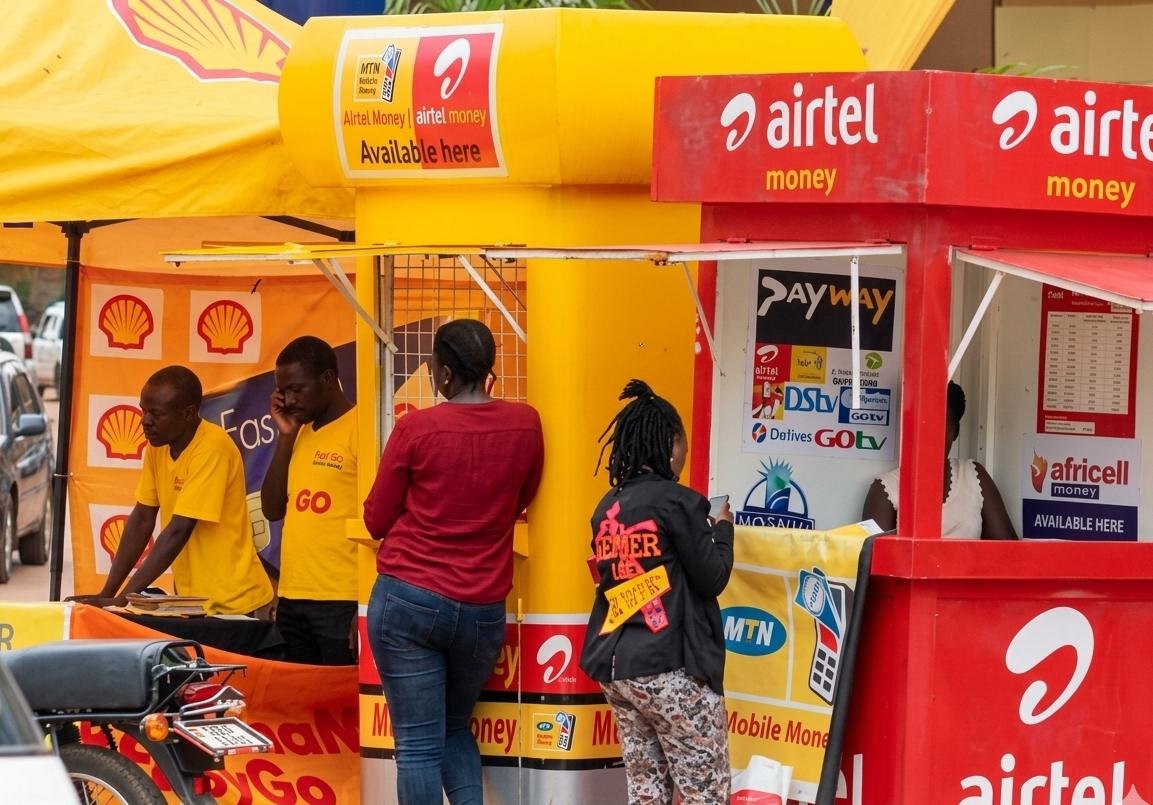
For years, Uganda’s mobile money revolution has been celebrated as one of Africa’s greatest financial inclusion success stories. From bustling city centers to remote rural trading hubs, mobile wallets have become the backbone of daily commerce, allowing millions to send, receive, save, and spend money with unprecedented convenience.
Yet beneath the impressive growth figures lies a surprising reality.
According to the latest Uganda Communications Commission (UCC) Market Performance Report for Q1 2026, Uganda now boasts 58.7 million registered mobile money accounts. However, only 36.7 million of those accounts were active within the standard 90-day measurement period.
That leaves a staggering 22 million mobile money accounts dormant.
At first glance, the numbers raise an alarming question: Has Uganda’s mobile money boom started to lose momentum?
The answer is more complex than it appears. The disappearance of 22 million active wallets is not simply a story of people abandoning digital finance. Instead, it reflects a major shift in consumer behavior driven by tighter regulations, anti-fraud measures, rising transaction costs, and changing technology habits.
Uganda’s Mobile Money Paradox
The numbers tell a fascinating story.
While registered mobile money subscriptions continue to rise, active usage has become increasingly concentrated among fewer accounts.
Many Ugandans who once maintained multiple SIM cards and mobile money wallets across different networks are now consolidating their financial activity onto a single primary line.
As a result, millions of secondary accounts have quietly slipped into dormancy.
In effect, Uganda’s mobile money ecosystem is becoming smaller in appearance but more focused in actual usage.
Why Did 22 Million Accounts Go Dark?
The End of the Multi-SIM Era
One of the biggest drivers behind dormant accounts is the strict enforcement of SIM card registration rules under the Regulation of Interception of Communications Act (RICA).
For years, it was common for consumers to own multiple SIM cards to take advantage of network-specific promotions, cheaper calling rates, or mobile money services.
However, enhanced biometric verification requirements linked to National Identification and Registration Authority (NIRA) records have made maintaining multiple lines more cumbersome.
Rather than update and verify every secondary SIM card, many users simply allowed extra lines to expire.
When those SIM cards became inactive, the mobile money wallets attached to them effectively died as well.
The Crackdown on Fraudulent SIM Cards
Uganda’s telecommunications sector has also undergone a significant cleanup exercise.
Authorities have intensified efforts to eliminate unregistered and fraudulently acquired SIM cards commonly used in mobile money scams, identity theft, and social engineering fraud.
Telecom operators have been under pressure to deactivate suspicious or unverifiable accounts to comply with regulatory requirements.
The result has been a healthier but smaller ecosystem.
Millions of dormant or questionable accounts have been removed from active circulation, contributing significantly to the 22-million-account gap.
Rising Costs Are Changing Consumer Behavior
Economic factors have played an equally important role.
Mobile money remains one of Uganda’s most widely used financial tools, but many consumers increasingly feel the impact of transaction fees and withdrawal charges.
According to the UCC report, the average peer-to-peer mobile money transaction costs around UGX 273, while the average transaction value is approximately UGX 100,690.
For households operating on tight budgets, maintaining multiple wallets across different networks often means paying multiple layers of transaction costs.
The rational response has been consolidation.
Instead of spreading money across several accounts, consumers are increasingly choosing one primary wallet and abandoning the rest.
A More Cost-Conscious Digital Consumer
The data also reveals a changing profile of Uganda’s digital user.
The average active customer performs only about two peer-to-peer mobile money transactions per month.
At the same time, smartphone adoption continues to expand rapidly, with approximately 20.3 million smartphones and 18 million active mobile internet subscriptions recorded during the quarter.
As smartphones become the dominant gateway to financial services, consumers are increasingly using integrated mobile banking apps and digital platforms that naturally favor a single SIM ecosystem.
The days of carrying multiple feature phones loaded with different network cards are gradually fading.
Is This a Good Thing or a Bad Thing?
The answer depends on how the data is interpreted.
The Bad News
The existence of 22 million dormant accounts highlights growing friction within Uganda’s digital financial ecosystem.
High transaction costs, withdrawal taxes, and cumbersome verification requirements can discourage active participation.
If digital finance becomes too expensive relative to cash, financial inclusion efforts may stall.
Some analysts fear that lower-income consumers are already reducing their use of digital financial services because of the associated costs.
“The massive gulf between registered wallets and active 90-day subscriptions is a classic macroeconomic indictment of transactional friction. When you overlay regressive excise taxes onto a developing market, you do not stop the consumer’s need for commerce, you simply shift their behavior. Ugandans are highly rational economic actors; they are actively optimizing their behavior by stripping away the luxury of secondary SIMs and consolidating their liquidity into a single primary channel.”
Lillian Akello, Sovereign Risk Analyst & Monetary Policy Consultant
Similarly, some economists argue that transaction fees disproportionately affect small-scale traders and rural communities.
“A baseline transaction cost of 273 shillings per transfer may appear nominal in a high-level policy brief, but to an informal micro-trader or a rural farmer, it represents an immediate hit to their daily margin. When you combine that with withdrawal levies, the digital wallet ceases to be a tool of financial empowerment and becomes an expensive storage unit. We are seeing a quiet but significant segment of the lower-income demographic revert to a cash-heavy posture for local daily commerce to preserve their purchasing power.”
Dr. Gerald Mukasa, Senior Macroeconomist, East African Development Analytics
The Good News
At the same time, the disappearance of millions of dormant accounts may actually strengthen the sector.
The cleanup reduces opportunities for fraud, identity theft, and mobile money scams that often rely on inactive or improperly registered SIM cards.
It also provides a more accurate picture of actual market activity.
For years, registered subscriber numbers were treated as indicators of market dominance. The latest figures suggest that active users, not total registrations, are the metric that truly matters.
The reduction in dormant accounts also lowers operational costs for telecom companies, allowing them to focus resources on serving active customers and expanding high-speed network infrastructure.
In many ways, the sector is becoming leaner, cleaner, and more efficient.
What Happens Next?
Recognizing the challenges, regulators have already begun discussions on possible reforms.
The UCC, Ministry of Finance, Uganda Revenue Authority (URA), and National Planning Authority (NPA) have held consultations examining ways to reduce barriers to digital adoption. Among the measures being considered are reviewing transaction taxes and mobile money levies, simplifying digital identity verification processes, expanding digital literacy programs, and improving access to secure and affordable financial services. The broader objective is to make digital financial services easier to use, less costly, and more attractive to ordinary Ugandans while maintaining the security and integrity of the ecosystem.
The Bottom Line
The 22 million dormant mobile money accounts are not evidence of a collapsing digital economy. Rather, they reflect a major transition in how Ugandans use financial technology.
Consumers are abandoning redundant SIM cards, consolidating their finances, responding to rising costs, and adapting to stricter regulatory requirements.
That makes the trend both a warning sign and a sign of maturity.
It is a warning because affordability remains a major obstacle to deeper financial inclusion. But it is also a sign of progress because a cleaner, more secure, and more efficient ecosystem is emerging.
The challenge for policymakers now is ensuring that the next phase of Uganda’s digital finance story is not just about registration numbers, but about meaningful, affordable, and active participation.
