
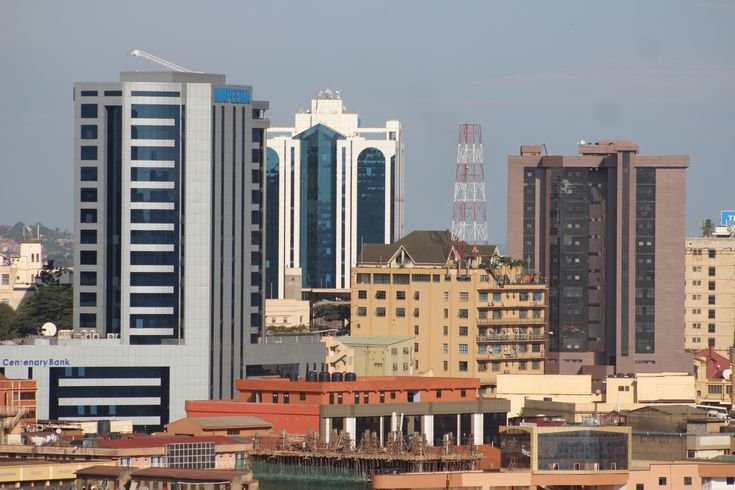
In Uganda today, inflation is no longer a single national experience; it has become a question of geography. The same fuel prices, the same harvest cycles, and the same national economic conditions are producing very different realities depending on where people live. In May 2026, this divide became more visible: while Uganda’s headline inflation stands at a moderate 3.2%, residents in Kampala High-Income areas and Masaka are facing 3.9%, compared to just 1.7% in Mbale.
What this means in practice is a growing imbalance in the cost of living. In some parts of the country, daily life is becoming noticeably more expensive, while in others, households are experiencing relative relief. The question is no longer whether inflation is rising nationally, but why it is hitting some regions far harder than others.
According to the Uganda Bureau of Statistics (UBOS), the slight rise in headline inflation from 3.0% to 3.2% was mainly driven by services at 4.6% and liquid energy fuels at 16.6%, pushing Energy, Fuel and Utilities inflation to 9.1%. However, these national figures hide a deeper divide beneath the surface, where urban and transport-dependent areas are absorbing far more pressure than less congested regions.
Kampala High-Income areas recorded inflation of 3.9%, driven largely by transport costs. Passenger transport services by road surged to 7.4%, reflecting how quickly fuel price increases feed into daily commuting expenses in the capital. With petrol up 16.6%, diesel up 21.5%, and kerosene up 25.4%, the impact is almost immediate in a city where movement is constant and transport demand is high. As a result, households in Kampala are spending more simply to move around the city, and these costs ripple quickly into overall living expenses.
Masaka tells a similar but structurally distinct story. Inflation there also reached 3.9%, with transport inflation climbing to 7.6%. As a key logistics and agricultural transit hub, Masaka is highly exposed to fuel-driven supply chain costs. Goods moving through the region face repeated transport markups, which are then passed into retail prices. This is compounded by rising costs in furnishings and household equipment, which increased to 2.4%, showing how transport inflation is spilling into everyday household consumption.
Mbale, on the other hand, offers a contrasting picture. Inflation there stood at just 1.7%, making it the most affordable monitored centre in the country. This relative stability is partly due to lower dependence on fuel-intensive transport systems and easing pressures in key service categories. Housing, utilities, and fuel-related costs slowed to 2.6%, while restaurants and accommodation services recorded a decline of -2.3%, reflecting softer consumer prices and lower operating costs compared to urban hubs in central Uganda.
At the national level, however, Uganda’s inflation remains contained because of a balancing act between rising fuel prices and falling food prices. Food crop inflation stayed extremely low at 0.2%, supported by a strong harvest driven by favorable rainfall conditions. Prices for key staples such as beans, sweet potatoes, sugar, and matooke all declined significantly, helping offset the inflationary pressure coming from transport and energy.
This creates a split reality across the country. Urban centres like Kampala and Masaka are more exposed to fuel-driven inflation because they depend heavily on transport networks and centralized supply chains. Every increase in diesel and petrol is quickly reflected in fares, logistics, and retail pricing. Rural and less transport-dependent towns, by contrast, benefit more directly from local food production and lower mobility costs, insulating them from the full impact of fuel shocks.
The concern among economists is that this balance may not last. While food prices are currently low, they reflect earlier production cycles that benefited from cheaper transport costs. Future harvests will increasingly carry the burden of today’s higher diesel prices. As fuel costs filter into farming, distribution, and logistics, food prices could begin to rise again, especially in high-demand urban markets like Kampala where transport costs strongly influence retail pricing.
Uganda’s inflation data for May 2026, therefore tells a deeper story than the national average suggests. Inflation is no longer evenly distributed across the country. Instead, it is increasingly shaped by geography, transport dependence, and supply chain exposure. Kampala and Masaka are feeling the pressure more intensely because they sit at the centre of Uganda’s fuel-driven economic network, while Mbale benefits from a more insulated cost structure.
Although national inflation remains moderate, the real picture is one of divergence. Uganda is gradually developing an uneven cost-of-living landscape where where you live is becoming just as important as how much you earn in determining how inflation is felt.
