
For years, Uganda’s technology story has been synonymous with Kampala.
The capital has dominated conversations around innovation, fintech, startup funding, digital infrastructure, and entrepreneurship. It became the natural home of incubators, venture capital conversations, government digital initiatives, and technology talent.
But a quiet shift is underway.
As Uganda pursues its ambitious vision of building a $500 billion economy by 2040 under the Fourth National Development Plan (NDPIV), the country’s digital transformation is increasingly moving beyond Kampala. Two regional cities Gulu in the north and Hoima in the west are emerging as powerful technology and innovation centers in their own right.
This is not simply a story of regional development. It is the beginning of a structural economic shift that could redefine where investment, innovation, and growth happen in Uganda over the next decade.
The rise of these cities is being driven by a combination of government policy, major infrastructure investments, university-led innovation, private sector participation, and international development support. Together, these forces are creating new technology ecosystems built around real economic activity rather than speculation.
At the heart of this transformation is Uganda’s Digital Transformation Roadmap and the broader NDPIV strategy. Government has recognized that achieving tenfold economic growth cannot happen if innovation remains concentrated in a single city. As a result, digital infrastructure investments are increasingly targeting regional centers.
The roadmap seeks to expand broadband access, digitize public services, and increase digital inclusion across the country. By 2040, Uganda aims to achieve widespread broadband coverage and significantly improve citizen access to online government services.
One example is the Shs4 billion Service Uganda Centre under development in Gulu. The facility is designed to bring key government services closer to businesses and citizens, allowing entrepreneurs to register companies, process tax requirements, and access public services without traveling to Kampala.
For businesses, this means lower costs, faster service delivery, and fewer bureaucratic barriers. More importantly, it signals a broader shift in how economic development is being distributed across the country. Technology ecosystems rarely emerge in isolation. They typically develop around major economic activity.
That is exactly what is happening in Hoima and Gulu.
Hoima’s rise is closely linked to Uganda’s oil and gas industry. The city sits at the center of the Albertine region, where billions of dollars are being invested in oil production, refining, logistics, and industrial infrastructure. The development of the Kabalega Petrochemical Industrial Park, the planned 60,000-barrel-per-day refinery, and the nearly completed Kabalega International Airport are creating demand for sophisticated technology solutions.
Oil companies, contractors, suppliers, and logistics providers increasingly require digital systems for compliance monitoring, supply-chain management, financial transactions, environmental reporting, and asset tracking. This has created opportunities for fintech firms, geospatial technology companies, logistics software providers, and industrial technology startups.
Unlike consumer-focused startup ecosystems, Hoima’s technology growth is anchored in business-to-business solutions serving large industrial clients.
The commercial opportunities are significant. Companies that provide supply-chain financing, contractor payroll systems, escrow services, environmental monitoring platforms, Geographic Information Systems (GIS), and industrial analytics are entering a market with strong demand and long-term growth potential.
Gulu’s story is different, but equally compelling.
As Northern Uganda’s commercial gateway and a strategic link to South Sudan and eastern Democratic Republic of Congo, Gulu is positioned at the intersection of agriculture, trade, and logistics. The expansion of National Backbone Infrastructure fiber connectivity into the region has strengthened internet access and created the foundation for technology-enabled commerce.
Agriculture remains the dominant economic activity in Northern Uganda, and the region’s innovation ecosystem reflects that reality.
Rather than building generic applications, entrepreneurs are increasingly focused on solving practical agricultural challenges through technology.
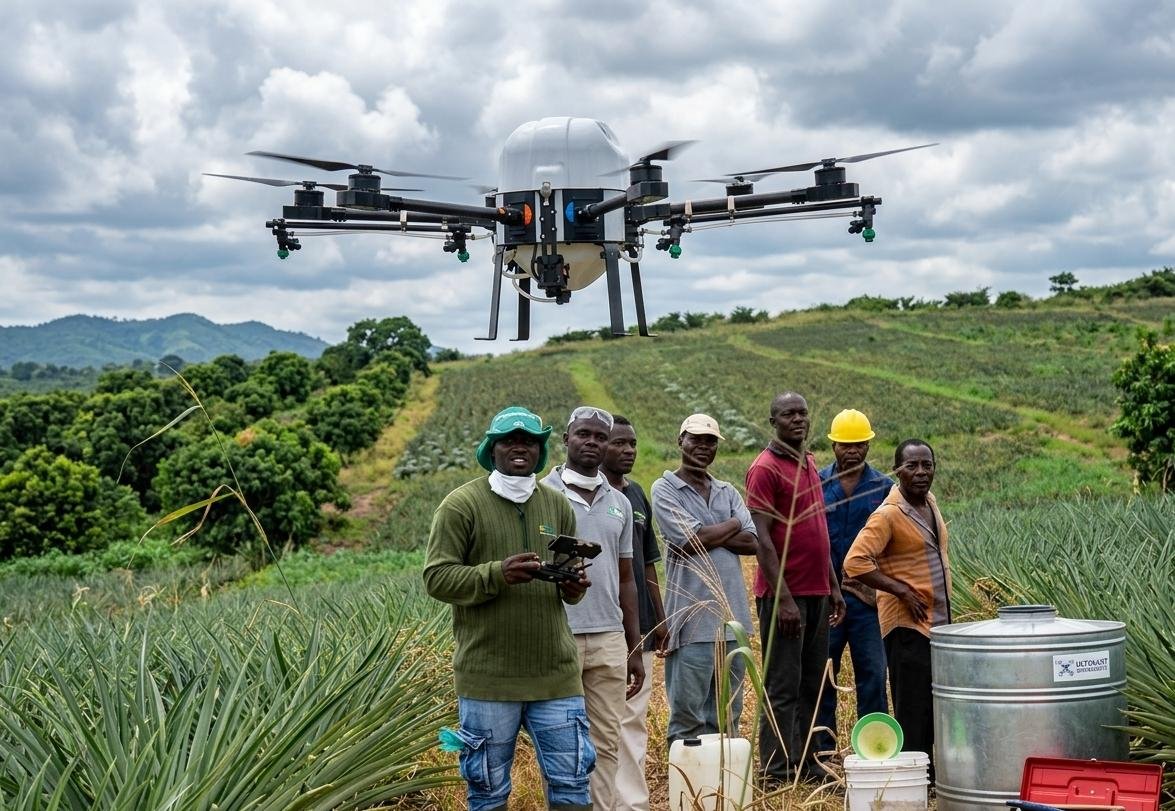
Digital marketplaces connecting farmers to buyers, climate-smart agricultural solutions, weather forecasting tools, post-harvest management systems, and digital financial services are becoming increasingly relevant.
As cross-border trade grows, demand is also increasing for cargo-tracking platforms, customs management software, logistics technology, and digital trade solutions.
The result is an ecosystem built around real economic demand rather than technology for its own sake. One of the most interesting aspects of Uganda’s regional technology transformation is the role of universities.
In many global innovation hubs, startups emerge from private sector research laboratories or venture-backed accelerators.
In Gulu and Hoima, universities are increasingly serving as the primary engines of innovation. Gulu University has become a central player through initiatives such as TAGDev 2.0, implemented in partnership with RUFORUM and the Mastercard Foundation.
The programme combines entrepreneurship, agriculture, technology, and climate resilience, encouraging students to develop commercially viable solutions to local challenges.
Researchers and student innovators are developing climate-adaptive seed varieties, livestock health innovations, food processing technologies, and digital agricultural tools designed specifically for local markets.
This approach creates a powerful innovation cycle:
Research → Development Support → Entrepreneurship → Commercialization → Market Impact
Because these innovations are rooted in real economic needs, they often have clearer pathways to commercialization than many traditional startup concepts.
For investors, the emergence of Hoima and Gulu presents a fundamentally different opportunity from Kampala. The capital’s technology ecosystem has matured considerably over the past decade. While that growth has created opportunities, it has also increased competition and raised customer acquisition costs.
Regional hubs offer a different proposition.
They provide access to underserved markets, lower operating costs, and economic ecosystems anchored by agriculture, energy, trade, and industrial development.
In Hoima, investors can tap into technology solutions linked directly to the oil and gas value chain.
The opportunity lies in industrial fintech, supply-chain digitization, contractor financing, asset tracking, compliance management, GIS platforms, and environmental monitoring systems serving major energy and infrastructure projects.
In Gulu, opportunities exist in agritech, logistics, trade facilitation, and digital financial services.
Investors backing digital produce marketplaces, climate-smart farming platforms, agricultural insurance products, and cross-border logistics software stand to benefit from a growing regional economy and expanding trade corridors into South Sudan and the wider East African market.
For decades, talented graduates from regions such as Northern Uganda and Bunyoro often felt compelled to relocate to Kampala in search of opportunity.
That pattern is beginning to change. As innovation ecosystems develop locally, more young professionals can build careers, launch businesses, and create wealth within their own communities.
This reduces pressure on Kampala while strengthening regional economies.
It also expands access to digital opportunities for women, youth, and underserved populations who may not have the resources to relocate to major urban centers.
The impact on public service delivery is equally important.
Digital government centers, improved connectivity, and localized innovation reduce the cost and complexity of doing business, making it easier for entrepreneurs to operate formally and participate in the broader economy.
The decentralization of Uganda’s technology ecosystem is no longer a future possibility. It is already happening.
Hoima and Gulu are demonstrating that successful innovation ecosystems do not emerge simply because technology companies decide to relocate. They emerge when infrastructure, investment, talent, policy, and economic demand align.
In Hoima, that alignment is being driven by oil, industrialization, and infrastructure development.
In Gulu, it is being powered by agriculture, trade, education, and digital public services.
For investors, corporate leaders, and policymakers, the message is increasingly clear.
The next chapter of Uganda’s digital economy may not be written in Kampala alone.
It may well be written in the oil fields of the Albertine region, the classrooms of Gulu University, the logistics corridors connecting East Africa, and the regional cities that are quietly becoming the engines of Uganda’s economic transformation.
Those who recognize that shift early may find themselves positioned at the center of one of East Africa’s most important emerging technology frontiers.
The bottom line: The decentralization of Uganda’s Silicon Savanna is no longer a speculative trend it is a live economic reality. Hoima and Gulu are proving that the future of innovation in Uganda will be built not only by technology, but by the industries, infrastructure, and communities that technology empowers.
