
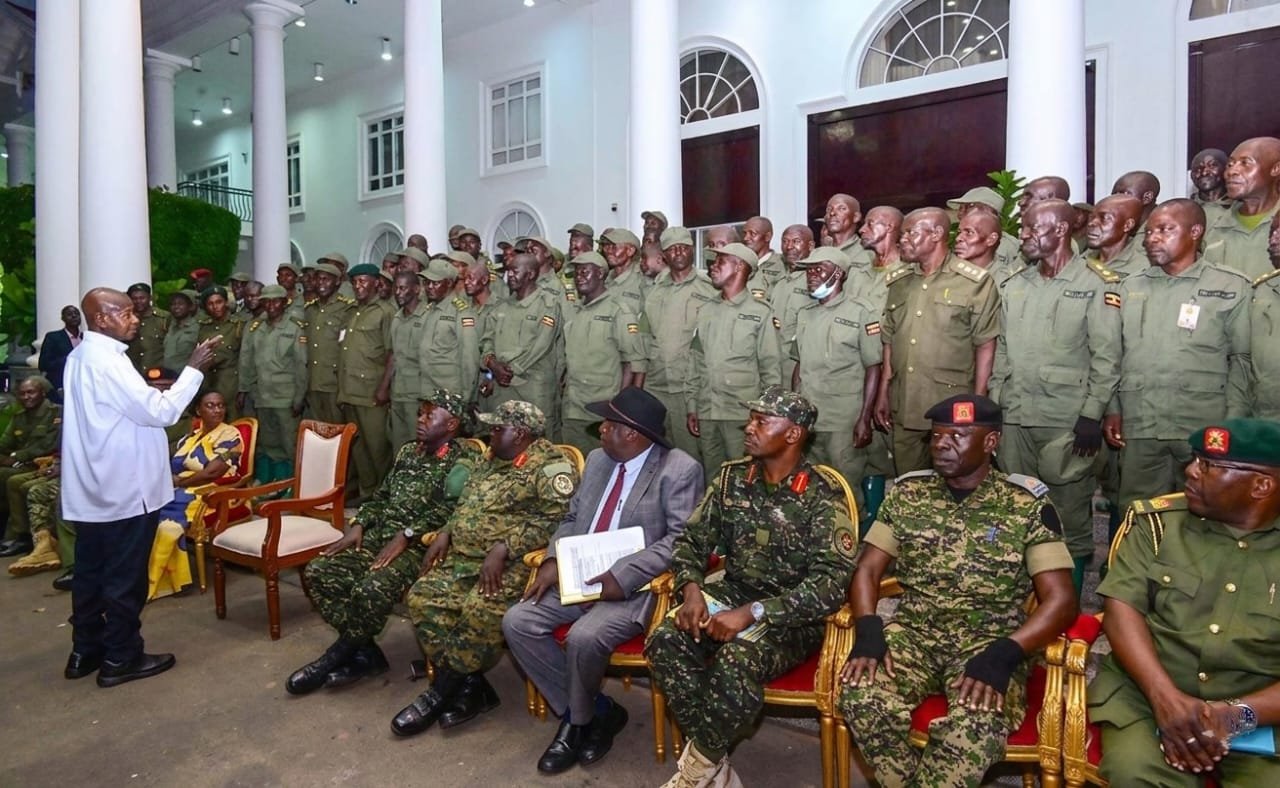
President Yoweri Kaguta Museveni has ordered a sweeping investigation into the management and distribution of Shs231 billion allocated as “Akasiimo,” a token of appreciation and ex gratia payment for Uganda’s war veterans, particularly those who fought in the liberation struggles that brought the National Resistance Movement (NRM) to power in 1986.
Speaking during Heroes’ Day commemorations at State Lodge Nakasero on June 9, 2026, the President expressed frustration that, despite the Treasury releasing the funds over multiple financial years, thousands of genuine, often aging veterans continue to live in hardship without receiving their rightful packages. He directed a full audit involving the State House Anti-Corruption Unit and intelligence agencies to trace the disbursement trail and establish accountability.
“The money was released to ensure our veterans live a life of dignity, not to enrich a few individuals in offices. We are going to probe this entire allocation. Where did it go?”
The President further described the Akasiimo as a sacred obligation owed to those who sacrificed for Uganda’s peace and stability.
The Shs231 billion was intended to provide financial recognition to NRA veterans and other contributors to the bush war effort. Earlier government commitments included one-time payments such as Shs5 million to veteran leaders and Shs1 million to supporters. However, allegations of ghost beneficiaries, bureaucratic delays, weak accountability mechanisms, and possible leakages have continued to undermine the programme.
Reports indicate that the President questioned how such substantial allocations could have been released over several financial years while many veterans still report receiving nothing.
“The Akasiimo is a sacred obligation to those who shed blood for the peace and stability Uganda enjoys today.”
The latest probe also comes against the backdrop of broader government efforts aimed at improving veterans’ welfare through wealth creation programmes, healthcare support, and poverty alleviation initiatives, even as inefficiencies in service delivery remain a concern.
For businesses and society, this development goes beyond an internal accountability exercise. It touches the core of public trust, national cohesion, and efficient resource management in a constrained economy. Veterans remain a significant constituency whose welfare influences rural stability, security, and confidence in state institutions.
Failure to deliver on longstanding commitments risks weakening the social contract that has underpinned Uganda’s post-liberation political settlement. At the same time, strengthening accountability in the use of public funds could improve efficiency and ensure that limited resources deliver real impact.
A credible investigation would also reinforce confidence in government oversight and anti-corruption systems, signaling that public funds, regardless of political sensitivity, remain subject to scrutiny. This is particularly important in a country pursuing economic transformation and wealth creation, where every public expenditure is expected to deliver measurable value.
The societal implications are equally significant. Properly supporting veterans acknowledges their contribution to national stability while addressing persistent poverty among former fighters and their families. Many live in rural communities where improved financial support can have wider economic benefits.
The issue also raises deeper questions about beneficiary verification, digital payment systems, record management, and institutional accountability. As government continues to adopt technology-driven service delivery, the veterans’ compensation programme could serve as a key test case for reform.
However, challenges remain. The investigation must be thorough enough to uncover any wrongdoing while moving quickly to avoid further delays in payments to deserving beneficiaries. Political sensitivities, historical records, and the complexity of veteran claims may complicate the process.
Looking ahead, the situation presents an opportunity to strengthen veteran support systems through transparent, technology-enabled mechanisms integrated with broader national development programmes. Such reforms could improve delivery while reducing risks of mismanagement.
For businesses, improved accountability could also open opportunities in sectors such as healthcare, financial services, agriculture, and community development aimed at supporting veterans and their households.
Ultimately, the probe ordered by President Museveni underscores a simple governance principle: public funds must serve their intended purpose. How the investigation unfolds will determine not only whether veterans receive what they are owed, but also whether Uganda can strengthen trust in the institutions responsible for delivering on national promises.
