
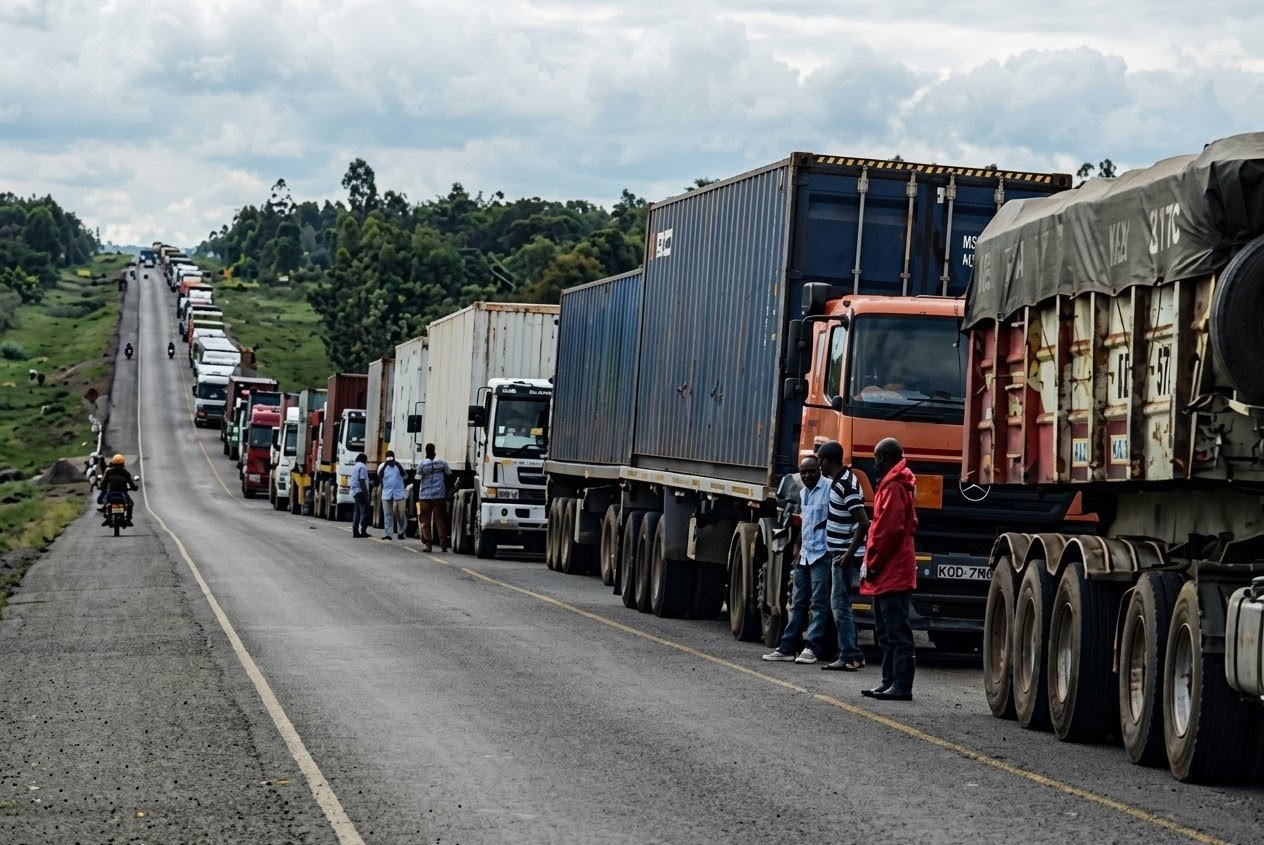
At the busy border crossings of Malaba and Busia, East Africa’s vision of a borderless market often grinds to a halt.
Truck drivers wait for hours under the equatorial sun as customs paperwork moves between desks. Freight forwarders navigate changing product standards, additional inspections, and compliance requirements that can emerge with little warning. For businesses moving goods across the region, these delays are more than administrative inconveniences. They are costs that directly affect profitability, competitiveness, and investment decisions.
The economic consequences are now visible in Uganda’s latest trade data.
According to the Ministry of Finance’s May 2026 Performance of the Economy Report, Uganda’s trade deficit with East African Community (EAC) partner states widened dramatically to USD 438.07 million in April 2026, up from USD 107.29 million during the same month a year earlier. The 308 percent expansion marks one of the sharpest deteriorations in Uganda’s regional trade position in recent years.
Yet the deficit tells only part of the story.
Beneath the headline figures lies a remarkable economic paradox. While Uganda’s regional trade position has weakened significantly, the broader economy continues to show signs of resilience. Economic growth remains strong, private sector credit continues to expand, and export earnings from strategic commodities are reshaping the country’s balance sheet.
The widening deficit reflects a growing imbalance within the regional bloc. Imports from EAC partner states surged to USD 730.04 million in April, while Uganda’s exports grew by only 1.77 percent. What was briefly a USD 41.52 million regional trade surplus in January 2026 has been completely erased by a flood of imports and persistent barriers facing Ugandan exporters.
The anatomy of the deficit reveals where the pressure is coming from.
Tanzania accounted for Uganda’s largest bilateral trade gap. Imports from Tanzania reached USD 185.82 million in April, while Ugandan exports totaled just USD 9.95 million, resulting in a deficit of USD 175.87 million.
Kenya remained the second-largest source of imbalance. Uganda imported goods worth USD 164.43 million from Kenya but exported only USD 52.87 million, producing a trade gap of USD 111.56 million.
These figures stand in sharp contrast to Uganda’s performance in newer frontier markets. Trade with the Democratic Republic of Congo generated a surplus of USD 74.22 million, while South Sudan delivered a surplus of USD 49.18 million. The numbers suggest Uganda is increasingly relying on emerging regional markets to offset losses from its largest traditional trading partners.
For many businesses, the problem is not competitiveness but market access.
Non-tariff barriers continue to create uncertainty across regional supply chains. Administrative inspections, changing certification requirements, customs delays, and compliance bottlenecks increase costs and disrupt delivery schedules. For agricultural exporters handling perishable products, even a short delay can turn an entire shipment into a loss.
The impact extends beyond exporters. Manufacturers are forced to hold larger inventories, increase warehousing capacity, and allocate more working capital to manage uncertainty. The result is higher operating costs that ultimately erode competitiveness across the entire value chain.
Yet even as regional trade becomes more difficult, domestic economic activity continues to strengthen.
The Bank of Uganda maintained the Central Bank Rate at 9.75 percent in April despite growing global uncertainty. More significantly, private sector credit expanded by 1.8 percent month-on-month to Shs 26.43 trillion, supported by lower lending rates and improving asset quality within the banking sector.
The Ugandan shilling also appreciated by 0.4 percent against the US dollar during the month, averaging Shs 3,716.7 per dollar. This stabilization came despite the widening regional trade deficit and reflected stronger foreign exchange inflows from exports and remittances.
Perhaps the most striking development is the transformation occurring within Uganda’s export basket.
Gold has emerged as the country’s most powerful economic shield.
According to the Ministry of Finance report, gold export earnings surged by 87.1 percent year-on-year to USD 866.10 million in April 2026, up from USD 462.86 million a year earlier. Rising geopolitical tensions and global demand for safe-haven assets pushed international gold prices higher, creating a windfall for Uganda’s refining and export industry.
Ironically, part of Uganda’s trade deficit with neighboring countries is linked to this success. Uganda increasingly imports raw gold and related mineral products from regional suppliers for refining and re-export, inflating import figures while simultaneously generating record export earnings.
The result is a paradoxical situation where the same trade relationships contributing to regional deficits are also supporting one of Uganda’s fastest-growing export sectors.
At the same time, the country’s traditional export champion is facing mounting pressure.
Coffee export earnings fell to USD 150.81 million in April 2026 from USD 214.38 million a year earlier. Export volumes declined from 687,299 bags to 591,687 bags, while international prices softened amid supply recoveries in major producing countries including Vietnam, Indonesia, and Ethiopia.
The divergence between booming gold exports and weakening coffee performance highlights a deeper structural shift in Uganda’s economy. As traditional agricultural exports face global competition and price volatility, mineral exports are becoming increasingly important sources of foreign exchange earnings.
This transition is occurring against a backdrop of growing regional trade tensions.
For investors, the question is no longer whether East Africa has the potential to function as a unified market. The question is whether the region can translate treaty commitments into practical commercial reality.
The latest trade figures suggest the challenge facing the EAC is no longer policy design but policy execution. Businesses can only invest confidently when market access is predictable, border procedures are transparent, and regional commitments are consistently enforced.
The USD 438 million trade deficit is therefore more than a trade statistic. It is a measure of the growing gap between the promise of East African integration and the reality businesses encounter every day.
Uganda’s economy is proving remarkably resilient. Banks are extending credit, gold exports are booming, and growth remains strong. But the longer non-tariff barriers persist, the more difficult it becomes for businesses to fully capitalize on the regional market they were promised.
Until the EAC enforces its own rules with greater consistency, the dream of a seamless East African marketplace risks remaining exactly that: a dream financed by exporters who are increasingly paying the cost of an integration project that has yet to fully arrive.
