
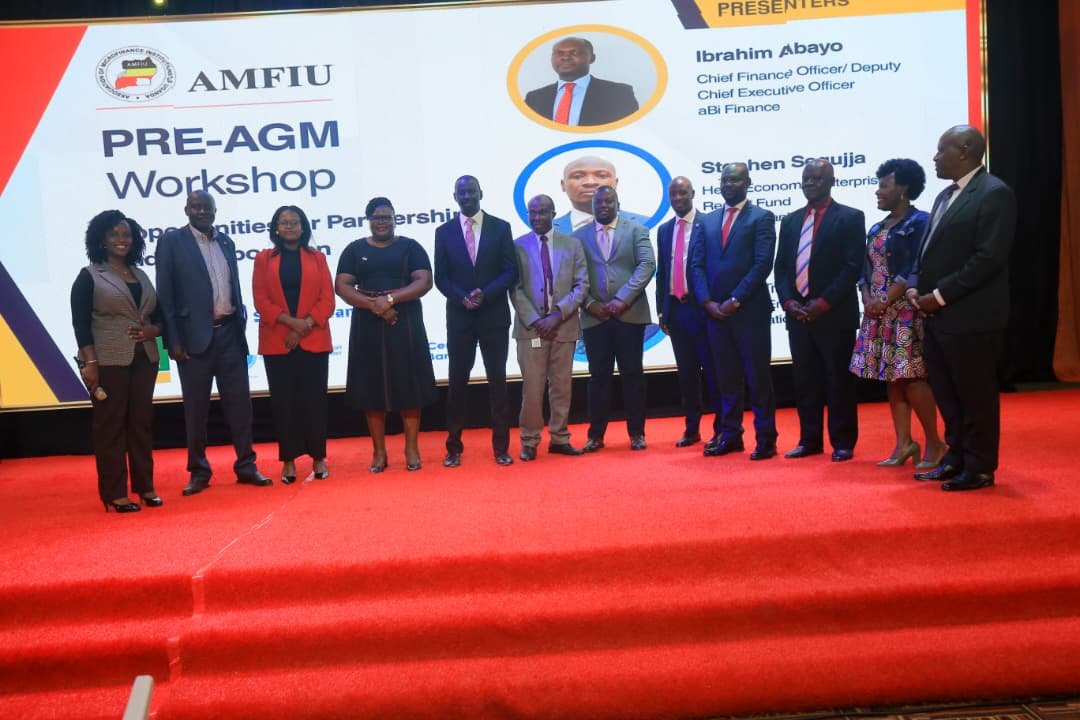
Stanbic Bank Uganda has reduced its lending rate for agriculture-based Savings and Credit Cooperative Organizations (SACCOs) to 10 percent per annum, deepening its push to expand affordable financing to rural communities after extending more than UGX 362 billion through SACCOs and Village Savings and Loan Associations (VSLAs) since 2021.
The announcement was made during the 28th Annual General Meeting (AGM) of the Association of Microfinance Institutions of Uganda (AMFIU), where the bank revealed that its partnership with community financial institutions has reached nearly four million Ugandans, the majority of whom are smallholder farmers.
Speaking at the AGM, Stephen Segujja, Head of the Economic Enterprise Restart Fund at Stanbic Bank, said financial inclusion goes far beyond providing bank accounts and credit facilities.
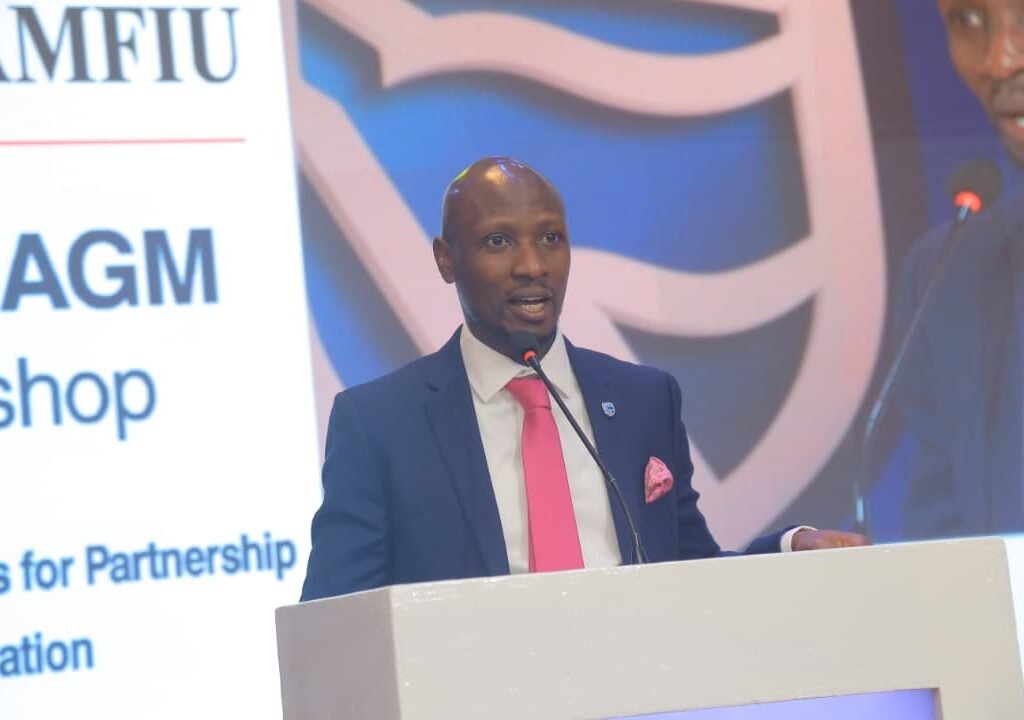
“We believe that financial inclusion is not simply about opening accounts or providing loans. It’s about creating opportunities. It is about enabling a farmer to increase productivity, a woman entrepreneur to expand her business, a young person to pursue their ambitions, and families to build resilience and prosperity. This is why our partnership with AMFIU remains so important. Together, we share a common vision of building an inclusive financial system that leaves no Ugandan behind.”
The initiative forms part of Stanbic’s Women, Youth and Farmers (WYF) agenda, backed by a UGX 1 trillion investment commitment aimed at increasing access to finance, improving agricultural productivity, strengthening businesses and accelerating financial inclusion across Uganda.
Segujja said the bank’s engagement with SACCOs and VSLs has grown significantly over the past five years.
“At the start of 2021, as a bank we barely had any business to talk about regarding SACCOs and VSLs, but through strong partnerships with members here we have seen a very significant shift in the way we look at SACCOs and VSLs, as well as women, farmers and youth. That impact has been demonstrated not only within Stanbic Bank but across the banking sector.”
According to Stanbic, more than UGX 362 billion has been channelled through SACCOs and VSLs since 2021, enabling nearly four million Ugandans to access financial services while approximately 780,000 members have directly received credit through community-based financial institutions.
To deepen access to affordable financing, the bank announced preferential lending rates for SACCOs, with agriculture-based institutions receiving the most competitive pricing.
“We understand that SACCOs need affordable capital to serve their members effectively. That’s why we’ve dropped our lending rates specifically for agriculture-based SACCOs to 10 percent per annum. We believe that is the lowest in the market. We are not only lending to SACCOs and VSLs, but we are also now lending to microfinance institutions.”
Stanbic said agriculture SACCOs will access financing at 10 percent, while multi-purpose SACCOs will borrow at 12.5 percent, with individual institutions eligible for loans of up to UGX 7 billion.
“If you’re agriculture-based, your lending rate is 10 percent and if you’re multi-purpose, it is 12.5 percent. These funds can go up to seven billion shillings per SACCO, and these investments are generating significant productivity. Their impact has been felt on a national scale and speaks to the power of targeted financing combined with strategic partnerships.”
Beyond financing, Stanbic is investing in the digital transformation of community financial institutions to improve efficiency and expand access to financial services.
“Digitization is becoming increasingly important. Stanbic Bank is working with SACCOs to adopt digital solutions that improve efficiency, transparency and customer experience. We’ve been working with partners like aBi Finance to provide grants to SACCOs to digitize them. Additionally, we are using our FlexiPay platform to digitize their members to ensure that we reach as many people as possible.”
The bank also disclosed that its partnership programmes have trained more than 35,000 women leaders and farmer representatives in governance, financial management and leadership, strengthening institutional capacity across Uganda’s community financial sector.
AMFIU Board President James Onyutta said microfinance institutions continue to play a central role in expanding financial inclusion and supporting enterprise development.
“The microfinance sector continues to play a pivotal role in advancing financial inclusion, supporting enterprise growth and improving livelihoods across Uganda.”
He added that despite a changing economic environment, AMFIU’s member institutions have remained resilient.
“Despite the evolving economic environment, our member institutions continue to demonstrate remarkable resilience and commitment to serving millions of Ugandans, particularly low-income households, microenterprises, vulnerable groups that could otherwise be excluded from the formal financial sector and rural communities.”
Founded in 1996, AMFIU has grown into Uganda’s umbrella body for the microfinance industry and now represents 204 member institutions, including SACCOs, non-deposit-taking microfinance institutions, Microfinance Deposit-taking Institutions (MDIs), commercial banks operating in the microfinance space, development partners, wholesale lenders, consultants and academic institutions.
Representing the Ministry of Finance, Planning and Economic Development, Commissioner for Financial Services Moses Ogwapus commended AMFIU for its contribution to Uganda’s financial inclusion agenda.
“Your work has enabled millions of Ugandans, particularly women, farmers and entrepreneurs, to access opportunities that were once beyond their reach.”
Stanbic said its long-term objective is to strengthen the capacity of SACCOs, VSLs and microfinance institutions to extend affordable credit deeper into underserved communities, reinforcing their role as the primary gateway to formal financial services for millions of Ugandans.
