
The Ugandan government has released Shs23.03 trillion for the first quarter of the 2026/27 financial year, representing 27% of the approved national budget, as it projects the country’s economy to expand by 10.2% on the back of anticipated first oil production and continued public investment.
The release, announced by the Ministry of Finance, Planning and Economic Development on Friday, marks the government’s first major fiscal commitment of the new financial year and signals confidence in Uganda’s macroeconomic outlook despite ongoing global economic uncertainties.
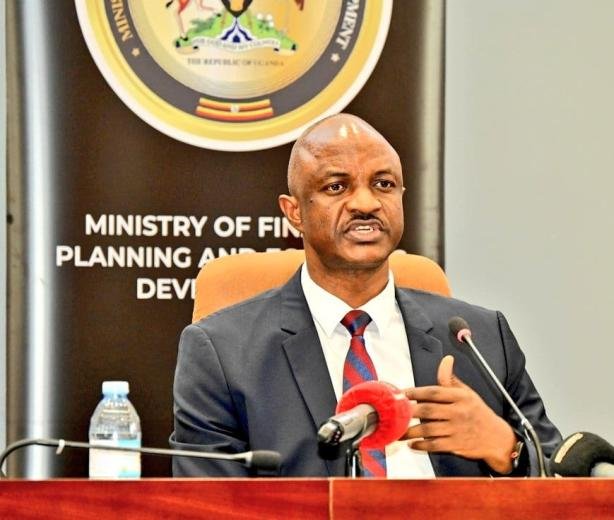
Speaking during the budget release at the Ministry headquarters in Kampala, Permanent Secretary and Secretary to the Treasury Ramathan Ggoobi said Uganda begins the financial year from a position of economic stability.
“Uganda enters FY2026/27 from a position of macroeconomic strength. Growth is accelerating, inflation is under control, the shilling remains strong, and exports have hit record numbers,” Ggoobi said.
He added that the quarter-one expenditure limits had been carefully aligned with expected cash inflows to preserve fiscal sustainability while supporting government priorities.
The government projects real GDP growth of 10.2% during the financial year, a significant jump from the 6.4% recorded in FY2025/26. The projected expansion is expected to be driven primarily by the commencement of commercial oil production, alongside continued investments in infrastructure and implementation of the government’s Tenfold Growth Strategy.
Nominal GDP is forecast to reach Shs287.23 trillion, equivalent to approximately $75.7 billion, while GDP per capita is projected to increase to $1,505.1 from $1,420 in the previous financial year.
Uganda’s macroeconomic indicators continue to paint a positive picture. Inflation averaged 3.3% during FY2025/26 and rose slightly to 3.7% in June 2026 following higher global oil prices linked to tensions in the Middle East. However, it remains comfortably below the Bank of Uganda’s 5% target.
The Ugandan shilling appreciated by 1.9% against the US dollar between May and June 2026, making it the strongest-performing currency within the East African Community during the period.
Foreign exchange reserves also strengthened to $6.01 billion, providing four months of import cover. Record export earnings of $18.04 billion and diaspora remittances totaling $2.8 billion contributed to a Balance of Payments surplus of $2.47 billion, the largest recorded in 15 years.
Debt Service Takes the Largest Share
Although the first-quarter release totals Shs23.03 trillion, a substantial portion has been allocated to mandatory government obligations.
Debt servicing and Treasury operations account for Shs10.83 trillion, nearly half of the total release. Government also allocated Shs2.46 trillion for wages and salaries, while pension and gratuity payments will receive Shs566.44 billion.
Parliament has been allocated Shs355.27 billion, while the Judiciary will receive Shs51.12 billion.
Infrastructure and Strategic Investments
Infrastructure remains one of government’s largest spending priorities.
The Ministry of Works and Transport received Shs1.53 trillion, including counterpart funding for strategic projects such as the Standard Gauge Railway, Uganda Airlines and Uganda Railways.
The Energy and Mineral Development sector received Shs609.4 billion to expand electricity transmission infrastructure and accelerate rural electrification.
In the health sector, the Ministry of Health has been allocated Shs325.11 billion, while the National Medical Stores will receive Shs284.7 billion to procure essential medicines and medical supplies.
Specialized health institutions, including the Uganda Cancer Institute and Uganda Heart Institute, have been allocated Shs191.5 billion. The National Council of Sports received Shs103.83 billion to support sports development, including preparations for the 2027 Africa Cup of Nations.
Funding the Tenfold Growth Strategy
Government also directed funding toward the key pillars of its ATMS strategy—Agro-industrialisation, Tourism, Mineral Development, and Science, Technology and Innovation.
Science, Technology and Innovation received Shs377.9 billion to support digitisation initiatives and expansion of internet connectivity.
Agro-industrialisation has been allocated Shs289.6 billion for agricultural research, innovation and value addition.
Tourism development received Shs65.6 billion to strengthen destination marketing under the Explore Uganda campaign.
Meanwhile, Shs50 billion has been allocated to the Uganda National Oil Company and the Petroleum Authority of Uganda to support activities leading to first oil production.
Treasury Tightens Budget Discipline
Alongside the budget release, the Ministry unveiled a new Budget Discipline and Accountability Charter aimed at improving public financial management and reducing wasteful expenditure.
The Treasury announced five mandatory rules that will apply to all Ministries, Departments, Agencies and Local Governments.
Under the new framework:
- Government entities will not be allowed to commit expenditure without an approved budget.
- Supplementary budgets will only be approved under exceptional circumstances involving genuine national emergencies.
- Accounting officers who accumulate domestic arrears risk dismissal.
- Projects without completed feasibility studies will not receive funding.
- Recruitment into public service will only be permitted where wage provisions already exist.
“Every shilling released this quarter is intended to accelerate growth while preserving fiscal discipline. Violations will attract severe sanctions,” Ggoobi warned.
The Treasury also announced additional austerity measures. Following a presidential directive, government-funded public celebrations on national holidays have been discontinued, except for religious holidays. Counterpart funding for donor-supported projects will now be managed centrally through the Treasury to minimise implementation delays.
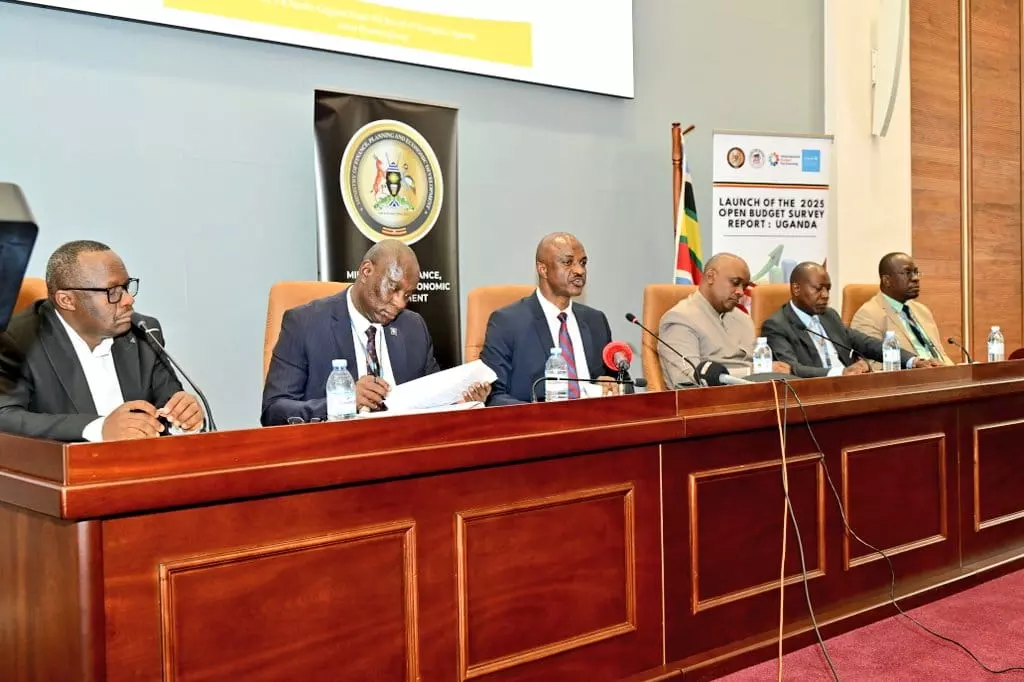
Open Budget Survey 2025 Launched
The Ministry also launched the Open Budget Survey 2025, highlighting Uganda’s progress in improving budget transparency and public participation since the introduction of citizen budget tracking initiatives in 2013.
Ggoobi acknowledged the contribution of development partners, including the International Budget Partnership, Uganda Debt Network and UNICEF, in strengthening accountability and public oversight of government finances.
Outlook
The first-quarter budget release sets the fiscal direction for what government expects to be a transformative financial year.
The anticipated commencement of commercial oil production has raised expectations of faster economic growth, increased exports and higher government revenues. At the same time, sustained investment in infrastructure, energy, agriculture and technology is intended to support private sector expansion and improve long-term productivity.
However, the allocation also underscores the continued pressure of public debt, with debt servicing consuming the largest share of quarterly expenditure. Whether the projected 10.2% economic growth materialises will depend not only on the successful delivery of first oil but also on disciplined implementation of public investment projects, efficient absorption of released funds and sustained fiscal accountability.
As Uganda enters what could become one of its most significant economic transitions in decades, the effectiveness with which these resources are managed will ultimately determine whether the country’s ambitious growth targets translate into broader economic opportunities for businesses and households alike.
