
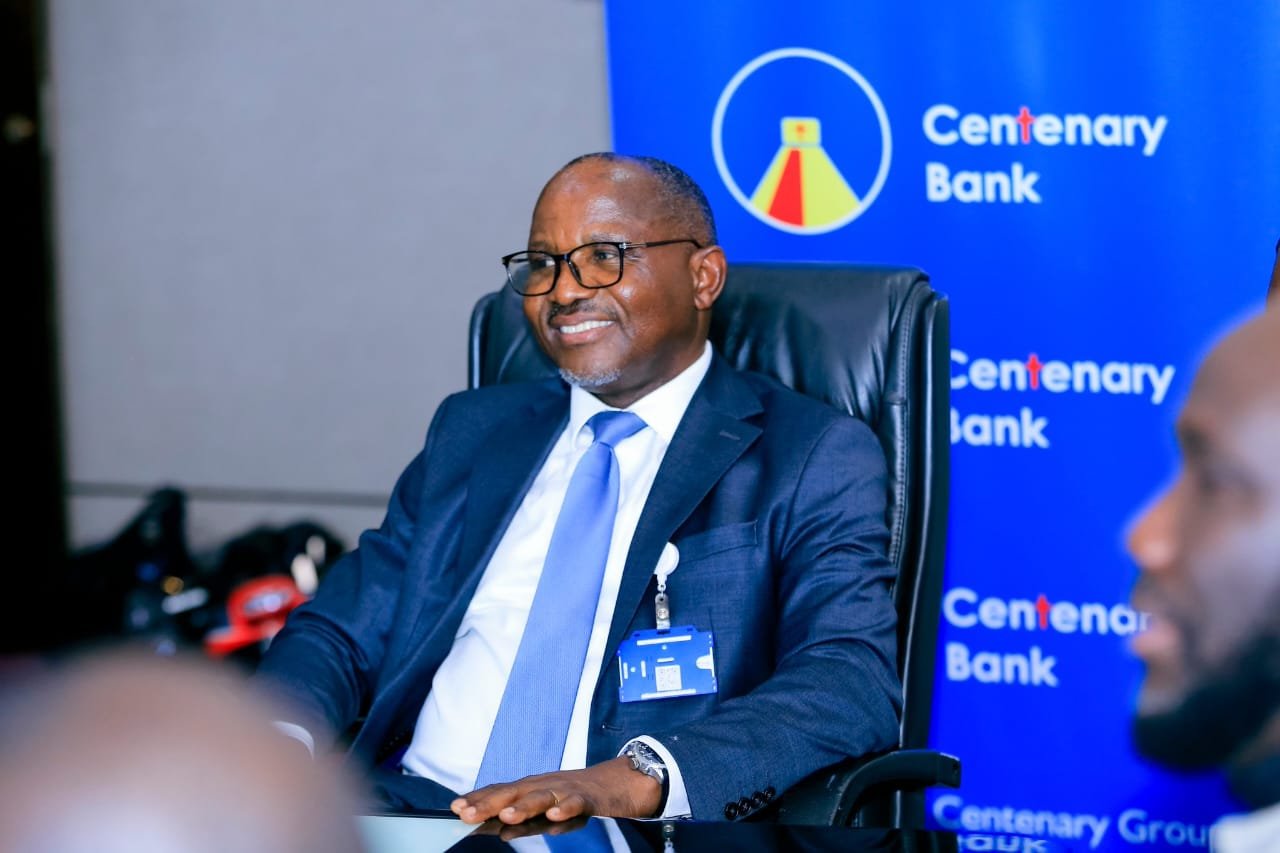
The numbers are striking.
Assets grew from UGX 807 billion to UGX 8.61 trillion. Customer deposits increased from UGX 630 billion to UGX 5.27 trillion. The loan portfolio expanded more than tenfold to UGX 4.16 trillion, while annual profit climbed from UGX 29.4 billion to a record UGX 424.2 billion. More than 3.4 million Ugandans now bank with Centenary Bank.
Behind those figures is the sixteen-year leadership story of Dr. Fabian Kasi, the executive who oversaw one of the most remarkable corporate transformations in Uganda’s financial sector. As he stepped down as Managing Director on June 30, 2026, handing over to CPA Godfrey Byekwaso, Kasi left behind an institution that has grown beyond its origins as a commercial microfinance bank into Uganda’s largest bank by customer numbers and one of the country’s most influential indigenous financial institutions. Today, he begins a new chapter as Group Chief Executive Officer of Centenary Rural Development Group, tasked with steering the organisation’s regional ambitions and diversified businesses beyond traditional banking.
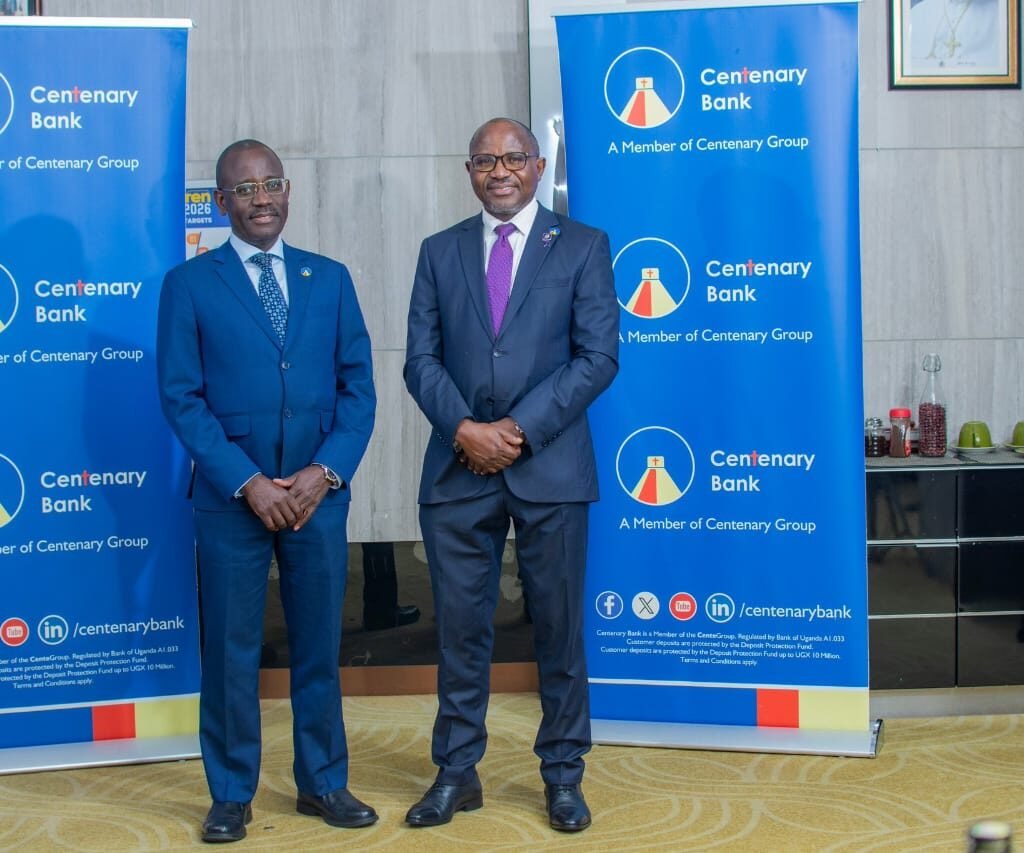
Yet, numbers alone do not explain the significance of the Kasi era. His legacy lies in the strategic choices that modernised Centenary Bank, deepened financial inclusion and positioned the institution for long-term sustainability in an increasingly competitive banking environment.
From Community Bank to Industry Leader
When Fabian Kasi assumed office in August 2010, Centenary Bank had already established itself as a trusted institution serving ordinary Ugandans. However, it remained relatively modest compared to larger multinational competitors operating in the country.
The challenge was not simply to make the bank bigger. It was to build an institution capable of competing at the highest level while preserving the values that had defined its identity since its founding.
Over the next sixteen years, the transformation was remarkable.
The bank’s assets increased more than tenfold, customer deposits grew eightfold and profits rose more than fourteen times. Its customer base expanded from approximately 850,000 to more than 3.4 million people, making Centenary Bank the country’s largest bank by customer numbers. Its physical footprint also expanded significantly, with branches increasing from 37 to 81 nationwide, while shareholder equity strengthened to approximately UGX 1.85 trillion.
Importantly, this expansion was accompanied by prudent financial management. Throughout a period marked by economic uncertainty, inflationary pressures and the aftermath of the COVID-19 pandemic, the bank maintained non-performing loans below industry averages, demonstrating disciplined credit management alongside sustained growth.
Reimagining Banking for Ordinary Ugandans
Perhaps Kasi’s greatest contribution was changing how Ugandans access financial services.
Recognising that traditional branch banking alone could not adequately serve a predominantly rural population, Centenary Bank invested heavily in alternative delivery channels long before digital banking became an industry necessity.
Agency banking became one of the institution’s defining innovations.
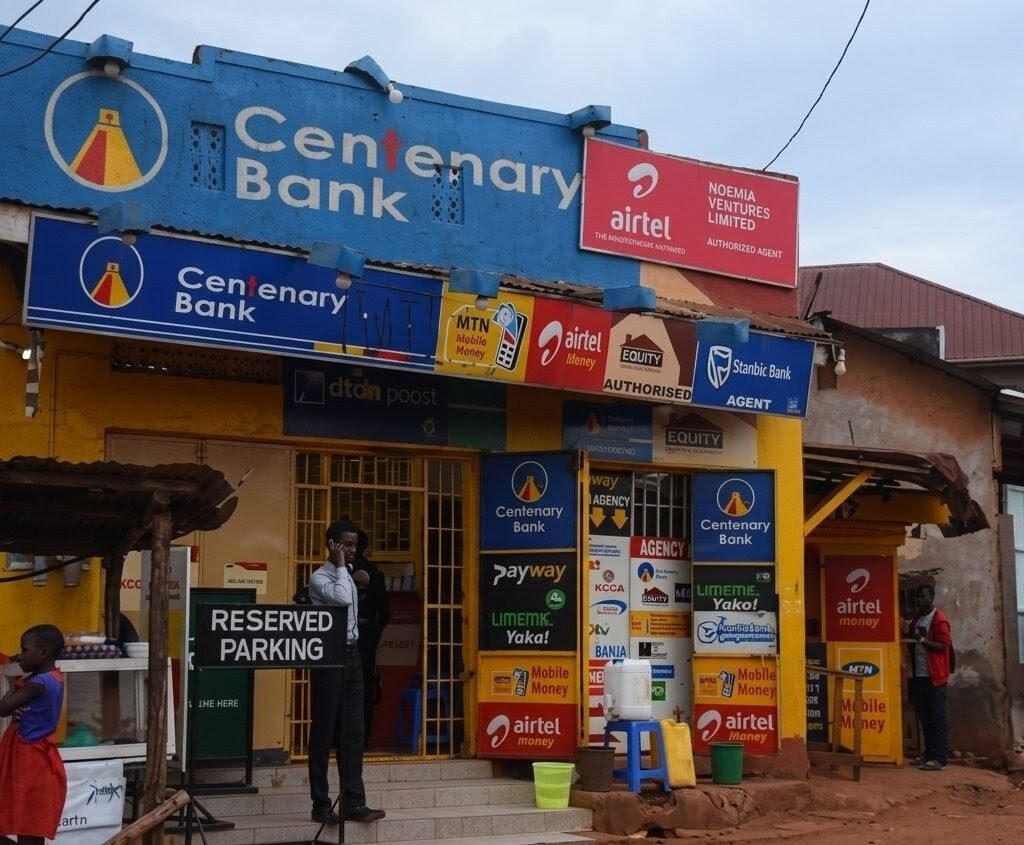
By 2026, more than 9,000 CenteAgents were operating across Uganda, handling nearly half of all customer transactions. For millions of customers, banking no longer meant travelling to a branch. Basic financial services became available within local communities, reducing transaction costs, improving convenience and extending financial services to previously underserved areas.
Behind the scenes, the bank invested heavily in technology. The migration to the Profits core banking platform in 2017 and the subsequent implementation of Oracle Flexcube between 2024 and 2026 modernised the institution’s operations, enabling real-time transaction processing, automated workflows and stronger integration with emerging financial technologies.
These investments positioned Centenary Bank not only to compete in an increasingly digital marketplace but also to continue serving customers efficiently as banking habits evolved.
Growth Anchored in Financial Inclusion
Despite becoming one of Uganda’s largest commercial banks, Centenary remained firmly committed to its founding mission of serving communities often overlooked by mainstream finance.
By the end of 2025, nearly 78 percent of the bank’s customers came from underserved groups, including smallholder farmers, women entrepreneurs, youth and refugees. Its Mission Critical Portfolio had reached UGX 1.76 trillion, supporting productive sectors central to Uganda’s economic development.
The bank financed more than 58,500 farmers during 2025 and extended over 118,000 loans to women-owned enterprises, including support through the Government’s GROW Project. Youth-focused financing initiatives and financial literacy programmes similarly expanded access to formal credit and business opportunities.
At a time when commercial success is often viewed as separate from social impact, Centenary demonstrated that profitability and financial inclusion can reinforce one another.
Building an Institution for the Future
One of Kasi’s most consequential decisions may prove to be one of the least visible.
Rather than simply expanding the bank, he oversaw its evolution into the Centenary Rural Development Group, a holding company structure designed to support long-term growth while strengthening governance.
The restructuring created specialised subsidiaries responsible for banking, technology, property development, social investment and regional operations, enabling the organisation to diversify while protecting the core banking business from unnecessary operational risk.
The move also reflected changing regulatory expectations and positioned the organisation for expansion into regional markets.
It is this broader organisation that Kasi now leads as Group Chief Executive Officer.
Leadership Beyond the Bank
Fabian Kasi’s influence has extended well beyond Centenary Bank.
Over the years, he served on the boards of the Capital Markets Authority, Financial Sector Deepening Uganda, Uganda Bankers Association, PAX Insurance, British American Tobacco Uganda and BBS Television. As Chairman of the Uganda Bankers Association in 2017, he played an important role in advancing collaboration across Uganda’s banking industry during a period of significant reform.
His leadership also earned widespread recognition.
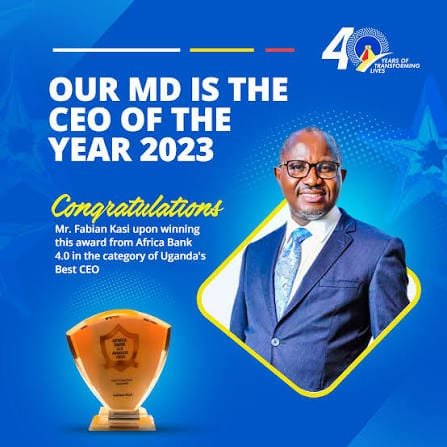
Centenary Bank was named Uganda’s Best Retail Bank, received Global Finance’s Best Bank in Uganda award and earned Brand Africa recognition for both customer trust and social impact. Kasi himself was recognised as CEO of the Year at the Pan-Africa Bank 4.0 Summit, underscoring his growing influence within Africa’s banking sector.
The Next Chapter
For incoming Managing Director Godfrey Byekwaso, the foundation is solid, but the expectations are equally high.
The bank must continue optimising its new digital infrastructure, accelerate customer migration to lower-cost banking channels, manage emerging climate-related lending risks and execute Centenary Group’s regional expansion strategy across East and Central Africa.
Those challenges reflect the realities of modern banking, where long-term success depends as much on technology, resilience and innovation as on financial performance.
More Than a Balance Sheet
Leadership is often measured in financial statements.
By that standard, Fabian Kasi leaves behind an extraordinary record.
But perhaps his greatest achievement is institutional rather than numerical. He demonstrated that a locally owned bank with deep community roots could compete with multinational institutions, embrace technological change without abandoning its social purpose and build governance structures capable of sustaining success beyond the tenure of any single leader.
Centenary Bank’s next chapter will be written under new leadership. Yet much of what defines the institution today, its scale, resilience, culture of inclusion and readiness for regional growth, was shaped during the sixteen years of the Kasi era.
That is the legacy of a banker who built far more than a bank. He built an institution.
