
The United Nations Development Programme (UNDP) and the World Bank Group have launched a new cooperation framework aimed at tackling one of the biggest obstacles to economic growth in fragile and low-income economies: creating conditions in which private businesses are willing and able to invest.
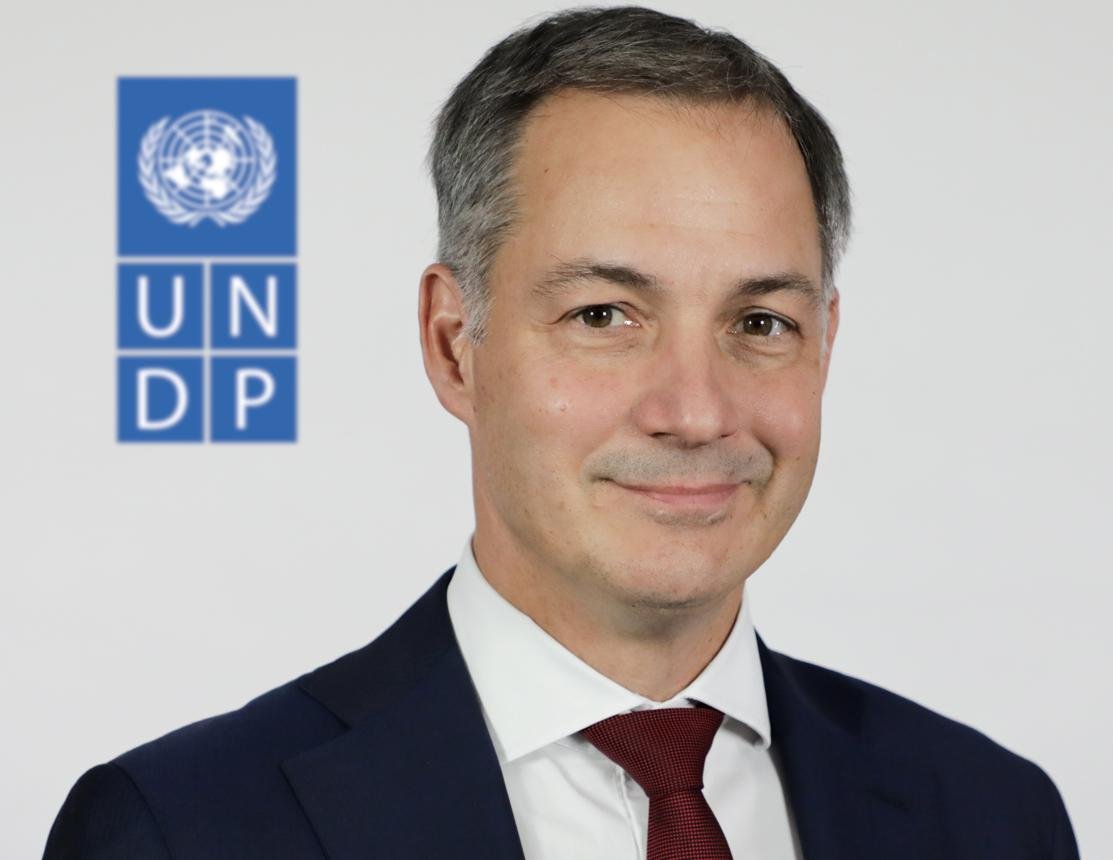
The framework, formalised on September 16 by UNDP Administrator Alexander De Croo and World Bank Group President Ajay Banga, will combine the institutions’ expertise and country-level presence to help governments improve investment environments, mobilise private finance and create jobs.
The partnership will initially be piloted in five countries: Ghana, Haiti, Lebanon, Nepal and Yemen. The countries have different economic and political circumstances, but all face challenges that can make investment more difficult, including institutional weaknesses, regulatory barriers, limited financing and, in some cases, conflict and fragility.
Rather than focusing exclusively on financing individual projects, the cooperation framework is designed to address some of the conditions that determine whether investment can take place in the first place.
The two organisations will work with governments on legal, regulatory and policy reforms intended to reduce the cost and risk of doing business. Areas of cooperation will include strengthening institutions and governance, improving investment environments, strengthening rule of law and contract enforcement, and supporting transparency and anti-corruption measures. The objective is to make markets more predictable for businesses while giving governments stronger capacity to implement reforms and development programmes.
That approach reflects a growing challenge for developing economies. Governments face large infrastructure and development needs at a time when public finances alone are often insufficient to provide the capital required.
UNDP has increasingly argued that development finance needs to do more than fund programmes directly. It should also help countries build the policy and institutional conditions needed to attract private capital, technology and expertise.
In a recent address to its Executive Board, UNDP said access to capital, technology, markets and global value chains increasingly determines whether countries can create jobs and compete in the global economy. The agency also highlighted its Investment Accelerator, which is intended to connect national development priorities with investment opportunities and private capital. The new framework with the World Bank extends that approach by combining the organisations’ respective strengths.
The World Bank Group brings financing capacity, economic expertise and relationships with governments, while UNDP has a broad operational presence and experience supporting institutional development and implementation.
The partnership is particularly significant in fragile and conflict-affected countries, where investors may face risks that cannot be addressed simply by providing additional capital. In such environments, weak institutions, poor infrastructure, limited public services, insecurity and uncertainty over contracts can make otherwise commercially viable investments difficult to finance. The framework therefore includes support for peacebuilding, stabilisation, restoration of local institutions and essential services, alongside economic and regulatory reforms.
The World Bank’s recent work in Haiti illustrates the scale of the challenge facing some of the pilot countries. A September 14 World Bank report said Haiti’s economic growth has been constrained for two decades and identified job creation, displaced populations, remittance volatility and market access among the country’s major economic challenges. The bank said stronger institutions and reforms would be necessary to create conditions for sustainable recovery.
Ghana presents a different case, with the partnership potentially building on an existing push to attract investment into productive sectors. On September 17, Ghanaian President John Mahama met International Finance Corporation Managing Director Makhtar Diop to discuss expanding commercial agriculture, infrastructure and digital connectivity. The discussions included cocoa, oil palm and poultry, as well as transport infrastructure and digital development.

For Ghana, the broader investment challenge is therefore not only attracting financing but directing it towards sectors capable of creating jobs and increasing domestic value addition. The same principle applies to Nepal, where the government and UNDP have been working on an Integrated National Financing Strategy designed to align public budgets, private investment and development cooperation with employment-focused economic growth.
The World Bank and UNDP said the five pilot programmes will be tailored to national development priorities rather than imposing one uniform reform package across all countries. The framework also aligns with the World Bank Group’s jobs agenda and refreshed Fragility, Conflict and Violence strategy, as well as UNDP’s 2026–2029 strategic priorities.
For private investors, the significance of the agreement will ultimately depend on whether reforms translate into lower transaction costs, clearer rules, stronger institutions and more predictable markets. That is particularly important because development finance can provide capital without necessarily resolving the structural problems that discourage businesses from entering difficult markets.
The new partnership therefore represents a shift toward tackling the investment environment itself. If the pilot programmes succeed, governments could gain stronger institutions and more credible investment pipelines, while businesses could gain clearer rules and reduced risks. But the results will depend on implementation. Legal reforms, improved governance and stronger institutions take time to establish, particularly in countries affected by conflict or severe economic constraints.
The first five pilots will consequently serve as an important test of whether coordinated development support can move beyond financing projects to building markets capable of attracting sustained private investment. For countries struggling to create jobs while facing limited public resources, that distinction could determine whether development finance produces temporary relief or helps establish the foundations for longer-term private-sector growth.
