
Uganda’s hospitality industry is entering a new investment cycle, driven less by today’s tourism numbers than by growing confidence in the country’s long-term economic prospects. International hotel brands are increasingly viewing Uganda not simply as a safari destination but as an emerging regional hub for business, conferences, and industrial investment.
Their confidence reflects expectations that the country’s economy, led by the oil and gas sector and supported by government incentives, will generate sustained demand for premium accommodation.
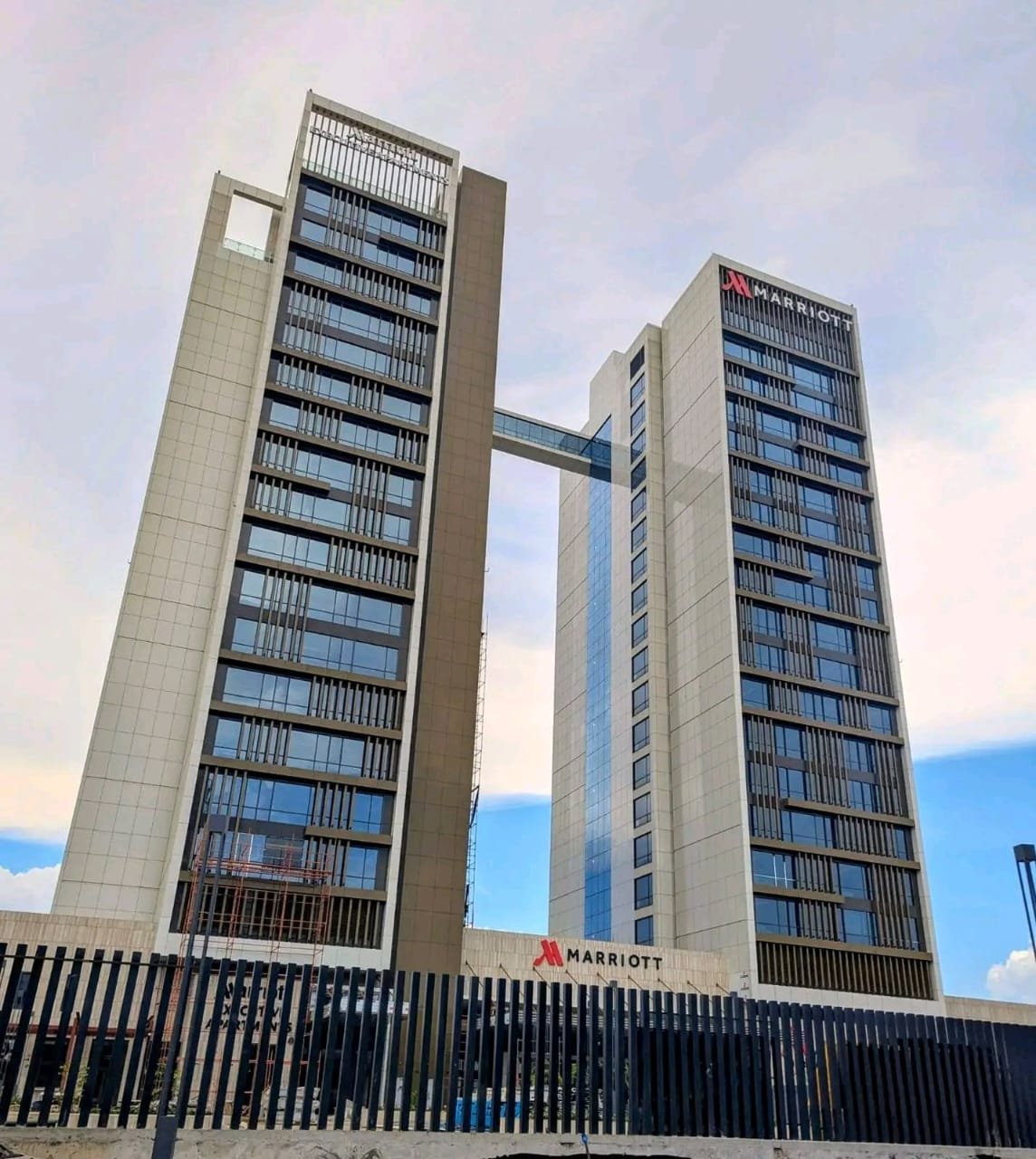
The latest example is the Kampala Marriott Hotel and Executive Apartments in Nsambya. The twin-tower development, built by Ugandan businessman Posiano Ngabirano, features 181 luxury rooms and suites alongside serviced executive apartments, conference facilities, restaurants, wellness amenities, and corporate meeting spaces.
More than just another five-star property, the project signals growing confidence that Uganda’s economy is entering a phase capable of supporting year-round demand for high-end hospitality.
Much of that confidence is tied to Uganda’s oil and gas industry. Large-scale projects such as Tilenga, Kingfisher, and the East African Crude Oil Pipeline (EACOP) are attracting engineers, project managers, environmental specialists, legal advisers, financiers, and technical consultants from around the world.
Unlike leisure tourists, whose travel is seasonal and discretionary, these professionals are attached to multi-year projects, creating a more reliable stream of business for luxury hotels.
The hospitality sector is already responding to this new reality. The Kampala Marriott has named some of its premium meeting facilities after oil-producing regions, including the Tilenga and Buliisa meeting rooms, reflecting the growing importance of corporate energy clients.
If oil production proceeds as scheduled, the sector is expected to support years of business travel, extending demand beyond Kampala and Entebbe to emerging commercial centres such as Hoima.
Government policy is reinforcing this momentum. The 2026/27 national budget introduced tax holidays for ultra-luxury tourism developments, with qualifying investments beginning at US$10 million for foreign investors and US$5 million for local investors.
These incentives complement a Shs567.32 billion allocation to the tourism sector and tourism earnings of US$1.86 billion recorded in 2025. Together, they point to a deliberate strategy of positioning Uganda as a regional destination for business travel, conferences, and investment.
Improved infrastructure, including Kabalega International Airport, is also expected to strengthen connectivity for corporate travellers while supporting activity generated by the oil industry.
Yet the optimism comes with important questions. Kampala’s luxury hotel market has historically depended on peaks created by international conferences, diplomatic summits, and major corporate events.
During quieter periods, occupancy has often softened, suggesting demand has not always kept pace with the growing supply of premium rooms. As more international brands enter the market, maintaining healthy year-round occupancy will become increasingly important.
Financing also remains a major challenge, particularly for local developers. Commercial lending rates in Uganda frequently range between 16 and 20 percent, making large-scale hotel investments expensive and extending the time required to recover costs.
International hotel brands, by contrast, often have access to lower-cost offshore financing, institutional investors, and internal capital. That financial advantage gives them greater flexibility to pursue long-term investments even during periods of lower occupancy.
The industry’s long-term economic impact will also depend on how much value remains within Uganda. Luxury hotels create employment during construction and operation while supporting local suppliers in agriculture, transport, maintenance, and professional services.
At the same time, some revenue inevitably leaves the country through franchise fees, management contracts, imported luxury goods, and expatriate salaries. Maximising local procurement, developing Ugandan management talent, and increasing domestic participation across hotel supply chains will be essential if the sector is to deliver its full economic potential.
Uganda is following a path already taken by Kigali and Nairobi, both of which expanded luxury hotel capacity to strengthen their positions as regional business and conference destinations. Their experience shows that premium hospitality performs best when supported by reliable transport infrastructure, consistent international events, strong private-sector investment, and diversified sources of business travel.
Ultimately, the expansion of Uganda’s luxury hotel sector is a long-term bet on the country’s economic future. If oil production accelerates, conference tourism expands, and private investment continues to grow, today’s hotel developments could prove exceptionally well timed.
If those growth drivers fail to materialise at the expected pace, however, the country risks building more luxury rooms than the market can consistently fill. For global hotel brands, the calculation is straightforward. They are investing not only in Uganda’s tourism industry but in the country’s broader economic transformation.
Whether that confidence is rewarded will depend on how successfully Uganda converts its energy ambitions, policy reforms, and investment momentum into sustained demand for premium hospitality.
