
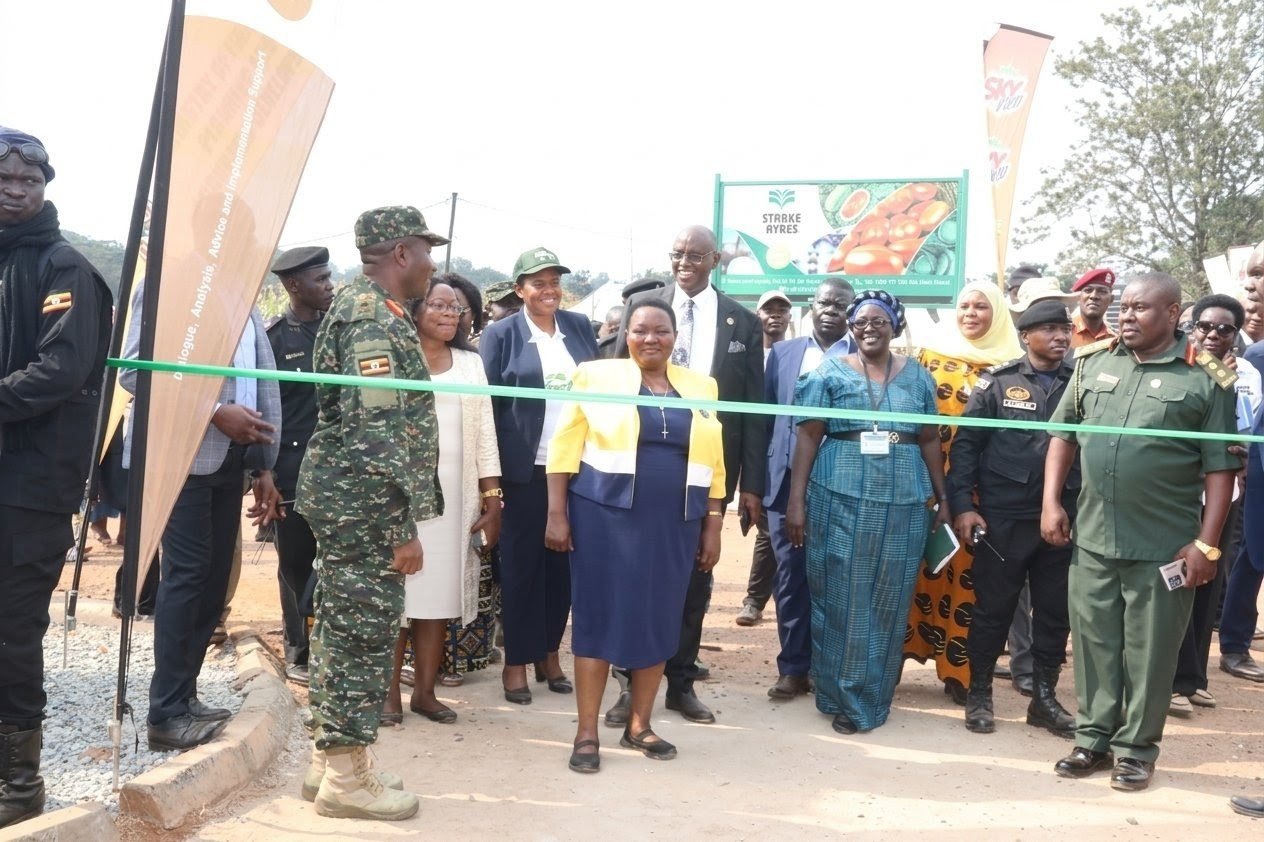
The gates of the UNFFE Show Grounds in Jinja opened this week to thousands of farmers, agribusiness entrepreneurs, policymakers, financial institutions and technology providers for the 32nd National Agricultural Show. But beyond the colourful exhibitions, livestock displays and modern machinery, the annual event has become the stage for a much larger national conversation.
Can government-led agricultural programmes such as Operation Wealth Creation (OWC) and the Parish Development Model (PDM) truly transform Uganda’s rural economy, or do impressive national statistics conceal persistent challenges faced by ordinary farmers?
Running from June 26 to July 11 under the theme of agricultural transformation and innovation, this year’s exhibition comes as government reports one of the strongest periods of agricultural growth in more than a decade. At the centre of the event is the newly commissioned Operation Wealth Creation Village, a dedicated exhibition showcasing technologies, value chains and success stories attributed to Uganda’s flagship wealth-creation programme.
Officially opening the show on behalf of President Yoweri Museveni, Prime Minister Robinah Nabbanja described agriculture as the foundation of Uganda’s socio-economic transformation and reiterated government’s commitment to commercialising household production.
In his speech, President Museveni defended Operation Wealth Creation and its Chief Coordinator, Gen. Salim Saleh, describing the programme as a key driver in moving thousands of Ugandan households from subsistence farming into the money economy.
“Operation Wealth Creation has become a cornerstone of Uganda’s socio-economic transformation agenda by helping households transition from subsistence production into commercial agriculture,” Museveni said in remarks delivered by the Prime Minister.
Government’s confidence is supported by fresh macroeconomic data.
According to the latest figures from the Uganda Bureau of Statistics, Uganda’s agriculture, forestry and fisheries sector expanded by between 6.5 and 6.7 percent during the 2025/26 financial year, significantly outperforming the decade-long average growth rate of approximately 4.2 percent.
Cash crop production grew by 12.1 percent, largely driven by coffee exports, while agriculture’s contribution to national GDP increased to 27.4 percent. Uganda’s nominal GDP also expanded to Shs250.4 trillion, reflecting broader economic growth.
For policymakers, these figures represent evidence that sustained investment in agriculture is beginning to generate measurable economic returns.
Museveni used the platform to reinforce his long-standing four-acre model, arguing that every Ugandan household should derive income from commercial agriculture, manufacturing, services or information technology.
He also renewed calls for increased value addition, warning that Uganda continues to export employment opportunities by selling raw agricultural commodities instead of processed products.
“Exporting raw coffee means exporting jobs. We must process our products locally if we are to build wealth and industrialise our economy,” Museveni said.
Away from the main pavilion, the exhibition grounds reveal how government hopes to achieve that transformation.
The Operation Wealth Creation Village has become one of the show’s biggest attractions, demonstrating complete agricultural value chains rather than simply displaying farm inputs. Visitors are being guided through enterprise selection, production planning, value addition and market access strategies designed to help beneficiaries make productive use of Parish Development Model funds.
The exhibition also highlights growing collaboration between government programmes and the private sector.
Equipment suppliers such as Meta Plant and Equipment are showcasing New Holland tractors supported through financing partnerships with DFCU Bank and Equity Bank, enabling organised farmer groups and cooperatives to acquire mechanised equipment through affordable repayment arrangements rather than outright purchases.
State Minister for Agriculture Bright Rwamirama described the exhibition as an important bridge connecting farmers, technology providers, financial institutions and policymakers.
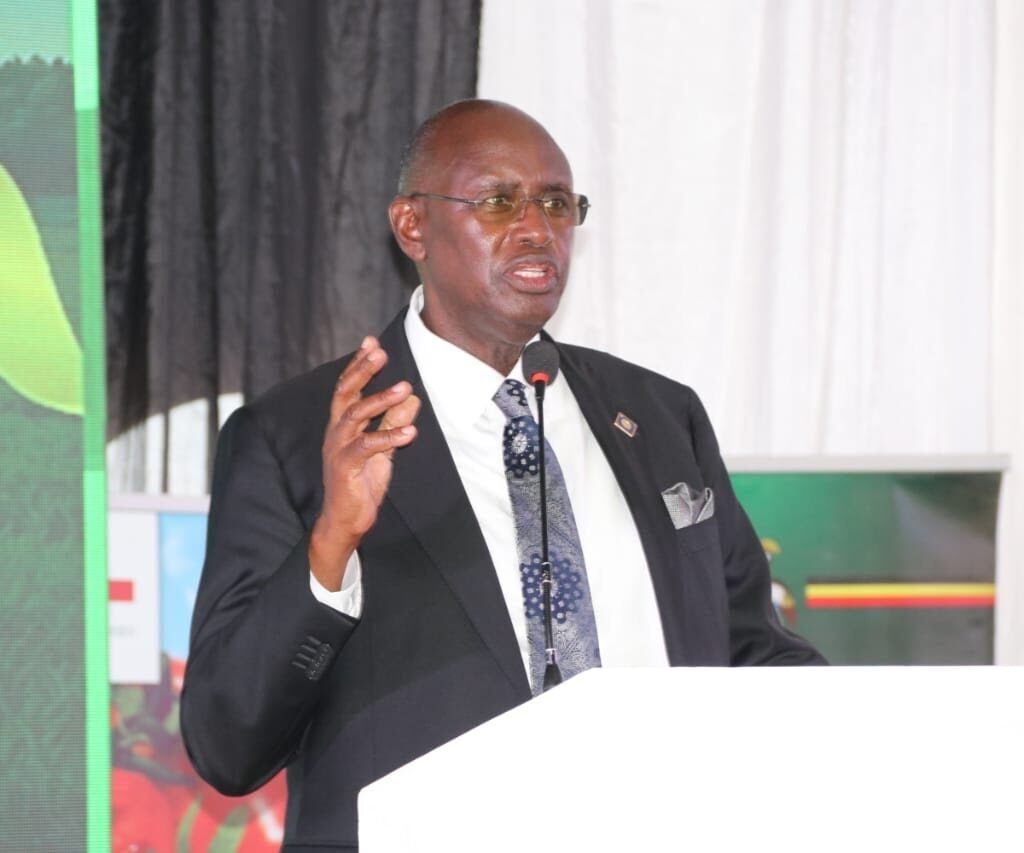
“This exhibition creates opportunities for farmers to access modern technologies, financing solutions and partnerships that can increase productivity and commercialisation,” Rwamirama said.
Several government agencies are also using the exhibition to provide practical training.
The Uganda Prisons Service is conducting demonstrations on poultry management and livestock production, while researchers are showcasing drought-tolerant crop varieties, improved seed technologies and climate-smart farming practices aimed at improving resilience against changing weather patterns.
The exhibition reflects government’s broader strategy of positioning agriculture not simply as a subsistence activity but as a commercially viable enterprise capable of attracting investment and creating employment.
Yet despite the optimism surrounding this year’s show, many agricultural experts caution against interpreting improved national indicators as proof that structural challenges have been resolved.
Critics argue that much of the sector’s recent performance has been driven by exceptional global coffee prices rather than widespread improvements in productivity across all agricultural subsectors.
Many smallholder farmers growing food crops continue to struggle with unreliable markets, inadequate irrigation, limited mechanisation and rising production costs.
Andrew Kigozi, a citrus farmer from the Busoga sub-region attending the exhibition, believes the gap between demonstration and implementation remains significant.
“A show is a show, but the village remains the village. We see beautiful tractors here in Jinja, but back home many farmers are still praying for rain because irrigation infrastructure does not exist. When seedlings arrive late or fail to germinate, it is the farmer who carries the loss.”
Analysts also point to longstanding operational weaknesses that continue to affect government agricultural programmes.
Procurement challenges have periodically resulted in delayed distribution of planting materials and fertilisers, reducing productivity during critical planting seasons.
Post-harvest losses remain another major concern. Estimates suggest Uganda loses between 30 and 40 percent of grain production annually because of inadequate storage facilities, poor rural transport infrastructure, limited cold-chain logistics and aflatoxin contamination. Without stronger investment in processing plants, warehouses and market infrastructure, increased production frequently results in oversupply that depresses farmgate prices rather than increasing household incomes.
Youth participation also remains a structural challenge.
Although more than 70 percent of Uganda’s population is below the age of 30, farming continues to be dominated by older generations. Many young people still perceive agriculture as labour-intensive, risky and less profitable than urban employment despite government investments in Presidential Industrial Hubs, agribusiness training and youth-focused financing programmes.
For investors, however, the exhibition signals expanding opportunities across Uganda’s agricultural value chains.
Mechanisation services, agro-processing, irrigation technologies, cold-chain logistics, seed multiplication, digital agriculture and agricultural finance continue to represent areas with significant growth potential as government intensifies efforts to commercialise rural production.
If supported by stronger infrastructure, improved extension services and greater private-sector participation, these investments could strengthen Uganda’s food security while increasing export competitiveness and rural employment.
Ultimately, the significance of the 32nd National Agricultural Show extends beyond exhibition stands and policy speeches.
It serves as a national progress report on Uganda’s ambition to transform agriculture from a subsistence livelihood into a modern commercial sector capable of driving industrialisation, exports and inclusive economic growth.
Government’s latest growth figures suggest meaningful progress is being made. Yet sustaining that momentum will depend less on annual exhibitions and more on consistent implementation, transparent delivery of agricultural inputs, stronger farmer support systems, expanded value addition and continued investment in rural infrastructure.
Until those structural bottlenecks are addressed, the success of Operation Wealth Creation and the Parish Development Model will ultimately be measured not by the size of exhibition crowds in Jinja, but by whether millions of Ugandan farmers experience lasting improvements in productivity, household incomes and economic resilience.
