
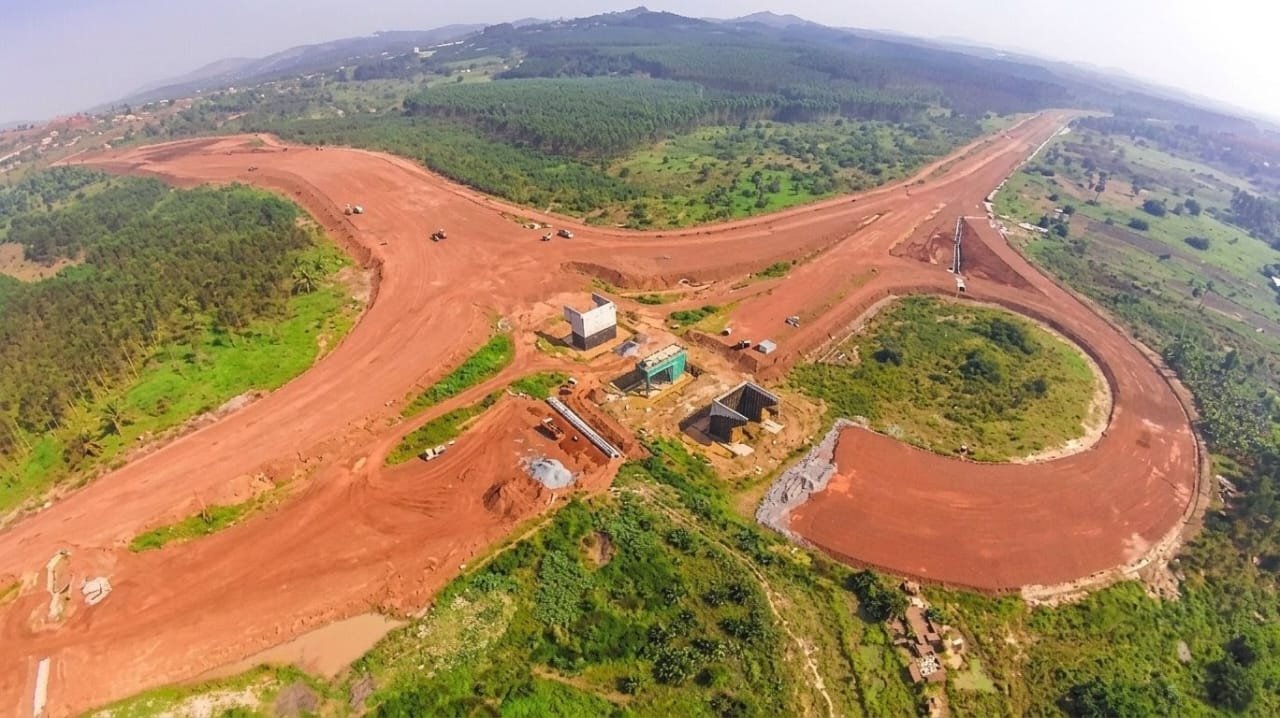
President Yoweri Museveni has ordered a sweeping crackdown on alleged corruption within the Ministry of Works and Transport, suspending three senior government engineers and directing Permanent Secretary Waiswa Bageya to step aside as investigators probe what could become one of Uganda’s most significant infrastructure scandals in recent years.
The presidential directive follows allegations that officials manipulated the alignment of the Busega-Mpigi Expressway to benefit private land interests, inflating project costs from an initial Shs600 billion to an estimated Shs1.3 trillion, despite the project being less than halfway complete.
In a directive dated June 26, 2026, addressed to the Inspector General of Government (IGG), Justice Aisha Naluzze Batoro, President Museveni ordered a comprehensive criminal investigation into the project and accused officials of deliberately orchestrating fraudulent compensation claims.
“The government borrowed Shs600 billion from ADB to do the Expressway 100%. As of now only 40% of the work has been done but all the money was paid. What happened? The corrupt engineers altered the route of the road and avoided the route that was already compensated for and charted a new route going through their own lands that needed fresh compensation. These thieves must be destroyed.”
The suspended officials are Edwin Raymond Kiyaga, Dickens Ahimbisibwe, and Patrick Muleme, while Barbara Namugambe, the ministry’s Under Secretary, has been appointed Acting Permanent Secretary to ensure continuity during the investigations.
Investigators believe the alleged fraud extended far beyond administrative negligence.
According to the President’s directive, the original 23.7-kilometre expressway corridor had already been surveyed, approved and largely compensated through payments to Project Affected Persons (PAPs). However, the engineers are accused of deliberately abandoning the approved alignment in favour of a new route that traversed land parcels in which they allegedly held direct or indirect interests.
The alleged manipulation produced two major financial consequences.
First, it invalidated previously completed compensation exercises, forcing government to undertake a fresh round of land acquisitions worth billions of shillings.
Second, it allegedly enabled insiders to profit from compensation paid on land that became valuable only after the road alignment had been altered.
If substantiated, investigators say the scheme represents a sophisticated abuse of public infrastructure planning for private financial gain.
The Busega-Mpigi Expressway was initially financed through a Shs600 billion loan from the African Development Bank and designed as a strategic transport corridor linking Kampala with western Uganda.
However, despite the original financing having been fully disbursed, only about 40 percent of construction has reportedly been completed.
The project now carries an estimated price tag of Shs1.3 trillion, raising serious concerns about cost escalation, procurement oversight and financial accountability.
The highway comprises a 23.7-kilometre dual carriageway, approximately 20 kilometres of access roads and four interchanges, all intended to ease chronic congestion along one of Uganda’s busiest commercial transport routes.
The scandal strikes at the heart of one of Uganda’s most important transport corridors.
The Kampala-Mpigi highway serves as a gateway to western Uganda and regional markets, carrying thousands of commercial vehicles, agricultural shipments, fuel tankers and passenger traffic every day.
Years of construction delays have forced motorists and freight operators onto congested diversions, increasing transport costs, fuel consumption, vehicle maintenance expenses and delivery times.
For businesses, those inefficiencies translate directly into higher logistics costs that are ultimately passed on to consumers through increased prices.
Agricultural producers transporting coffee, dairy products, fresh produce and manufactured goods have continued to shoulder significant operational losses as congestion persists along the unfinished corridor.
Beyond transport, the controversy presents broader fiscal challenges for government.
With the original African Development Bank financing reportedly exhausted, completing the remaining sections of the expressway could require additional borrowing or the diversion of domestic revenues from other national priorities.
That would place additional pressure on an already stretched public budget, potentially affecting spending on healthcare, education, agriculture and flagship poverty alleviation programmes.
The scandal also raises fresh questions about governance standards attached to externally financed infrastructure.
International development partners increasingly tie lending decisions to transparency, procurement integrity and project performance. Allegations of route manipulation and fraudulent compensation could invite greater scrutiny over future financing arrangements and potentially increase borrowing costs for subsequent infrastructure projects.
For investors, the unfolding investigation is about more than one highway.
Large-scale infrastructure projects underpin industrial expansion, tourism development, manufacturing competitiveness and real estate investment. When flagship projects become associated with governance failures, investor confidence can weaken, particularly among institutions financing long-term infrastructure.
Construction delays also postpone the wider economic benefits expected from improved transport connectivity, including lower logistics costs, increased tourism flows and expanded commercial activity.
At the same time, the allegations reinforce long-standing public concerns about corruption within public procurement and infrastructure development.
The Inspector General of Government, working alongside State House investigators and forensic auditors, is expected to undertake a comprehensive review of the project’s procurement processes, route alterations, compensation payments and financial records.
The investigation will seek to establish whether criminal conduct occurred, identify beneficiaries of any fraudulent compensation schemes and recommend prosecutions or asset recovery where appropriate.
For President Museveni, the intervention represents one of the strongest actions taken against alleged corruption within Uganda’s infrastructure sector in recent years.
Whether it becomes a defining moment in strengthening accountability will depend on what follows.
If investigators secure successful prosecutions, recover misappropriated public funds and implement structural reforms in land acquisition and project oversight, the Busega-Mpigi Expressway could become a turning point for infrastructure governance.
If not, the unfinished highway risks standing as an enduring symbol of how corruption can derail development, inflate public debt and delay the economic transformation that strategic infrastructure is meant to deliver.
