
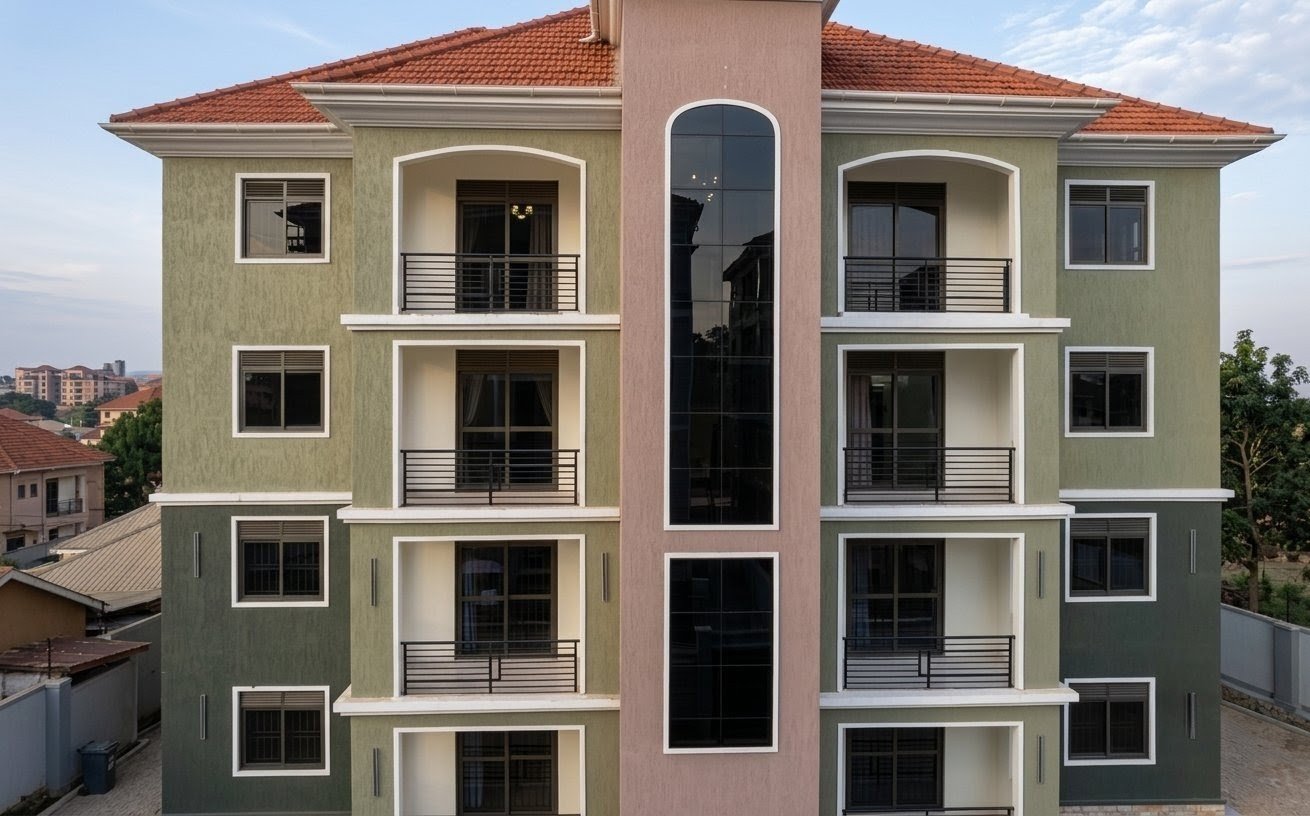
Kampala’s skyline is changing rapidly. Across suburbs such as Naalya, Najjera, Kisaasi, Ntinda, Bukoto and Kyambogo, apartment blocks are steadily replacing the single-family homes that once defined these neighbourhoods.
What appears to be a construction boom is, in reality, a structural shift in the city’s housing economy driven by rising land values, growing rental demand and increasing flows of diaspora capital into real estate.
The economics behind this transformation are reshaping how land is used, financed and valued across Uganda’s capital.
In Naalya and Najjera, unfurnished one-bedroom apartments typically rent for between Shs350,000 and Shs550,000 per month, while furnished units can fetch around Shs1.2 million depending on location and amenities. These price points reflect a market that is steadily shifting toward high-density rental developments over standalone housing.
The underlying logic is simple. Land in Kampala’s established suburbs has become too expensive to justify single-house developments. Developers are increasingly opting for apartment blocks that generate income from multiple tenants, spread financial risk and maximise returns from scarce urban land. For many investors, vertical construction is no longer optional. It is the only viable model.
A major driver of this shift is diaspora investment. According to the Bank of Uganda, annual remittances have reached approximately US$2.5 billion, with a growing share directed toward residential property. Rather than relying on commercial bank loans with interest rates of 16 to 20 percent, many Ugandans abroad finance developments through savings, family partnerships and phased construction models. This reduces debt exposure and allows projects to proceed flexibly over time.
Demand, however, is equally important in sustaining the boom.
Kampala continues to attract thousands of new residents every year, including young professionals, recent graduates, NGO staff, entrepreneurs and expatriates. Most are entering a rental market concentrated in well-connected suburbs such as Ntinda, Bukoto, Kisaasi, Naalya and Najjera, where access to jobs, transport routes and social infrastructure remains a key advantage.
This sustained inflow of tenants has encouraged investors to diversify rental models. While long-term leases remain dominant, furnished and short-stay apartments are gaining traction in high-demand areas. These units generate higher monthly returns, though they come with more variable occupancy rates.
However, not all suburbs perform equally.
Ntinda and Bukoto continue to attract higher-income tenants, including expatriates and senior professionals, resulting in stronger occupancy rates and more stable rental yields. Naalya and Najjera have become the core of the middle-income apartment market, where rising competition is beginning to moderate rental growth. Kyambogo maintains steady demand driven by its large student and academic population, while Kisaasi has emerged as a hotspot for young professionals and workers in Kampala’s expanding service economy.
This fragmentation reflects a broader reality. Kampala is no longer a single rental market. It is a collection of overlapping micro-markets shaped by income levels, infrastructure quality and location advantage.
Infrastructure has now become one of the most decisive factors in determining investment success.
Poor roads, unreliable water supply and weak drainage systems can significantly reduce occupancy rates, even in newly completed buildings. In response, landlords are increasingly investing in private infrastructure solutions, including boreholes, underground water storage systems, solar power, backup generators, CCTV security systems and high-speed internet connectivity.
For tenants, reliability is becoming as important as location or price.
At the macro level, Uganda continues to face a significant housing deficit estimated at between 180,000 and 200,000 units annually, while formal construction supply remains at roughly 60,000 units. This gap continues to push demand toward informal and private sector-driven housing development, particularly in urban centres like Kampala.
Yet this rapid expansion is also exposing structural weaknesses in urban planning. Traffic congestion, inadequate parking, overstretched utilities and poor waste management systems are increasingly visible alongside the growing number of apartment blocks.
Without coordinated investment in public infrastructure, the pace of private construction risks outstripping the city’s capacity to support it.
Ultimately, Kampala’s apartment boom represents more than a real estate cycle. It reflects a deeper transformation in how urban land is perceived and utilised.
The traditional model of single-family ownership is steadily being replaced by a rental-driven, income-focused urban economy shaped by demographic pressure, rising land values and diaspora-driven capital flows.
As more developments enter the market, success will depend less on construction alone and more on strategic location, tenant experience, infrastructure reliability and professional property management.
Kampala’s skyline will continue to rise. But its future will not be defined by height. It will be defined by how efficiently the city manages its growing density and whether infrastructure can keep pace with ambition.
