
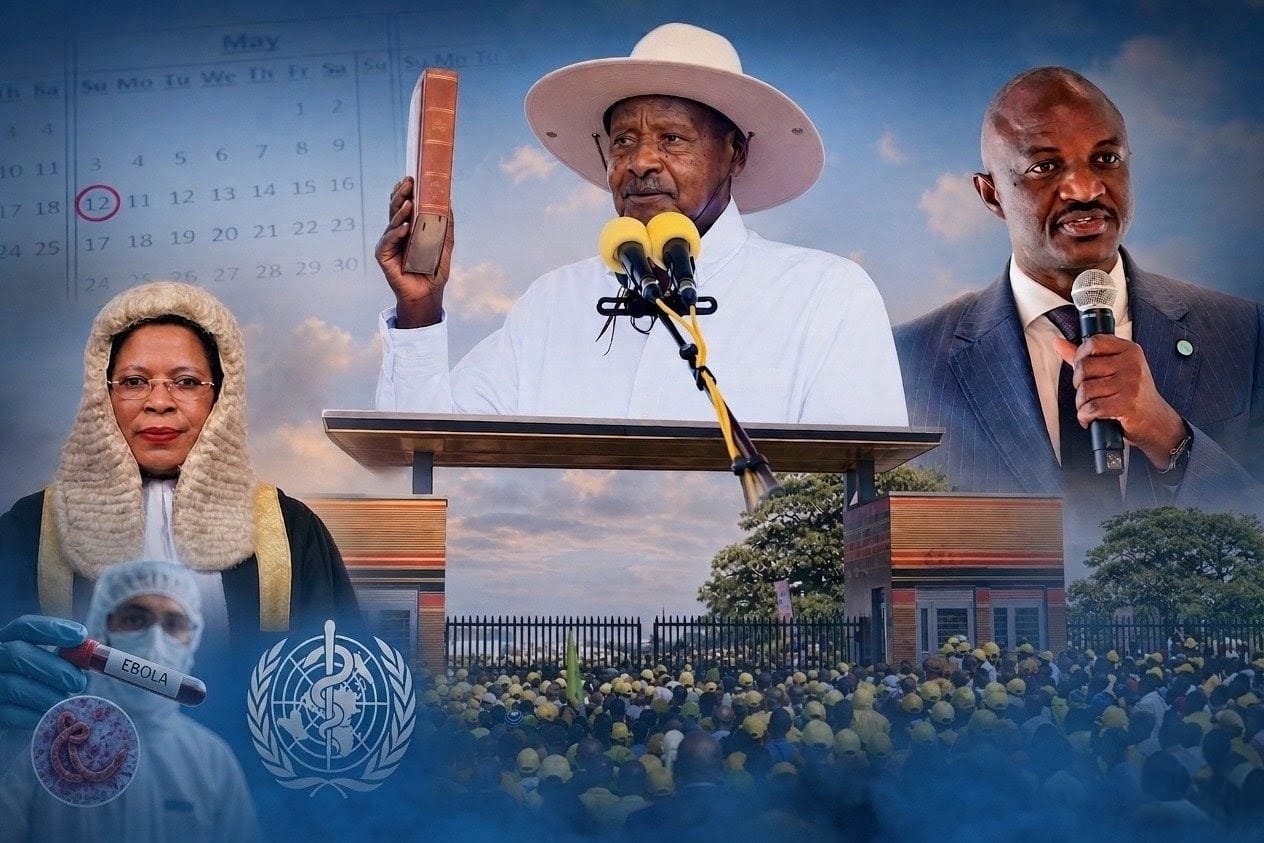
If you fell asleep on May 1st and woke up today, you wouldn’t recognize Uganda. In just 31 days, the nation has sworn in a new Parliament, watched its former Speaker face dramatic investigations, witnessed a security lapse inside the Central Bank, welcomed Starlink, and danced to Spice at Lugogo Cricket Oval. Here is your definitive guide to a month that truly had it all.
May 2026 was one of the busiest and most consequential months Uganda has experienced in recent years. Politics, technology, public health, security, economics, and entertainment collided in a whirlwind of events that reshaped the national conversation and set the tone for the years ahead.
A Month of Shake-Ups and State Decisions
The month began with Labour Day celebrations on May 1, but it did not take long for attention to shift to government institutions and public administration.
One of the first major developments came in the energy sector when top leadership at the Uganda Electricity Distribution Company Limited (UEDCL) was removed amid growing public frustration over power outages and operational challenges.
The move sent a clear signal that government was prepared to take a tougher stance on accountability and service delivery.
At around the same time, a highly unusual security breach shook the Bank of Uganda’s headquarters on Plot 45 Kampala Road overnight on May 3.
Burglars managed to infiltrate the heavily guarded building, spending nearly three hours inside undetected, and walked away with six high-end laptops.
The incident triggered severe criticism regarding internal controls.
However, a rapid response by the Crime Intelligence and Criminal Investigations Directorates (CID) led to the arrest of four civilian suspects identified as Boaz Micheal Kule, Ramathan Kabuye, Isaac Izoo Lubangakene, and Jorem Jude Oedo, alongside the detention of five Counter Terrorism (CT) police officers to determine insider involvement.
By mid-month, police successfully recovered all six stolen laptops to be used as court exhibits.
The government also moved forward with the Protection of Sovereignty Bill, 2026, passing it in a packed plenary session on Tuesday, May 5.
The bill drew immense public scrutiny, prompting extensive consultations with over 200 stakeholders across civil society, academia, and the diaspora.
To align the legislation with the Constitution and prevent overreach, nearly 87% of the initial draft was revised or completely removed.
Key revisions included:
- Narrowing the target: Restricting the law strictly to “agents of foreigners” engaged in specified influence-related activities in political and public decision-making, deleting previous overbroad clauses that applied to “any person.”
- Refining definitions: Overhauling definitions to exclude Ugandan citizens living abroad from being erroneously categorized under foreign influence.
National Security Infrastructure Shaken: The CCTV Corruption Probe
In a dramatic twist toward the end of the month, the security apparatus faced a massive institutional cleaning.
On May 23, President Yoweri Museveni directed that three top security and internal affairs officials be sent on an immediate six-month forced leave amid a sweeping anti-corruption investigation.
The directed suspensions hit the absolute core of the ministry’s administrative architecture:
- Lt. Gen. Joseph Musanyufu (Permanent Secretary, Ministry of Internal Affairs)
- Mr. Aggrey Wunyi (Under-Secretary of Police)
- AIGP Felix Baryamwisaki (Director of Research, Planning, and Development in the Uganda Police Force)
The probe centers around allegations of bribery and deliberate payment obstruction tied to the national CCTV surveillance camera maintenance network.
According to state briefings, after tech giant Huawei outsourced camera maintenance following 2019 global sanctions, a local private contracting firm, Dealan Associates Limited, was brought in to handle the security infrastructure.
However, ministry technocrats reportedly blocked a 31.37 billion-shilling payment earmarked for the scientists, allegedly demanding kickbacks through a middleman identified as Hassan Serunjogi.
The State House Anti-Corruption Unit has taken full charge of the inquiry, signaling deep anxieties regarding corruption affecting critical security eyes on the streets.
The Beginning of a New Political Chapter
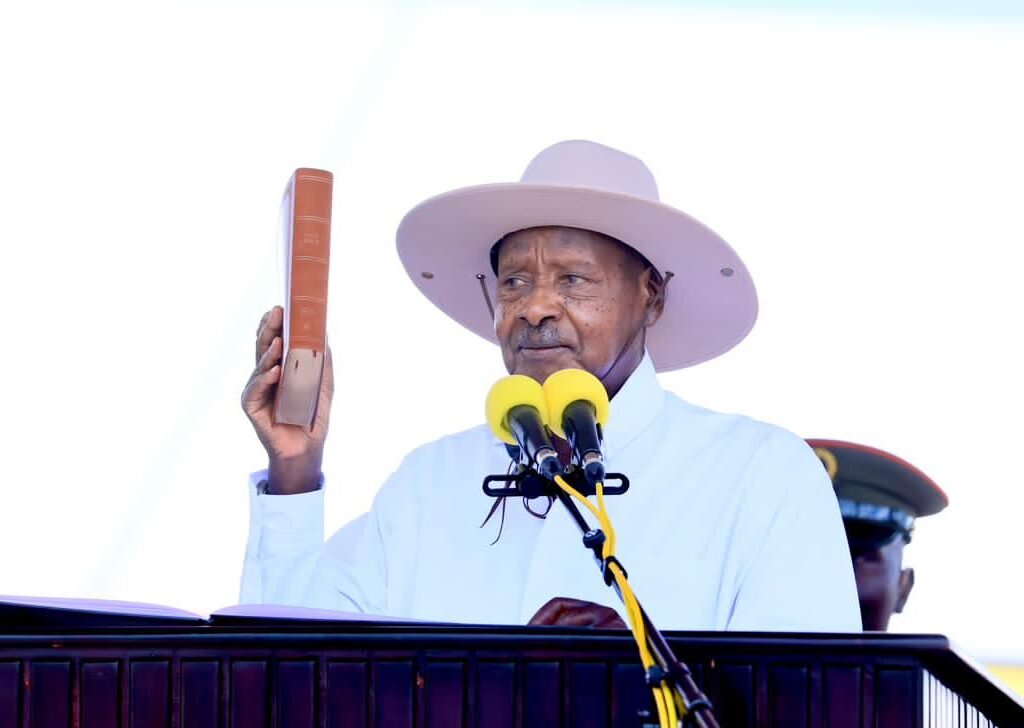
On May 12, President Yoweri Museveni was sworn in for a new term at Kololo Ceremonial Grounds, officially beginning another chapter in Uganda’s political journey.
The ceremony attracted regional leaders, diplomats, and thousands of supporters.
In his address, Museveni emphasized economic transformation, anti-corruption efforts, and institutional discipline as key priorities for the years ahead.
Crucially, he implored Ugandans to adopt a strict work ethic, famously declaring this 2026–2031 tenure as a “Kisanja of no more sleep” (a term focused entirely on relentless wealth creation and public service).
Warning that citizens could no longer afford to be complacent, he stressed that hard work, not slumber, is the only way to lift families out of poverty.
The inauguration would prove to be only the beginning of a dramatic political month.
The Anita Among Story That Dominated Headlines
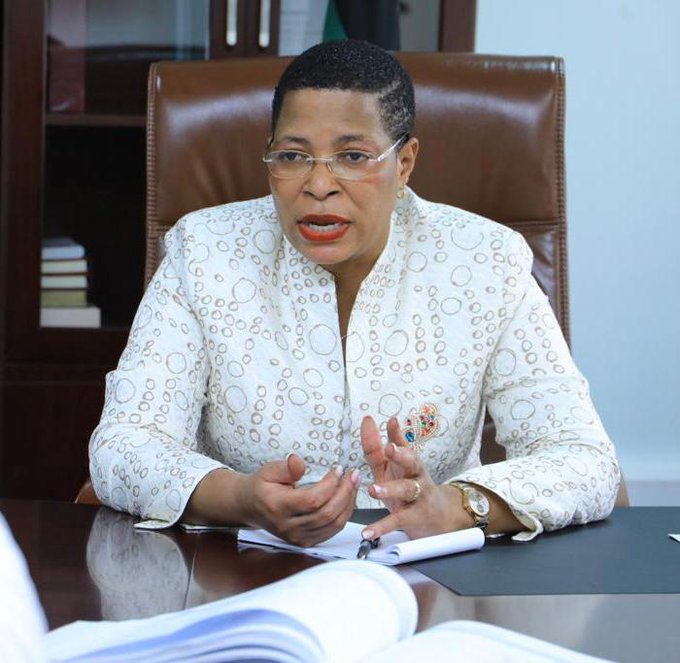
Few stories captured public attention more than the investigations involving former Speaker of Parliament Anita Annet Among.
Throughout May, security agencies carried out high-profile operations linked to the former Speaker, including searches, seizures, and financial investigations that dominated news cycles.
The developments quickly became one of the biggest political stories of the year.
As pressure mounted from corruption allegations, public scrutiny over wealth, and international sanctions, Among withdrew from the race for Speaker of the 12th Parliament.
This marked a stunning and abrupt end to a powerful chapter in Uganda’s legislative leadership, serving as a major test of the government’s anti-corruption agenda.
Museveni Rebuts Andrew Mwenda’s “Senile” Claims
The ideological battles took a highly personal turn online when President Museveni penned a blistering, multi-page response directly targeting veteran journalist Andrew Mwenda on May 23.
The public back-and-forth erupted after Mwenda criticized the cabinet’s internal economic debates on social media, implying the 82-year-old president was making poor policy choices regarding loss-making, government-backed infrastructure projects.
Museveni fired back with typical defiance, thanking Mwenda ironically for “declaring me senile” before adding:
“You will, however, discover that at 82, I am still able to defend Uganda and myself with the Bible, the AK-47, and the pen.”
The President fiercely defended Uganda’s industrialization blueprint, pointing to import substitution, a blanket ban on raw mineral exports, and a massive jump in local gold refining capacity (which pushed gold exports to $7.48 billion) as empirical proof that his “stubborn” economic patriotism is outperforming neo-colonial ideas.
Starlink Arrives in Uganda
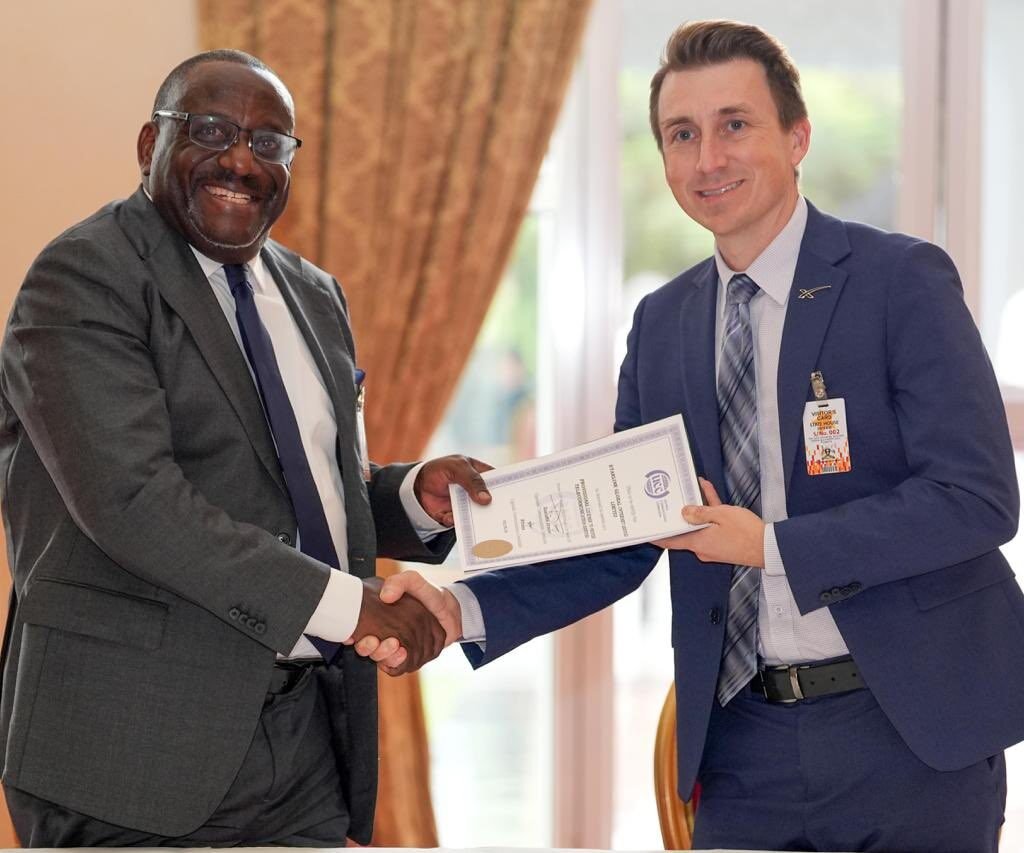
While politics dominated the headlines, May also delivered a landmark moment for Uganda’s technology sector.
On May 15, Starlink officially secured approval to operate in Uganda following an agreement with the Uganda Communications Commission (UCC).
The arrival of the satellite internet provider was widely welcomed as a breakthrough for connectivity, particularly in remote and underserved communities where reliable internet access remains limited.
For businesses, schools, health facilities, and rural households, Starlink’s entry represents a potentially transformative step in Uganda’s digital future.
Shaking Up the Global Tourism Stage: POATE 2026
Uganda’s tourism sector took center stage from May 21–23 as the country hosted the Pearl of Africa Tourism Expo (POATE 2026).
The premier travel trade event brought together hundreds of regional tourism boards, international buyers, and hospitality operators looking to position East Africa as a primary global destination.
Opening the expo, President Museveni emphasized that Uganda’s unparalleled biodiversity and cultural heritage are massive economic drivers.
To fully capitalize on this potential, the President called for sweeping regional visa reforms, urging East African nations to simplify entry protocols and remove unnecessary travel barriers, arguing that an open, integrated regional visa regime is vital to boost international arrivals and ensure seamless travel for globetrotters exploring the continent.
A Public Health Challenge Returns
The month also brought renewed concern over public health after confirmed cases linked to the Bundibugyo strain of Ebola emerged following cross-border transmission involving the Democratic Republic of the Congo.
Health authorities responded by swiftly strengthening surveillance systems, contact tracing, screening operations, and isolation facilities across the country.
By the end of May, Uganda had recorded 9 confirmed cases and 1 death.
Because the Bundibugyo strain lacks an approved vaccine or treatment, the government took decisive containment actions, including temporarily closing its western border to non-essential traffic on May 27 and suspending weekly markets in high-risk border districts.
While the outbreak remains a serious regional challenge, the rapid deployment of mobile laboratories and strict quarantine protocols highlighted the readiness of Uganda’s strategic epidemic response infrastructure.
A New Parliament and Cabinet Take Shape
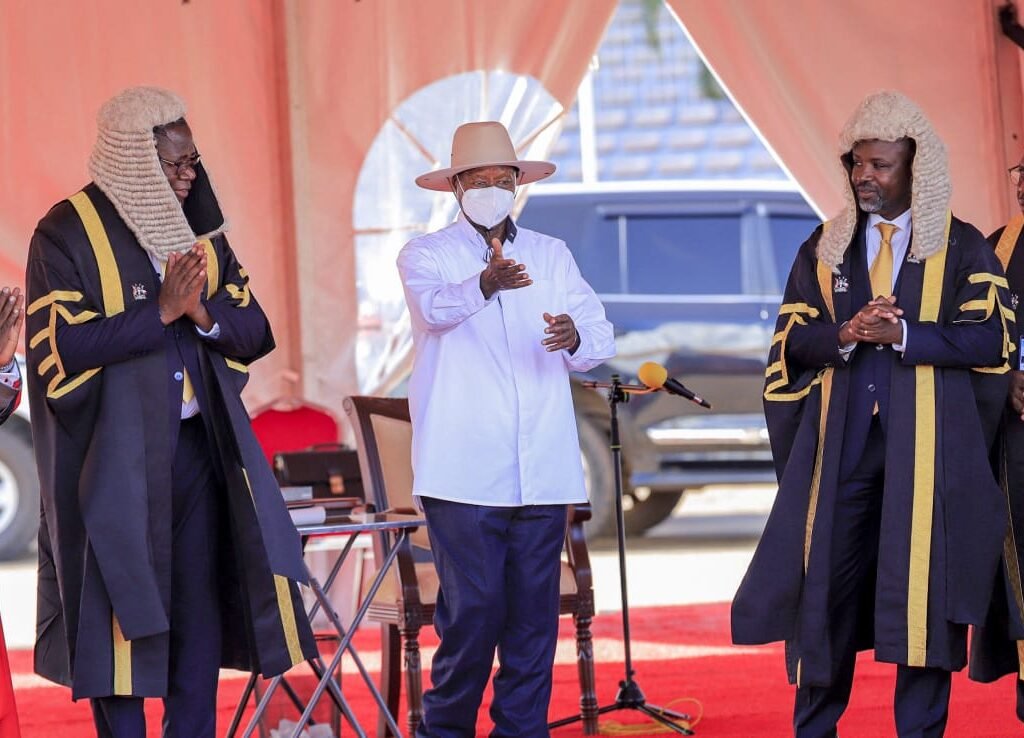
As May entered its final stretch, Uganda’s political landscape officially transitioned.
On Monday, May 25, the 12th Parliament convened its first sitting at the Kololo Ceremonial Grounds, presided over by Chief Justice Flavian Zeija.
Jacob Marksons Oboth (West Budama Central) emerged as the new Speaker of Parliament, securing a landslide victory with 441 votes.
He comfortably defeated Jinja South Division East MP Paul Mwiru, who obtained 60 votes, and Norbert Mao, who received 15 votes.
In his acceptance speech, Oboth pledged a policy of zero tolerance toward corruption and promised a results-based, open legislature.
Meanwhile, Thomas Tayebwa (Ruhinda North) overwhelmingly retained his position as Deputy Speaker, garnering 457 votes to defeat Asinansi Nyakato (45 votes) and Sarah Aguti (14 votes).
Soon afterward, President Yoweri Museveni unveiled a new Cabinet for the 2026–2031 term, balancing continuity with significant renewal. To provide stability as the 12th Parliament commenced, Vice President Jessica Alupo and Prime Minister Robinah Nabbanja were both re-appointed and advanced to parliamentary vetting by month’s end.
At the same time, the reshuffle introduced nearly 30 new and younger faces into Cabinet, signaling a stronger focus on youth representation and performance. By dropping several long-serving political veterans, State House responded to growing public pressure over service delivery and signaled a gradual transition within Uganda’s leadership structure.
Eyes Turn to the Economy & Hard-Hitting Austerity Measures
With major political appointments finalized, attention shifted toward Uganda’s economic future.
Government launched National Budget Month and prepared to roll out an 84.3 trillion-shilling budget centered on Agriculture, Tourism, Minerals, and Science, Technology and Innovation, collectively known as the ATMS agenda.
However, the biggest headline from the Treasury dropped on May 31.
Permanent Secretary and Secretary to the Treasury, Dr. Ramathan Ggoobi, announced that starting with the 2026/2027 fiscal year, the government will completely stop spending public funds on organizing state holiday celebrations, including International Women’s Day, Labour Day, and Independence Day.
Instead of blowing billions on massive public infrastructure layouts, tents, security logistics, and entertainment at regional grounds, President Museveni will address the country via radio and TV broadcasts from State House.
This aggressive belt-tightening measure aims to slash recurrent expenditure, with all saved revenue funneled directly into wealth creation initiatives and the ATMS economic programs.
Looking Outside: Integrating the Aliko Dangote Refinery Pipeline
As Uganda targets economic independence, its structural strategy continues to look closely at massive regional logistical corridors.
The operational integration of Nigeria’s Aliko Dangote Refinery the largest single-train refinery on earth presents an active regional benchmark.
For an East African community heavily reliant on fuel imports, the sheer scale of the Dangote supply chain offers strategic lessons in industrialization, domestic value addition, and bulk storage.
As Uganda finalizes localized energy investments, regional planners are assessing how cross-continent refined product networks can buffer against global fuel supply shocks and lower regional pump prices.
More Than Politics: The Jamaican Queen Rules Lugogo

Beyond government policies and budget cuts, May provided an unforgettable chapter for Kampala’s vibrant entertainment and cultural scene.
Ahead of her performance, Jamaican Dancehall Queen Spice embarked on a week-long cultural immersion organized by the Uganda Tourism Board.
On May 6, she paid a courtesy visit to the seat of the Buganda Kingdom at Bulange, where she was received by the Katikkiro of Buganda, Charles Peter Mayiga. Embracing Ganda culture, Spice wore a traditional gomesi and was bestowed with the Kiganda name Nankula before being officially placed into the Enkula (Rhino) clan.
Following a tour of the Kasubi Royal Tombs, the Uganda Tourism Board announced that exploring Uganda’s heritage firsthand would become the standard for visiting international artists.
The celebrations culminated on May 9 when the Safari Beats concert took over the Lugogo Cricket Oval. Thousands of fans packed the venue to watch Spice perform live in Kampala.
Joined by Ugandan music stars Cindy Sanyu and Karole Kasita, Spice delivered a high-energy performance that kept the crowd dancing for hours.
The massive turnout proved that no matter how intense the political climate becomes, Kampala’s appetite for global music and nightlife remains unmatched.
Few months in recent memory have packed as much activity into 31 days as May 2026.
Uganda witnessed the inauguration of a president, the formation of a new Parliament under a landslide speakership vote, high-profile security and CCTV corruption sackings, a heavily revised Sovereignty Bill, the introduction of harsh holiday spending cuts, the arrival of Starlink, and a phenomenal concert at Lugogo.
It was a month of disruption, transition, and ambition.
As the country moves into a new political cycle, May 2026 will be remembered as the moment Uganda accelerated into a new chapter of its national story.
