
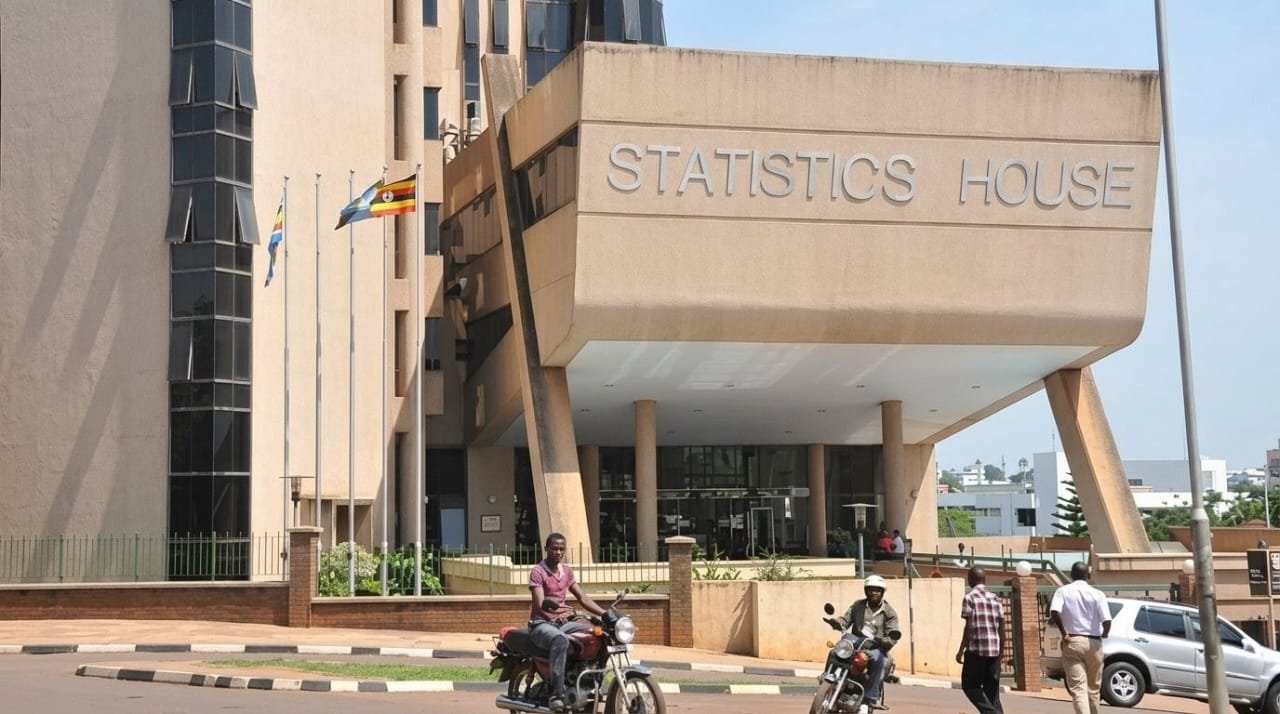
For much of the past three years, Uganda’s economy has been one of East Africa’s standout performers.
Massive infrastructure projects, preparations for first oil production, expanding industrial activity, strong agricultural exports, and rising investor confidence helped propel growth to levels that attracted attention from development institutions and frontier-market investors alike. The narrative was simple; Uganda was accelerating.
But the latest data from the Uganda Bureau of Statistics (UBOS) suggests that momentum has weakened significantly.
Uganda’s economy grew by 5.8% year-on-year in the third quarter of FY2025/26, down sharply from 8.5% recorded during the same period a year earlier. While a growth rate approaching 6% remains strong by global standards, the slowdown is significant for a country seeking to sustain rapid industrialization, create jobs for its growing population, and position itself as a regional economic powerhouse.
More concerning is the quarter-on-quarter picture. On a seasonally adjusted basis, economic growth slowed to just 1.2%, compared to 3.6% in the previous quarter. The figures suggest that Uganda’s economy is not merely growing at a slower pace than last year. It is also losing momentum in real time.
The slowdown exposes structural weaknesses that have long existed beneath Uganda’s impressive headline growth numbers.
Agriculture Loses Momentum
The most significant drag on growth came from agriculture, a sector that remains the backbone of Uganda’s economy and a primary source of income for millions of households.
Agricultural value added expanded by only 2.1% year-on-year, a dramatic slowdown from 10.3% recorded during the same quarter of the previous fiscal year.
The quarter-on-quarter figures paint an even more troubling picture. Real agricultural output contracted by 1.3%, falling from Shs10.08 trillion in Q2 to Shs9.95 trillion in Q3.
Cash crops including coffee, tea, and cotton continued to grow, posting an expansion of 7.2%, but this was insufficient to offset weakness across food crops, forestry, and fishing activities.
The result was a decline in agriculture’s contribution to nominal GDP from 23.4% to 22.5%.
For an economy where millions depend directly on farming, such a slowdown carries consequences far beyond GDP statistics. Slower agricultural growth translates into weaker rural incomes, lower household spending power, and reduced demand across other sectors of the economy.
Industry Encounters Turbulence
Uganda’s industrial sector also lost momentum.
Overall industrial growth slowed from 7.4% to 5.9% year-on-year, while quarter-on-quarter activity contracted by 2.3%.
Manufacturing maintained moderate growth of 4.8%, demonstrating resilience despite broader economic headwinds. However, construction emerged as the sector’s weakest point.
Construction growth slowed sharply from 14.0% to 7.2%, effectively cutting its expansion rate in half.
This slowdown is particularly significant because construction has been one of Uganda’s primary growth engines in recent years, fueled by public infrastructure investments, urban development, and oil-related projects.
A deceleration of this magnitude raises questions about project execution timelines, financing conditions, and the pace of private-sector investment.
While industry’s nominal contribution to GDP increased slightly to 25.8%, underlying activity suggests that the sector is facing growing pressure.
Services Prevent a Sharper Slowdown
The services sector provided the economy’s strongest source of support.
On a quarter-on-quarter basis, services expanded by 4.0%, increasing real value added from Shs18.49 trillion to Shs19.24 trillion.
Yet even this traditionally resilient sector showed signs of cooling.
Year-on-year growth slowed from 8.7% to 5.9%, indicating that consumer and business activity is becoming less robust.
Trade and repair services, which are closely linked to household spending and commercial activity, slowed dramatically from 11.4% growth to 5.5%.
Real estate remained relatively stable, growing by approximately 6.9%, but stability alone was not enough to offset broader weakness across the economy.
As the largest contributor to Uganda’s GDP, accounting for 43.5% of economic output, services played a crucial role in preventing a much sharper slowdown.
Consumers Are Tightening Their Belts
Perhaps the most revealing signal in the entire report comes from the demand side of the economy.
Final consumption expenditure grew by only 3.2% in real terms compared to 22.2% during the same quarter a year earlier.
Household consumption, which forms the foundation of domestic demand, slowed dramatically from 21.8% growth to just 2.5%.
This collapse in spending momentum suggests that consumers are becoming increasingly cautious.
Several factors may be contributing to this trend, including higher living costs, tighter credit conditions, slower growth in rural incomes, and growing uncertainty about future economic conditions.
When households spend less, businesses sell less. Retailers, manufacturers, transport operators, and service providers all feel the effects.
The slowdown therefore creates the risk of a feedback loop in which weaker consumption suppresses business activity, discourages investment, and further limits income growth.
Investment Is Also Cooling
Business investment remains positive but is slowing.
Gross Fixed Capital Formation, a key measure of investment in productive assets, expanded by 6.3%, down from 8.7% a year earlier.
The moderation suggests that businesses are becoming more cautious about expansion plans and capital expenditure.
While not alarming in isolation, slower investment growth alongside weaker household demand raises concerns about the sustainability of future economic expansion.
Why This Matters
Uganda’s latest GDP figures are not simply a story about slower growth.
They reveal the growing challenge of sustaining high economic expansion once the benefits of post-pandemic recovery begin to fade.
For years, infrastructure spending, construction activity, and recovering consumer demand provided powerful tailwinds. Those tailwinds are now weakening.
At the same time, structural vulnerabilities remain unresolved. Agriculture remains heavily exposed to climate risks and productivity constraints. Industrial growth continues to depend on large capital projects. Consumer spending remains vulnerable to income shocks.
These realities matter because Uganda’s demographic profile demands rapid and sustained economic growth.
With one of the world’s youngest populations, the country must create millions of jobs over the coming decades. Growth rates near 6% remain respectable, but they may not be sufficient to absorb the expanding labor force or deliver broad-based prosperity.
The Road Ahead
The slowdown arrives at a critical moment.
Uganda is approaching first oil production, a milestone expected to reshape economic activity, government revenues, and investment flows.
However, the latest GDP figures suggest that oil alone will not solve the country’s structural challenges.
To sustain stronger growth, policymakers may need to focus on boosting agricultural productivity, strengthening household purchasing power, expanding access to affordable credit, and improving execution across major infrastructure projects.
The next phase of Uganda’s development will depend less on building new assets and more on maximizing the productivity of existing investments.
The Bottom Line
Uganda’s economy has not stalled. It remains one of the faster-growing economies in Africa.
However, the latest UBOS data makes one thing clear: the era of effortless acceleration is over.
Agriculture is slowing. Construction has lost momentum. Consumers are spending less. Investment growth is moderating.
The economy has not hit a wall, but it has encountered a meaningful speed bump.
Whether Uganda regains its previous pace will depend on its ability to strengthen the sectors that support everyday livelihoods while ensuring that major investments translate into sustainable, broad-based growth. Investors, businesses, and policymakers will be watching closely to see whether this slowdown proves temporary or signals a more profound shift in the country’s economic trajectory.
