
The global financial and technology sectors are preparing for what could become one of the most significant public offerings in modern history. Elon Musk’s SpaceX is reportedly targeting a valuation of approximately $1.75 trillion, with plans to raise around $75 billion through an initial public offering (IPO).
The numbers are staggering, but the implications extend far beyond financial markets. While SpaceX is widely known for its rockets, reusable launch systems, and ambitious plans for space exploration, investors are increasingly valuing the company for something much closer to home: internet connectivity.
At the center of this transformation is Starlink, SpaceX’s rapidly expanding satellite broadband network. What began as an effort to provide internet access from space has evolved into one of the world’s most ambitious communications infrastructure projects. Today, Starlink serves millions of users globally and has become the primary driver of SpaceX’s commercial growth.
For emerging markets such as Uganda, the significance of a SpaceX IPO is not merely a story about corporate valuation. It is a story about how the future of connectivity may be reshaped, potentially bringing millions of people into the digital economy regardless of where they live.
For decades, expanding internet access has largely depended on physical infrastructure. Telecommunications companies have invested heavily in fiber-optic networks, mobile towers, power systems, and transmission equipment to connect homes and businesses. While this model has delivered impressive results in urban areas, extending reliable high-speed internet to remote communities has often proved expensive and commercially challenging.
This challenge is particularly evident across many developing economies, where vast rural populations remain underserved by traditional telecommunications infrastructure. Building networks in sparsely populated regions often requires significant capital investment with relatively low financial returns, making connectivity expansion slower than demand.
Starlink offers a fundamentally different approach.
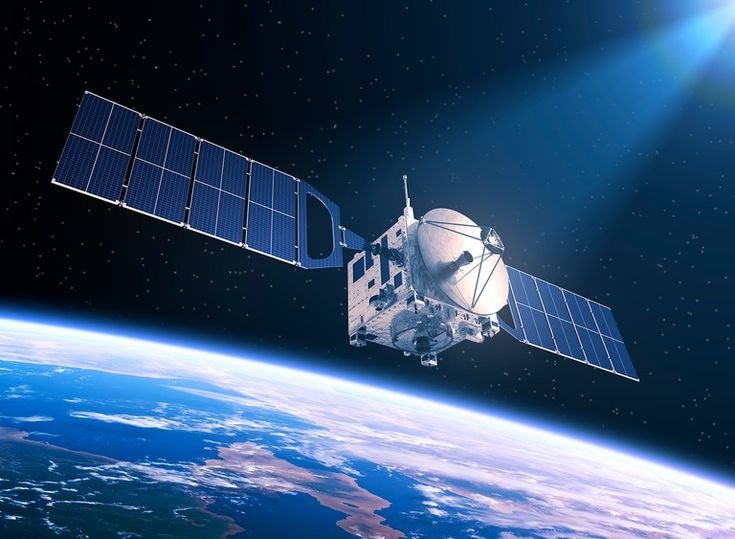
Rather than relying primarily on terrestrial infrastructure, SpaceX has deployed thousands of satellites in Low Earth Orbit (LEO) to provide broadband coverage directly from space. By reducing dependence on extensive ground networks, Starlink can reach locations that would otherwise take years—or even decades—to connect through conventional means.
The result is a model that has the potential to dramatically expand internet access across underserved regions while reducing the infrastructure barriers that have historically limited connectivity.
One of the most important developments in Starlink’s evolution is its Direct-to-Cell (DTC) technology. Traditionally, satellite internet required specialized equipment, including satellite dishes and dedicated terminals. Direct-to-Cell changes this equation by allowing ordinary smartphones to connect directly to satellites using existing LTE and 5G technologies.
In effect, satellites become mobile phone towers in space.
Users can access connectivity without purchasing specialized devices, and telecom operators can extend coverage into areas where building conventional towers may be difficult or uneconomical. Rather than competing directly with mobile network operators, Starlink is positioning itself as a complementary layer of infrastructure capable of filling coverage gaps that terrestrial networks cannot easily reach.
For countries with large rural populations, the implications are significant. Communities that currently experience weak or inconsistent network coverage could gain access to more reliable communication services, improving both personal and commercial connectivity.
SpaceX is also preparing to launch its next generation of satellites, known as Starlink V3, which are expected to deliver substantially greater performance than previous versions. Each satellite is designed to provide significantly higher bandwidth capacity, enabling the network to support growing demand for data-intensive applications.
The satellites are expected to operate closer to Earth, reducing latency and improving responsiveness. For users, lower latency means faster cloud services, smoother video conferencing, better support for digital financial transactions, and improved performance for enterprise applications.
As digital economies continue to expand, these improvements become increasingly important. Businesses now depend on cloud computing, digital collaboration tools, online marketplaces, and real-time data systems. Reliable, high-speed connectivity is no longer a luxury; it is an essential component of economic competitiveness.
For emerging markets, enhanced satellite connectivity could help bridge infrastructure gaps that have long constrained growth.
In agriculture, farmers can access real-time weather forecasts, market information, precision farming tools, and digital trading platforms. Improved connectivity can help producers make better decisions, increase productivity, and connect directly with buyers.
In healthcare, remote clinics can use telemedicine platforms to consult specialists, access medical records, and improve patient outcomes. This can be particularly valuable in regions where specialist healthcare services are limited.
Education may also benefit substantially. Schools located far from major urban centers can gain access to online learning platforms, digital libraries, and educational resources that were previously difficult to obtain. Students can participate in a global learning environment regardless of their location.
The impact on financial inclusion could be equally transformative. Digital banking, mobile payments, microfinance services, and online financial platforms all depend on reliable internet access. Expanding connectivity can help bring underserved populations into the formal financial system, creating new opportunities for entrepreneurship and economic participation.
Industrial sectors stand to benefit as well. Mining operations, manufacturing facilities, tourism enterprises, logistics providers, and energy infrastructure increasingly rely on connected systems for monitoring, communications, and operational management. Satellite connectivity can provide reliable coverage in locations where terrestrial infrastructure remains limited.
Yet despite its promise, affordability remains one of the most important challenges facing satellite broadband adoption.
Current Starlink equipment costs and subscription fees remain beyond the reach of many households in developing economies. While prices may decline over time as the technology scales, widespread adoption among individual consumers is likely to take longer.
In the near term, institutions are expected to be among the primary beneficiaries. Schools, healthcare facilities, businesses, local governments, tourism operators, and agricultural enterprises may find satellite connectivity more immediately viable due to the economic value it can generate.
Shared-access models could also emerge as an important solution. Community internet hubs, local service providers, and public access centers may use satellite connections to distribute connectivity across broader populations at lower individual costs.
Importantly, the rise of satellite broadband does not necessarily signal the decline of traditional telecommunications companies. Instead, it may create new opportunities for collaboration.
Telecom operators can use satellite services to connect remote towers, improve network resilience, and expand coverage into underserved areas. Governments can leverage satellite infrastructure to support digital transformation initiatives, while businesses can gain access to reliable connectivity without waiting for fiber networks to reach their locations.
Rather than replacing terrestrial infrastructure, satellite networks are increasingly becoming an additional layer within a broader connectivity ecosystem.
This is ultimately why investors are paying close attention to SpaceX.
The company is no longer viewed solely as a space transportation business. Through Starlink, it is building a global communications network that could play a central role in the future of digital infrastructure. As connectivity becomes increasingly essential to economic growth, the value of such infrastructure continues to rise.
SpaceX’s anticipated $1.75 trillion IPO therefore represents more than a financial milestone. It reflects a growing belief that the next phase of global development will be driven by technologies capable of connecting people, businesses, and institutions regardless of geography.
For emerging markets, that possibility carries profound significance.
The ability to access reliable, high-speed internet is increasingly tied to economic opportunity, innovation, education, healthcare, and financial inclusion. If satellite connectivity continues to mature and become more affordable, communities that have historically been excluded from the digital economy may find themselves participating more fully in the opportunities of a connected world.
The technology is advancing rapidly. The remaining questions revolve around affordability, regulation, partnerships, and implementation.
How governments, telecom operators, businesses, and development institutions respond will determine how quickly the benefits of this new connectivity model reach the people who stand to gain the most.
