
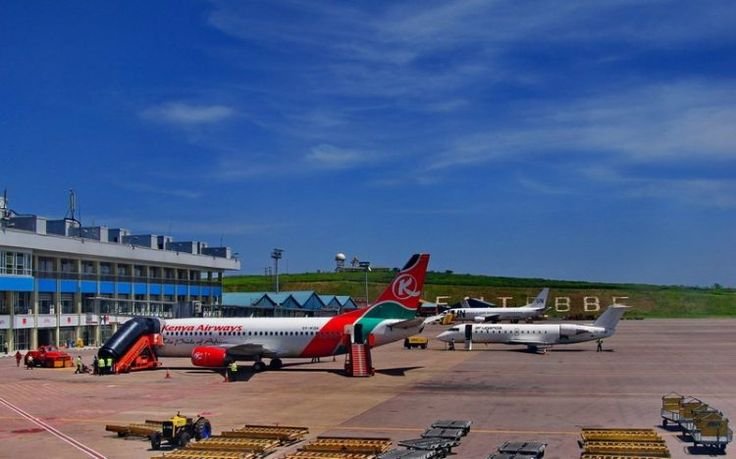
For many business travelers departing from Entebbe International Airport, one question keeps resurfacing; why does it sometimes cost nearly as much, or even more, to fly to a neighboring East African city than to travel thousands of kilometers to Europe?
On June 6, 2026, a return economy ticket from Entebbe to Dar es Salaam, a journey of roughly 1,100 kilometres, typically ranged between $350 and $650. Yet flights from Entebbe to London, a route almost six times longer at approximately 6,500 kilometres, were available for between $700 and $950, with promotional fares occasionally dropping even lower.
At first glance, the pricing appears irrational. Common sense suggests that longer distances should cost significantly more. In reality, however, airline pricing is shaped by economics, regulation, competition, and market scale, not distance alone.
The result is one of the most overlooked barriers to African integration; it often costs more per kilometre to fly within East Africa than it does to travel to Europe.
This is more than an aviation issue. It is a trade issue, a business issue, and ultimately a development issue.
The roots of this challenge can be traced to the continent’s slow progress toward liberalizing its skies. More than two decades ago, African governments adopted the Yamoussoukro Decision, a framework intended to open African airspace to greater competition. This vision later evolved into the Single African Air Transport Market (SAATM), an ambitious initiative designed to allow African airlines to operate more freely across the continent.
Yet implementation remains uneven.
Many countries continue to protect national airlines through restrictive bilateral agreements that limit routes, flight frequencies, and market access. While intended to shield local carriers from competition, these restrictions often produce the opposite outcome for consumers; fewer flights, less competition, and higher ticket prices.
In mature aviation markets such as Europe and North America, airlines compete aggressively on major routes because regulations allow them to operate freely across borders. Competition drives innovation, improves connectivity, and pushes fares downward.
Across much of Africa, however, market access remains constrained. As a result, travelers often pay a premium simply because there are fewer airlines competing for the same passengers.
Taxes and airport charges add another layer to the problem.
A significant portion of the cost of a regional airline ticket is often unrelated to the airline itself. Departure taxes, security levies, passenger service charges, infrastructure fees, and other government-imposed costs can account for a substantial share of the final fare.
For shorter regional routes, these fixed charges represent a much larger percentage of the ticket price. By contrast, long-haul flights spread those costs across thousands of kilometres and larger passenger volumes, making them less noticeable on a per-kilometre basis.
Fuel costs also play a role.
Aviation fuel remains expensive in many African markets due to supply constraints, taxes, and infrastructure inefficiencies. Airlines inevitably pass these costs on to passengers.
Scale is another important factor.
The Entebbe-London route benefits from strong and consistent demand from tourists, international organizations, students, business travelers, and the Ugandan diaspora. Such demand allows airlines to operate larger aircraft, fill more seats, and spread operating costs across a greater number of passengers.
Regional routes often do not enjoy the same scale.
Although travel between cities such as Entebbe, Nairobi, Kigali, and Dar es Salaam continues to grow, passenger numbers remain fragmented across multiple carriers and smaller markets. Airlines frequently operate smaller aircraft and face lower load factors, meaning they must charge more per passenger to remain profitable.
The consequences extend far beyond the aviation sector.
High regional airfares create a hidden barrier to trade and investment. A Ugandan manufacturer seeking opportunities in Tanzania or Kenya must factor in the cost of moving executives, engineers, sales teams, and technical specialists across borders. Entrepreneurs looking to expand into regional markets face the same challenge.
The African Continental Free Trade Area (AfCFTA) aims to increase trade by reducing barriers to the movement of goods. However, if the movement of people remains expensive, the broader goals of economic integration become harder to achieve.
After all, markets do not integrate themselves. People do.
Business relationships are built through meetings, site visits, negotiations, and partnerships. When mobility becomes expensive, integration slows down.
The solution is neither mysterious nor complicated.
African governments must move beyond rhetoric and fully implement the Single African Air Transport Market. Opening regional skies to greater competition would encourage new routes, increase flight frequencies, and reduce fares for consumers.
There is also a strong case for reviewing passenger taxes and airport charges, particularly on intra-African routes. Treating aviation as a strategic economic enabler rather than simply a source of tax revenue would stimulate travel, tourism, trade, and investment across the region.
At the same time, African airlines can strengthen partnerships through codeshare agreements, shared maintenance facilities, and coordinated route planning. Greater collaboration would improve efficiency and help carriers compete more effectively while reducing costs.
Uganda’s economy continues to make significant strides. The country has crossed the lower-middle-income threshold, expanded production, and increased participation in regional and global markets. Yet for these gains to translate into deeper continental integration, physical infrastructure must be matched by regulatory reform.
The fact that it can sometimes cost less per kilometre to fly from Entebbe to London than from Entebbe to Dar es Salaam is a reminder that geography is no longer the greatest barrier to African connectivity.
Policy is.
Until African skies become as open as African ambitions, businesses and travelers will continue to face a paradox that should have disappeared long ago; finding it easier, and sometimes cheaper, to reach Europe than to reach their own neighbors.
