
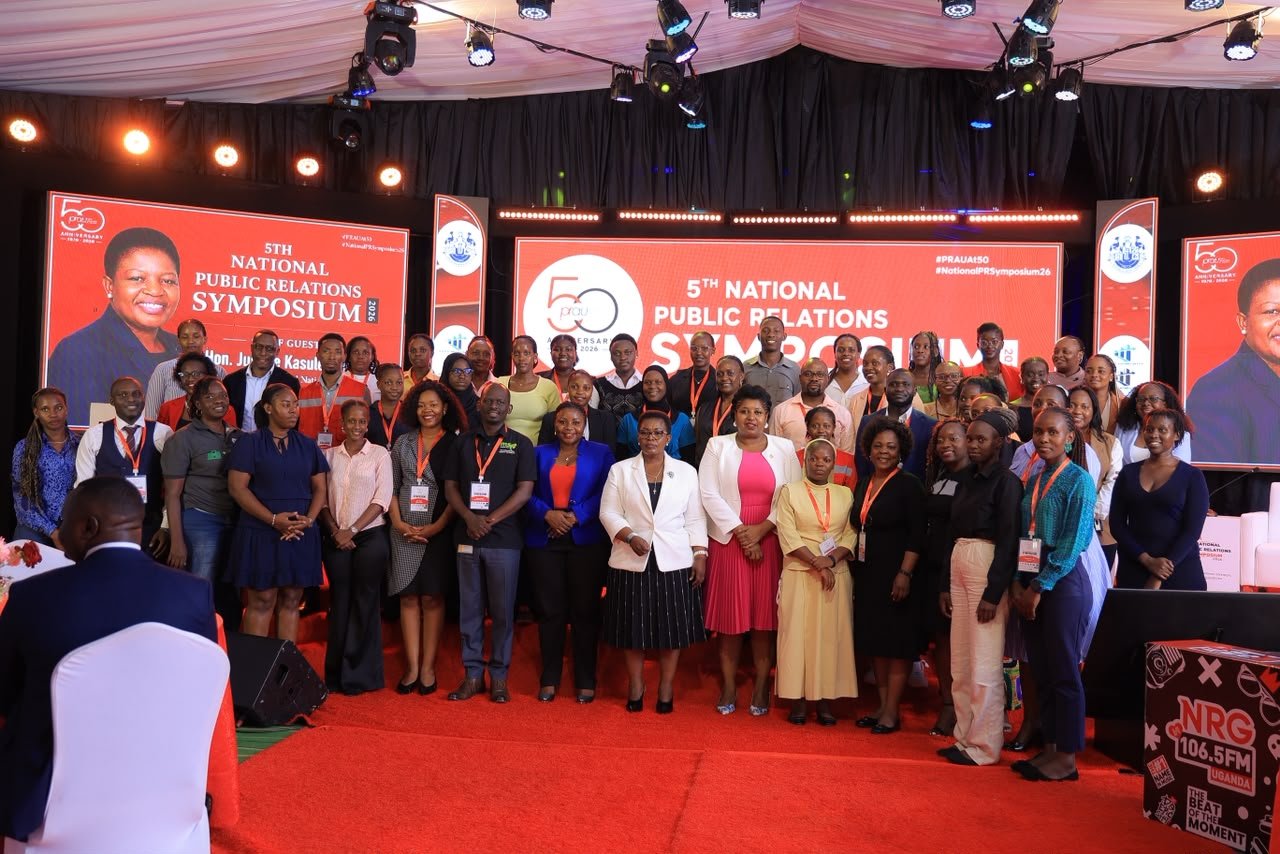
When the Public Relations Association of Uganda (PRAU) was founded in 1976, Uganda was under Idi Amin’s rule. Information was tightly controlled, journalists operated under constant fear, and communication was largely synonymous with propaganda. Public relations, as understood today, had little room to flourish.
Yet amid that uncertainty, a small group of communication professionals under the stewardship of the late James Mutabaazi quietly laid the foundation for what would become Uganda’s leading professional body for public relations.
As the world marks World PR Day, a celebration of the power, influence and evolving role of public relations in shaping societies, PRAU’s 50-year journey offers a reflection of how the profession has transformed alongside Uganda’s own political, economic and social evolution.
The story of PRAU is, in many ways, the story of modern Uganda. As the country moved from military rule through economic liberalisation and into the digital age, public relations evolved from basic information management into a strategic function responsible for building trust, managing reputations and influencing organisational success.
PRAU’s origins cannot be separated from the political realities of the 1970s. Media censorship was widespread, and official communication flowed almost exclusively through government channels. It was in this environment that pioneers under Mutabaazi sought to establish public relations as a discipline governed by ethics, planning and institutional responsibility, built on credibility rather than control.
The liberalisation policies of the 1990s then fundamentally altered Uganda’s corporate landscape. Foreign investors entered the market, multinationals established operations, and private enterprise expanded rapidly.
Telecommunications companies, banks and manufacturers required structured stakeholder relations, crisis communication and community trust. Public relations was no longer event management; it had become a strategic management function that influenced investment decisions, corporate reputation and public confidence.
Several industry leaders helped accelerate that transition. Hope Kivengere, President Museveni’s first Press Secretary from 1986 to 2001, professionalised government communication during Uganda’s post-war reconstruction. Henry Rugamba, a former PRAU president, consistently argued that reputation should be treated as a boardroom issue. Goretti Masadde, who became PRAU’s first female president in 2010, strengthened the association’s financial sustainability while demonstrating the strategic value of communication within Uganda’s banking sector.
As World PR Day highlights the global contribution of communication professionals, PRAU’s journey reflects the wider transformation of public relations from a support function into a critical driver of leadership, governance and organisational resilience.
Despite its expanding influence, public relations remains one of Uganda’s few major professions without statutory regulation. PRAU argues that this gap allows virtually anyone to market themselves as a communications consultant, exposing institutions to unethical practices and declining standards.
To address this, PRAU has spent years advocating for the PRAU Practitioners’ Bill, which would establish mandatory accreditation, create disciplinary mechanisms and formally recognise public relations alongside bodies such as the Uganda Law Society and the Institute of Certified Public Accountants.
The proposed law represents more than regulatory reform; it reflects the association’s ambition to become the legal custodian of professional standards and ensure that communication practitioners uphold the highest levels of ethics, accountability and competence.
The era when organisations could manage crises through press conferences or newspaper statements has largely passed. Today, a misleading social media post or AI-generated deepfake can trigger reputational damage before an organisation has time to respond.
Recognising this changing landscape, PRAU has introduced Digital Membership IDs to verify accredited practitioners. The association has also expanded its focus to include digital reputation management, data analytics and what it describes as “algorithmic trust,” safeguarding institutional credibility in an increasingly fragmented information ecosystem.
World PR Day serves as a reminder that public relations is no longer simply about managing messages; it is about building relationships, protecting trust and helping institutions navigate complexity in a rapidly changing world.
PRAU’s Golden Jubilee is therefore as much about the future as it is about the past. Through its National Students’ Mentorship Programme, the association is bridging the gap between university education and industry expectations. It is also raising UGX 800 million to construct the PRAU Home, envisioned as a permanent centre for professional development and research across East Africa.
PRAU’s first 50 years were shaped by political change, economic transformation and the growing recognition of communication as a strategic asset. Its next 50 will be defined by whether it can successfully regulate the profession, prepare a new generation of practitioners and help organisations preserve trust in an age where credibility has become one of the world’s most valuable currencies.
As the world celebrates World PR Day, Uganda’s public relations journey stands as a testament to how the profession has evolved from controlling information to creating understanding, from managing publicity to shaping trust, and from supporting decisions to influencing the future.
