
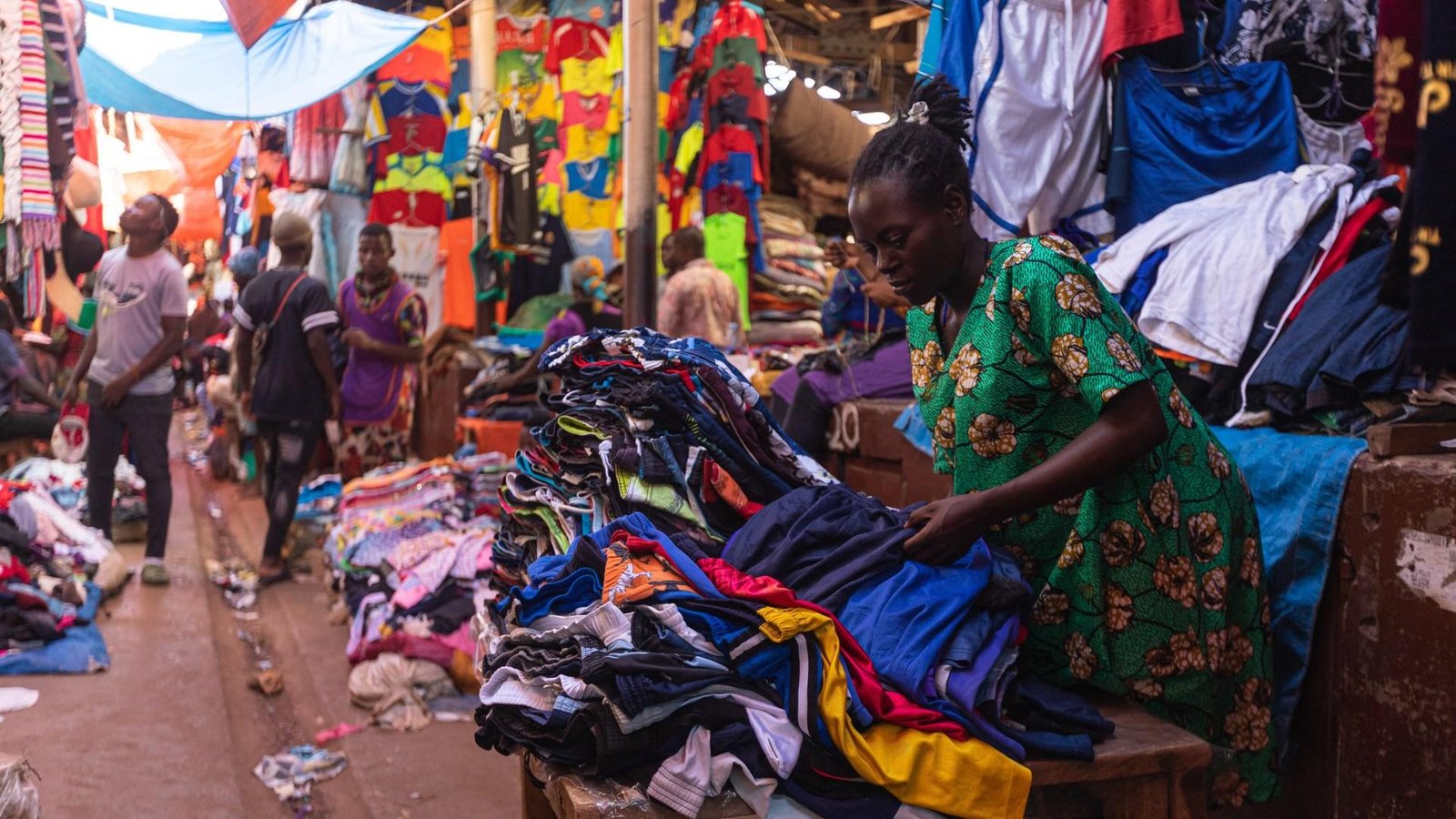
Why does a country that grows cotton still dress itself in other people’s discarded clothes?
Why do used Japanese cars dominate Uganda’s roads, while refurbished phones have become a major route into smartphone ownership?
The answer is not simply that Ugandans prefer second-hand products. In many cases, they are buying used goods because new ones are priced beyond what their incomes can comfortably support.
Uganda imported about 88.4 million kilogrammes of used clothing in 2024, worth roughly $106.4 million. By 2023, used clothing imports had already overtaken new clothing imports in value, according to the Economic Policy Research Centre.
The same economic logic appears in phones and vehicles.
What looks like a consumer preference is, in large part, a purchasing-power story.
Why is mivumba winning the clothing market?
Walk through Kampala’s markets and the strength of Uganda’s second hand economy is difficult to miss.
Mivumba has become a major source of affordable clothing for households that cannot justify paying significantly more for new garments. In 2024, Uganda imported about 88.4 million kilogrammes of worn clothing. The trade also supports thousands of traders and workers across wholesale, transport, tailoring and retail.
For a consumer living on a tight budget, the calculation is straightforward.
The question is not whether a shirt is new. It is whether it fits, looks good, lasts and can be bought without putting pressure on the household budget.
That gives second-hand clothing a powerful advantage.
It also exposes one of Uganda’s biggest economic contradictions.
The country grows cotton, yet much of the value generated from that cotton is created outside Uganda. Domestic textile and garment production remains relatively limited, while imported clothing continues to fill the gap between what Ugandans need and what local industry can supply.
Uganda therefore finds itself producing a raw material for clothing while importing large quantities of finished and second-hand garments.

The problem is not simply consumer behaviour. It is the gap between domestic production and what consumers can afford.
Why is the affordable smartphone often a used one?
The same story is playing out in Uganda’s technology market.
Feature phones still account for a significant share of mobile subscriptions, while the 2024 national census found that only 43 percent of Ugandans personally own a mobile phone.
That matters because smartphones are increasingly essential to participation in the modern economy.
They provide access to mobile money, digital financial services, education, information and online commerce.
But owning one requires an upfront payment that many households struggle to make.
Taxes on imported smartphones add to the cost, while limited incomes make new devices difficult to purchase outright. Used and refurbished phones consequently become an important entry point into the digital economy.
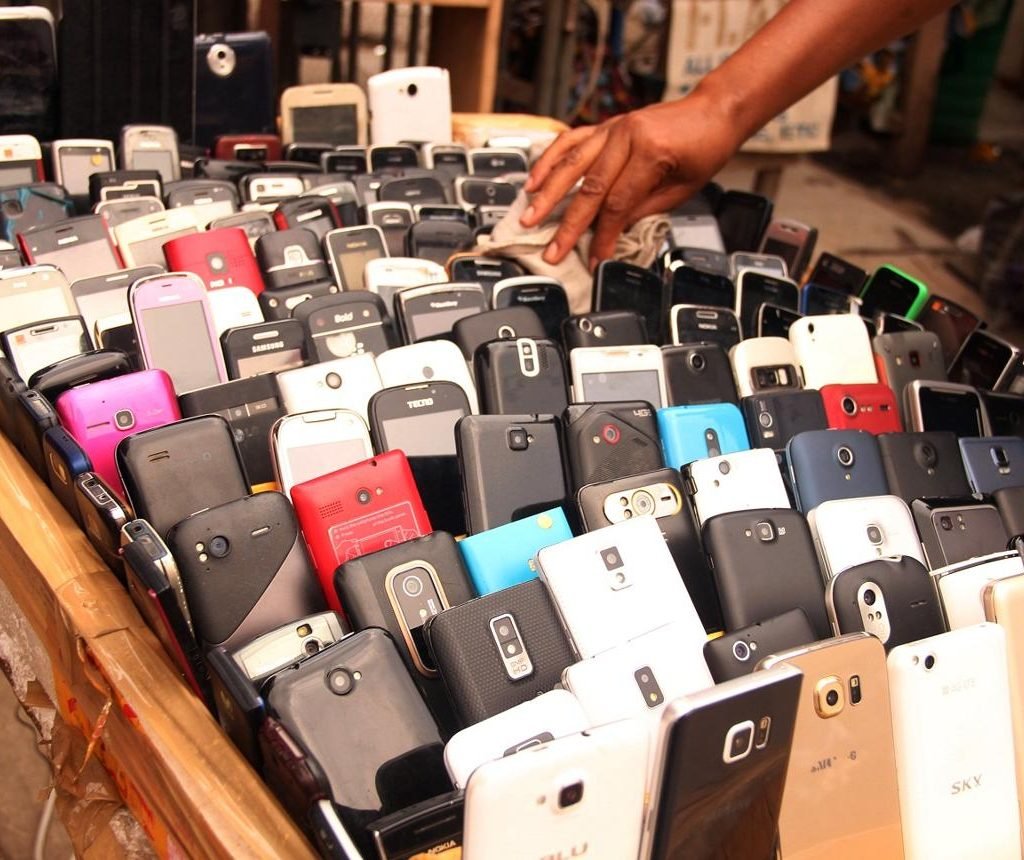
The regional experience shows that policy can influence affordability. Rwanda removed VAT on smartphones in 2022 as part of efforts to expand digital access, while Kenya applies zero import duty to smartphones under the East African Community’s common external tariff framework.
Uganda has taken a different approach.
For many consumers, therefore, the used phone is not necessarily a second-best choice.
It is the phone they can afford.
Why are Ugandans still buying used Japanese cars?
The economics become even clearer with vehicles.
For most Ugandan households, buying a new car through an official dealership is a major financial commitment. Used Japanese vehicles have consequently become the default option for a large section of the market.

Toyota Premios, Passos and Harriers, Nissan X-Trails and other Japanese models are familiar on Ugandan roads. Their popularity is supported by consumer confidence, availability of spare parts and the familiarity of local mechanics with the vehicles.
Demand remains strong.
Shipments of used Japanese vehicles to Uganda increased by more than 40 percent between January 2025 and January 2026, according to JUMVEA. This happened despite import taxes and restrictions, including a ban on vehicles more than 15 years old.
Why? Because depreciation works in the buyer’s favour.
A vehicle that has already lost much of its value in Japan can become an affordable means of transport in Uganda. The first owner absorbs much of the depreciation. The Ugandan buyer acquires the vehicle later, at a lower price.That is not irrational consumption. It is a financial calculation.
What does income have to do with it?
Almost everything.
Uganda’s GDP per capita remains relatively low, while individual incomes are modest. At those income levels, the difference between a new product and a used one can determine whether a consumer buys the product at all.
The labour market makes the situation more difficult.
About 85 percent of workers operate informally, while the statutory minimum wage remains UGX 130,000 a month and has not been revised since 1984.
For households with irregular or limited incomes, the cash price matters.This is where consumer credit becomes important.
A consumer in a wealthier economy may finance a car or smartphone over several years. For many Ugandan consumers, the ability to pay cash today is much more important.
That naturally favours used products.
The exchange rate adds another layer. When the shilling weakens, imported goods become more expensive in local currency terms. Used goods can provide some protection because much of their original depreciation has already occurred.
Is second-hand always about being cheap?
Not necessarily. Price explains much of the demand, but trust and perceived value also matter.
Japanese vehicles, for example, have developed a reputation for reliability in Uganda. Buyers know the models, mechanics know how to repair them and spare parts are widely available.
The same can happen with clothing.A second-hand garment that has already survived previous use may be viewed as better value than a cheaply produced new garment selling at a similar price.
Once consumers become familiar with particular used products, second-hand stops being merely the cheaper option.
It becomes the rational option.
So, what is the real problem?
Uganda’s second-hand economy is often discussed as a consumer problem. But it is more accurately an income and industrialisation problem.
Local manufacturers need consumers with enough purchasing power to buy locally produced goods. At the same time, consumers need products that are affordable enough to compete with imports.
That creates a difficult cycle.
A factory may want to produce a new shirt. A technology company may want to sell a locally assembled smartphone. A vehicle distributor may want to sell a new car.
But consumers make their decisions with the money available to them.And for millions of Ugandans, used goods still offer the best value for every shilling. The long-term answer is therefore unlikely to be simply banning or discouraging second-hand products.
It is to raise household incomes, expand affordable consumer credit, improve local manufacturing and make domestically produced goods competitive on price and quality.
Until that happens, Uganda’s second-hand economy will remain deeply embedded in everyday life.
The clothes in Owino Market, refurbished smartphones in Kampala’s electronics shops and used Japanese cars on Uganda’s roads are all telling the same story.
Ugandans are not necessarily buying yesterday’s goods because they prefer yesterday. They are buying them because yesterday’s prices are closer to today’s incomes.
And that leaves Uganda with a much bigger economic question:
How long can an economy keep growing while so many of its consumers can afford only what someone else has already finished with?
